What is a hedge fund, and what does it actually do?
Short selling: how you can make money when a share price falls
Most people make money on a share when its price goes up. Some investors make money when it goes down, by selling a share they do not even own. How is that allowed?
-
1
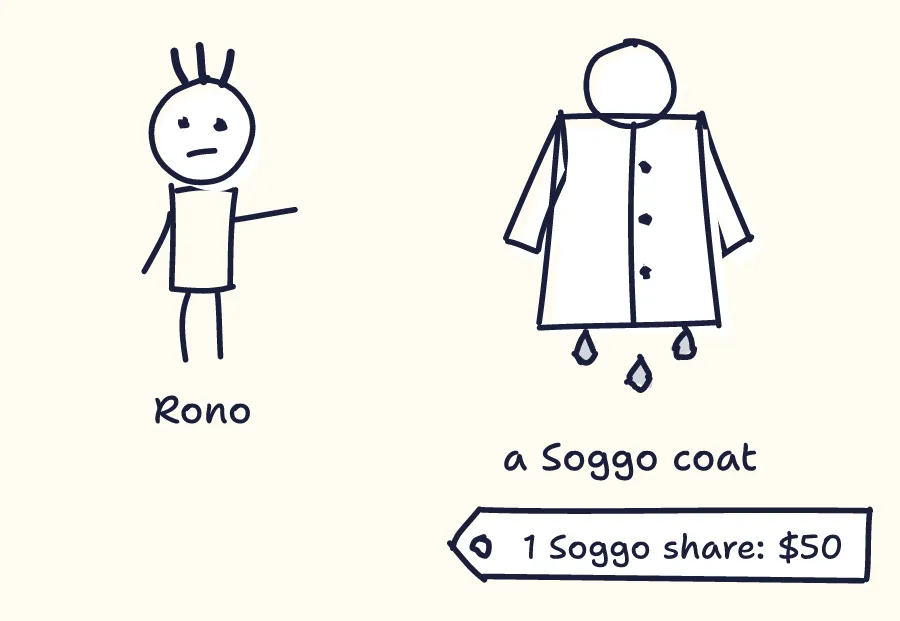
This spring, your friend Rono left his bank job and opened a small fund: a pot of money he invests for others. He has tried a raincoat from Soggo, a company whose shares anyone can buy on the stock market. The coat leaks. So Rono is sure the price of a Soggo share, $50 today, will fall.
-
2
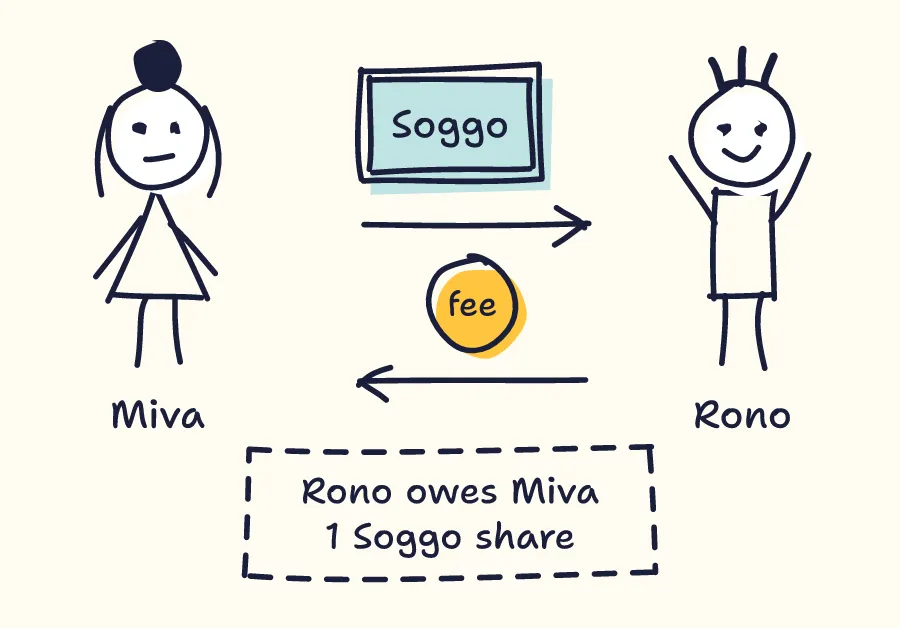
But Rono owns no Soggo shares. Miva, a friend, owns some. So Rono borrows one from her. He pays her a small fee and promises to give her one Soggo share back later. Not $50: one share.
-
3
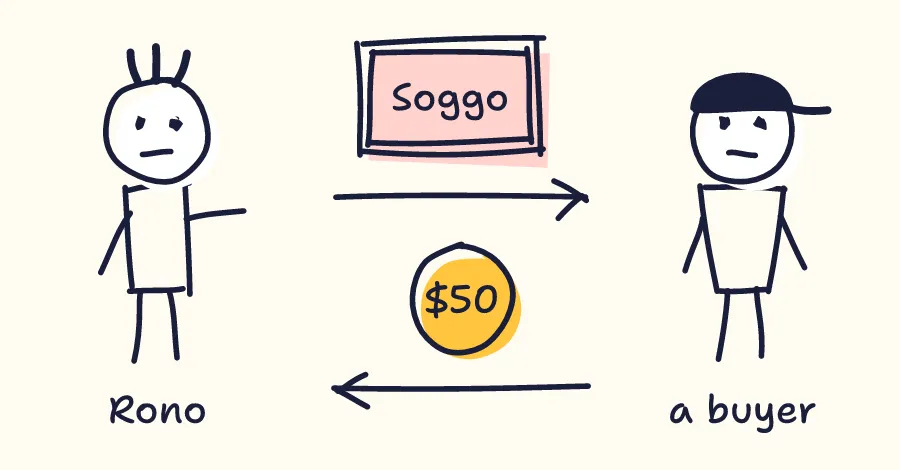
Then Rono does something strange. He sells the borrowed share at once, to a buyer on the stock market, for $50. Now he has $50 in cash, and he still owes Miva one share.
-
4
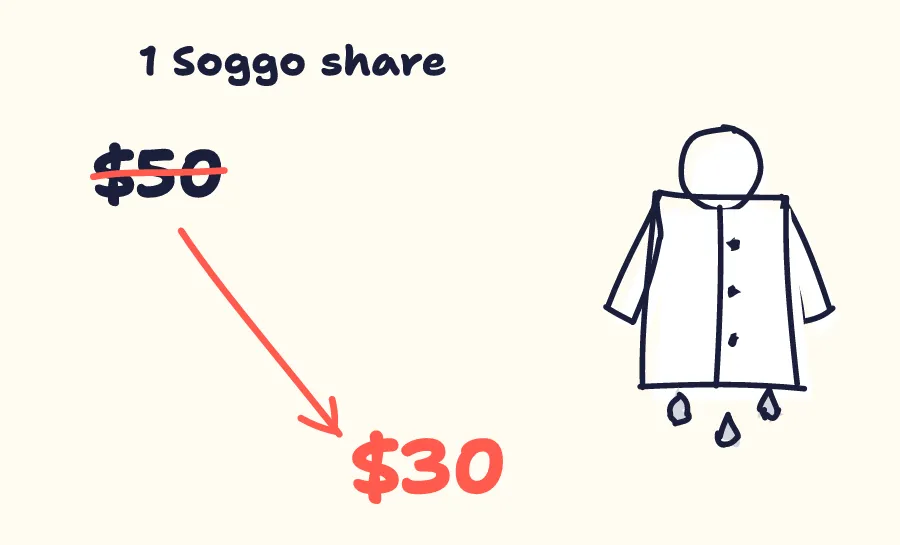
A few weeks later, many reviews say the same thing: Soggo coats leak. People who own Soggo shares sell them, and the price falls to $30.
-
5
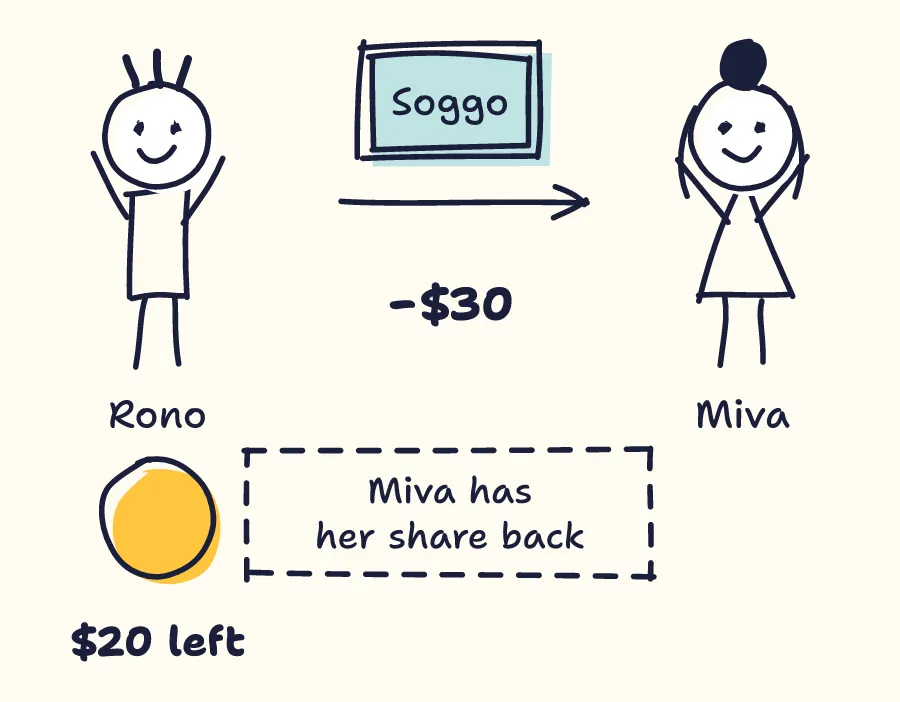
Now Rono buys one Soggo share for $30 and gives it back to Miva. His promise is kept. He sold for $50 and bought for $30, so $20 stays with him, minus the small fee. This is short selling: sell first, buy back later, and win if the price fell.
-
6
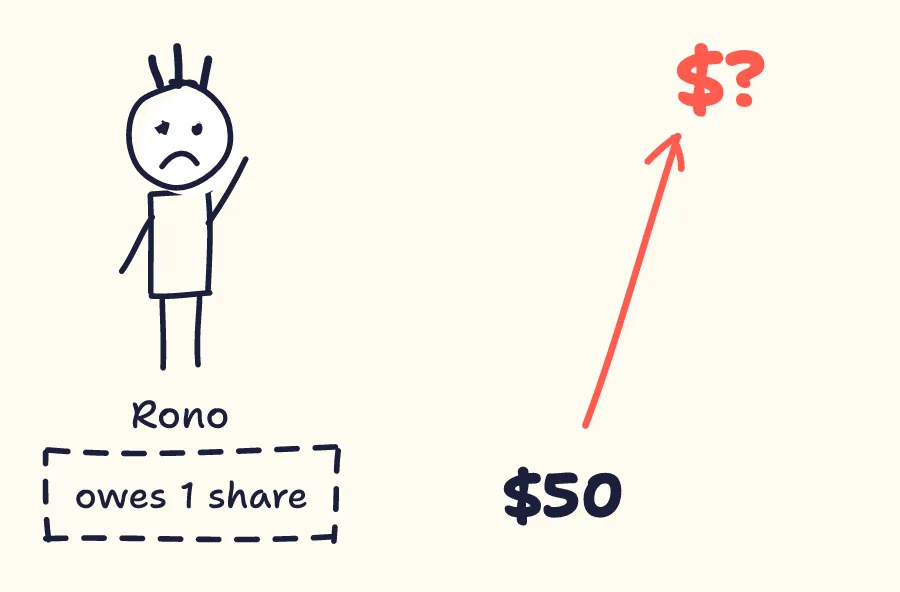
Investors call it going short. Owning a share and hoping its price goes up is going long. But a short has a catch. Rono owed one share, not an amount of money. If the price had gone up instead, he would have had to buy the share back anyway, at the new price.
-
Quick check
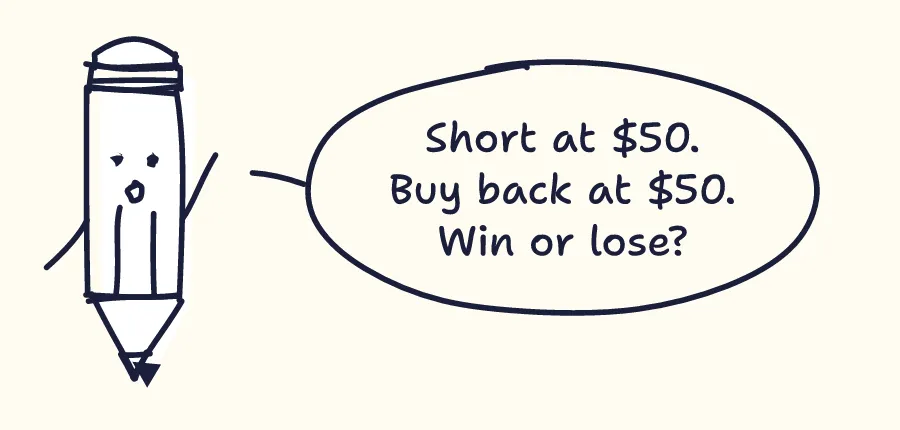
A price that does not move.
Show the answer
You lose a little. You sold for $50 and bought back for $50, so the share gives you nothing, and you still pay the fee to the lender.
-
Go further
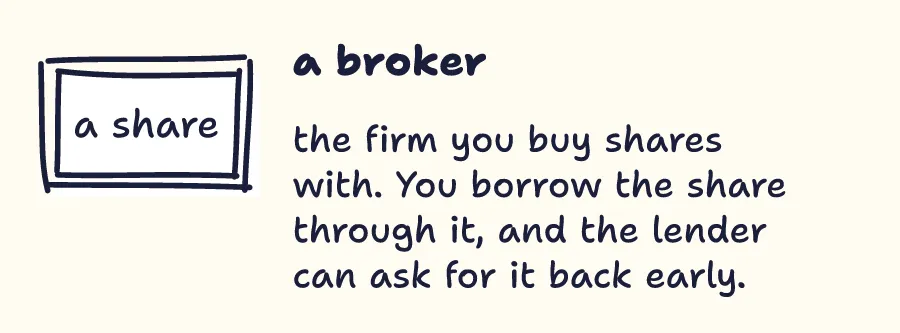
Who you borrow from, in real life.