What is a hedge fund, and what does it actually do?
Why it is called a hedge fund: the 1949 trick of betting on both sides
Hedge funds are known for big risks. Yet the name comes from a way to cut risk, found in 1949. How can a fund still make money on the day the whole stock market crashes?
-
1
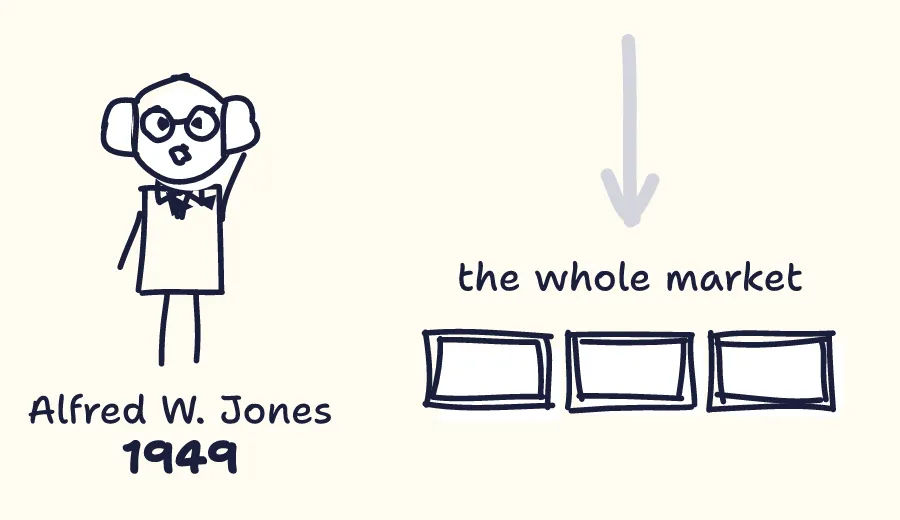
In 1949, Alfred Winslow Jones, an American who wrote about money for a magazine, started a fund. He had one big worry: a crash. On a bad day, almost every share falls, the good ones too.
-
2
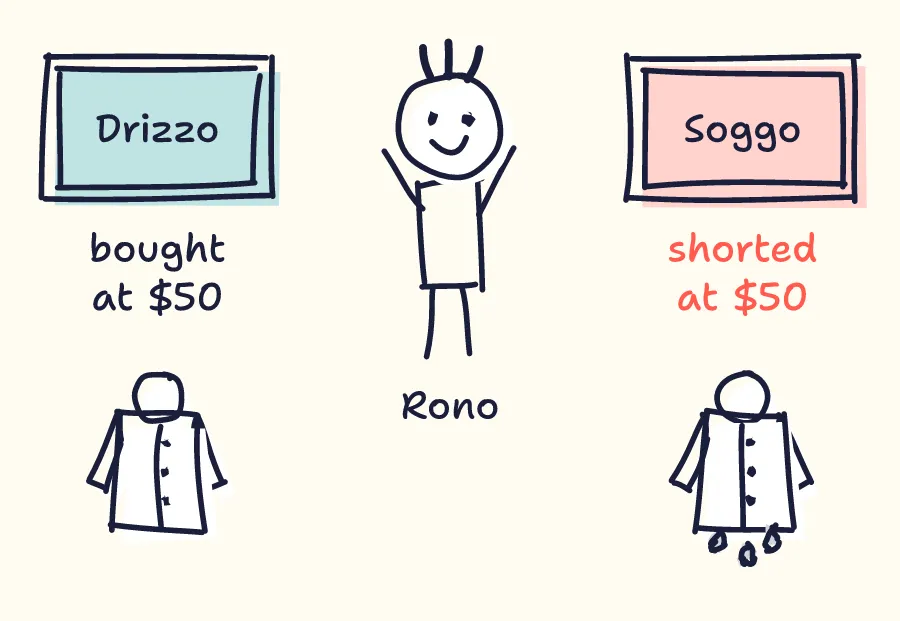
His answer works for Rono too. Rono buys a share of Drizzo, a raincoat maker with good coats, for $50. And he shorts a share of Soggo for $50, the way he did before. His bet: Drizzo will do better than Soggo.
-
3
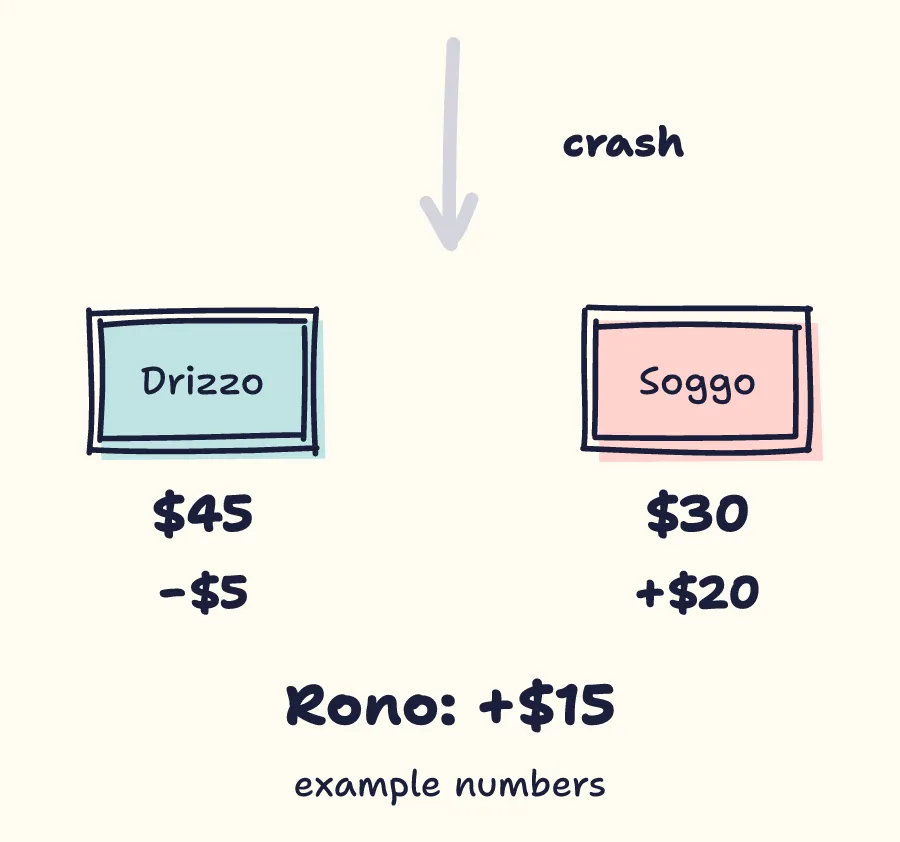
Then the whole market crashes, and both shares fall. Drizzo falls only to $45, so Rono loses $5 there. Soggo falls to $30, and his short wins $20. On a terrible day, he is still $15 up.
-
4
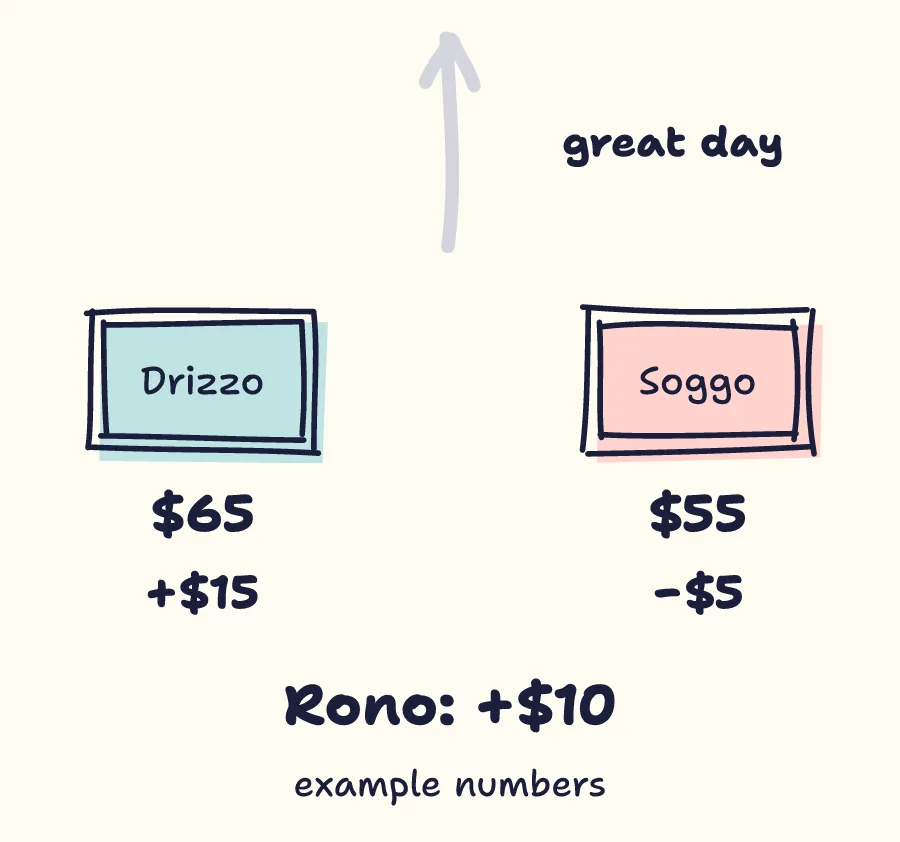
On a great day, the market rises and lifts both shares. Now the short loses $5. But Drizzo gains $15, so Rono is $10 up again.
-
5
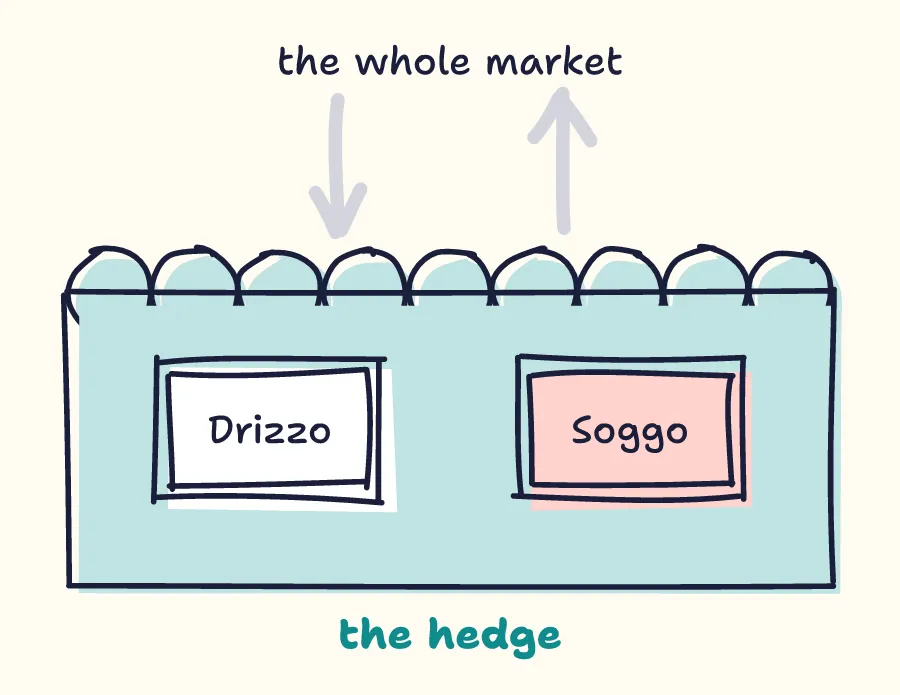
Up or down, the move of the whole market hurts one side and helps the other. What is left is the one thing Rono bets on: Drizzo doing better than Soggo. Jones called it a hedged fund. To hedge a bet is to protect it, the way a hedge protects a garden.
-
6
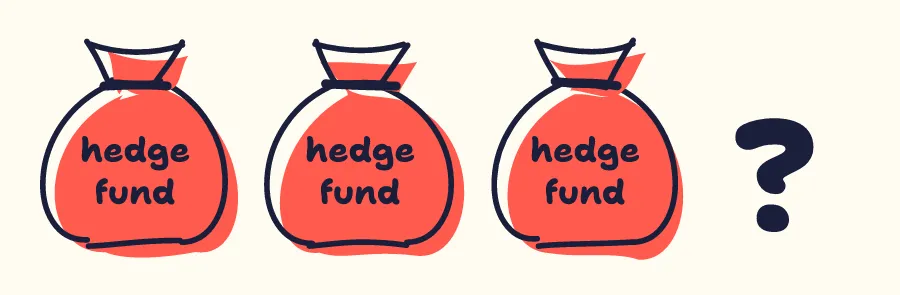
In 1966, a magazine story made Jones famous, and many others copied him. Today there are thousands of hedge funds. Yet many of them never bet on both sides at all. So what still makes a fund a hedge fund?
-
Quick check
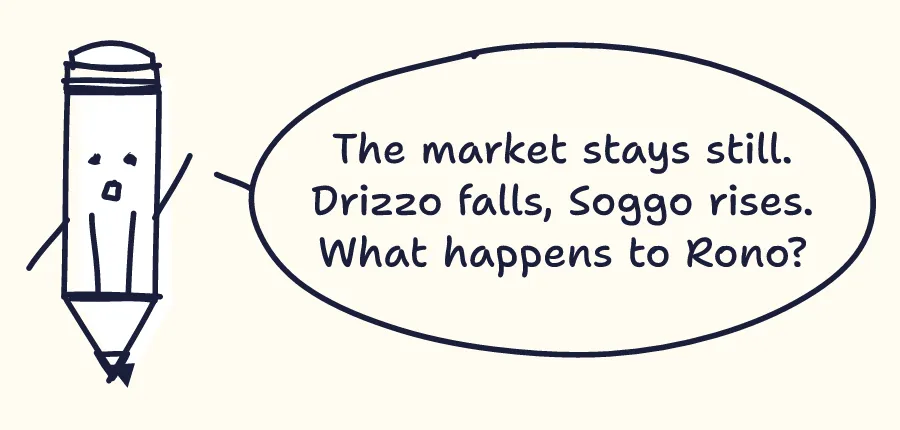
A pick that goes wrong.
Show the answer
He loses on both sides. The hedge only cancels a move of the whole market. If his pick is wrong, nothing protects him.
-
Go further
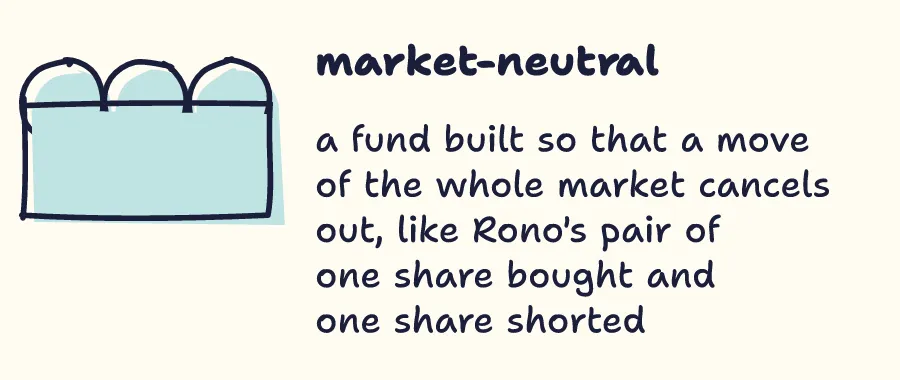
The name for what Rono's pair does.