How tax brackets work: why a raise never lowers your take-home pay
Tax brackets explained: does a raise push all your pay into a higher tax rate?
Many people turn down a raise because it would put them in a higher tax bracket. They are afraid the new rate will eat their whole salary. Here is what a tax bracket really taxes.
-
1
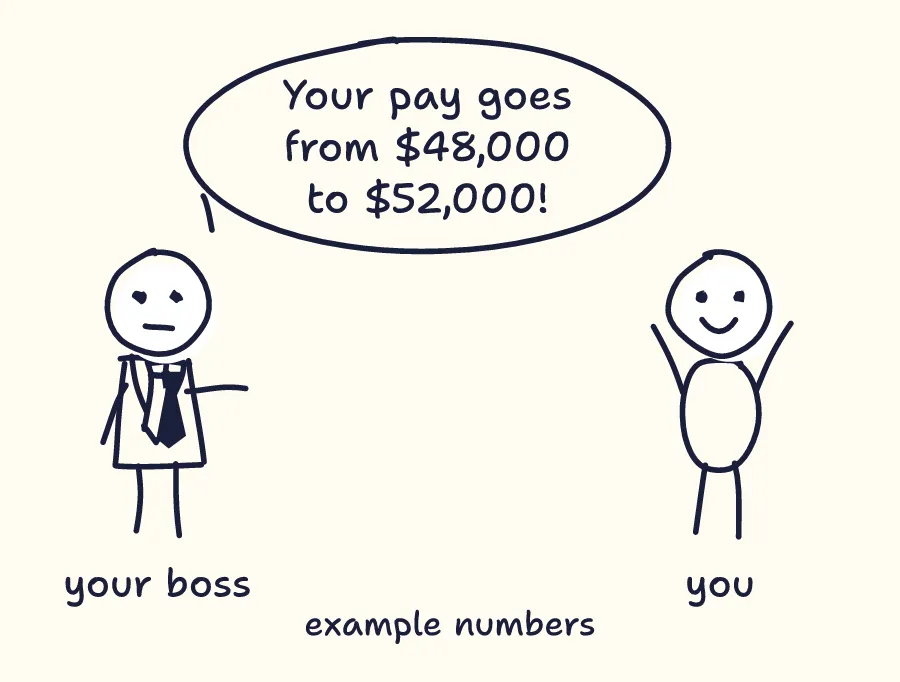
Good news at work: your boss offers you a raise. Your pay goes from $48,000 a year to $52,000.
-
2
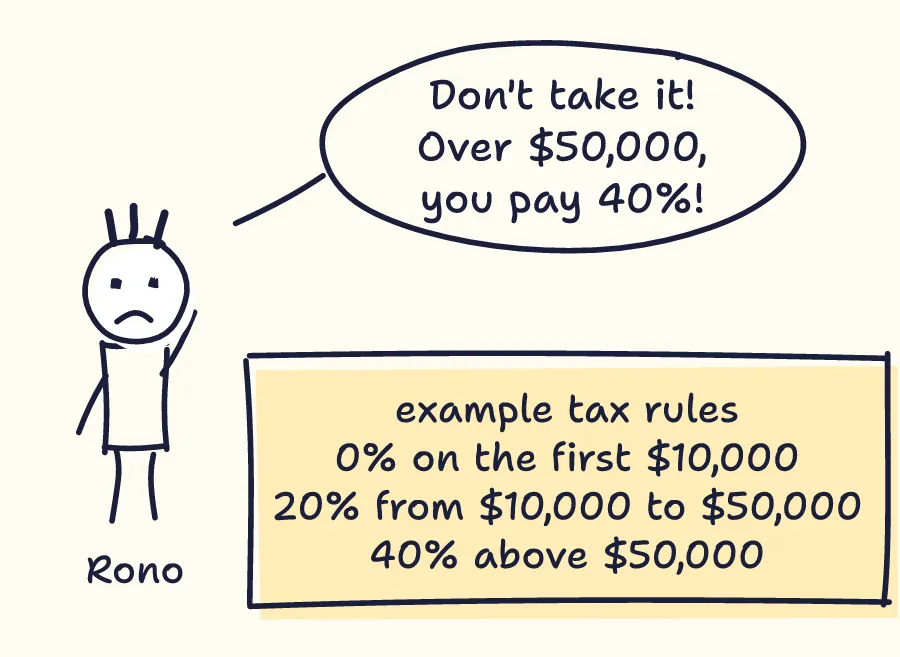
Your coworker Rono looks worried. He knows the tax rules: above $50,000, the rate is 40%. He thinks the raise makes all your pay taxed at 40%. That is $20,800 of tax. You would keep $31,200, less than the $40,400 you keep now.
-
3
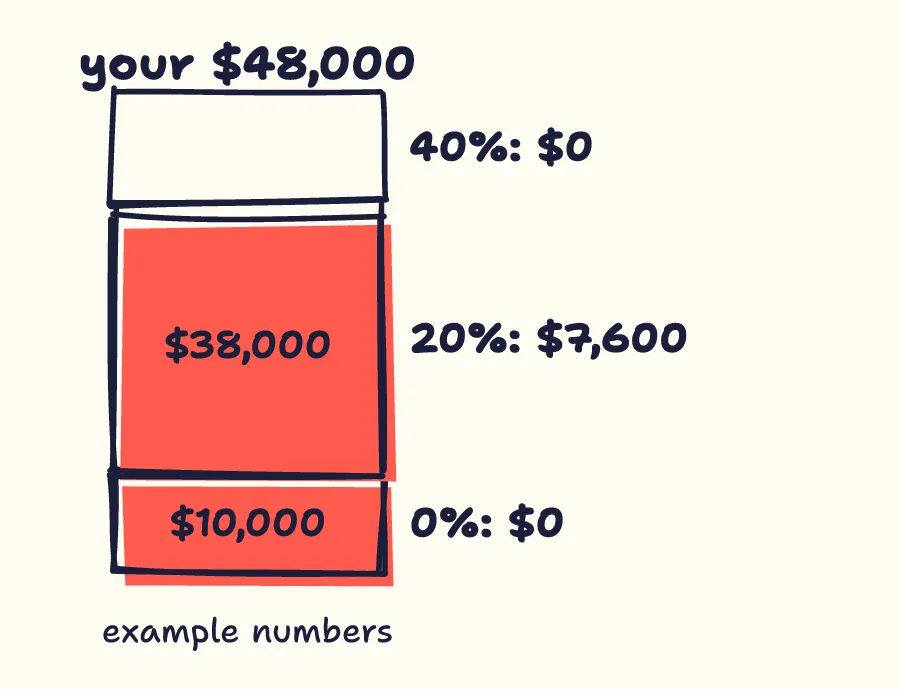
But the tax does not take your pay as one block. It cuts it into slices, called tax brackets, and each slice has its own rate. Today, your first $10,000 pays nothing. The next $38,000 pays 20%: $7,600.
-
4
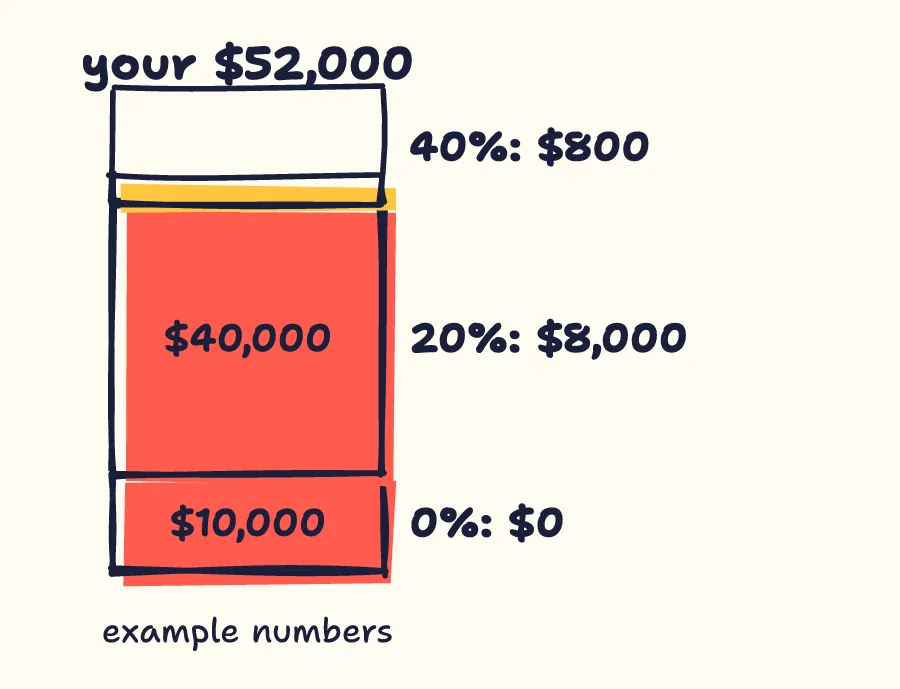
Now take the raise. The two lower slices do not change. Only the $2,000 above $50,000 lands in the top bracket, so only those $2,000 pay 40%: $800.
-
5
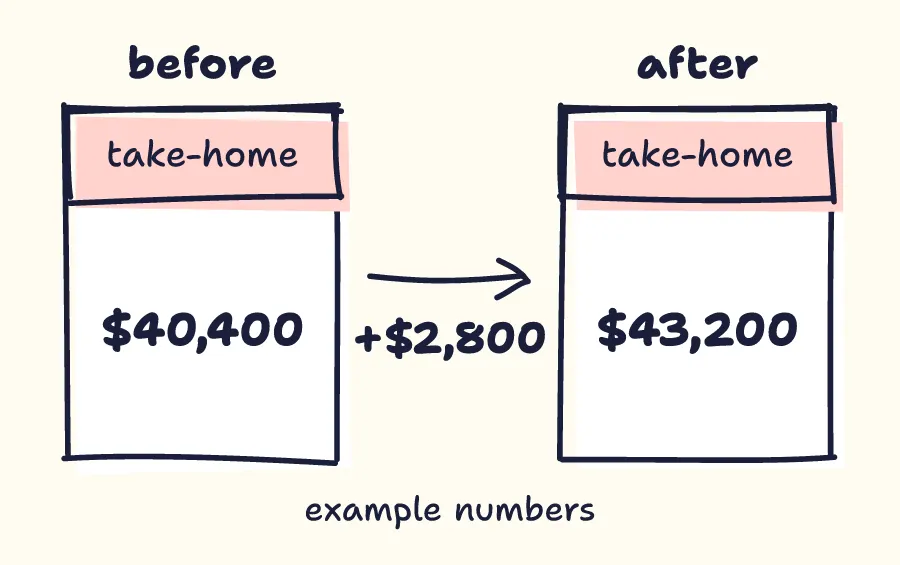
Your tax goes from $7,600 to $8,800. Of the $4,000 raise, you keep $2,800. The money you keep after tax is your take-home pay, and a raise makes it bigger, never smaller.
-
6
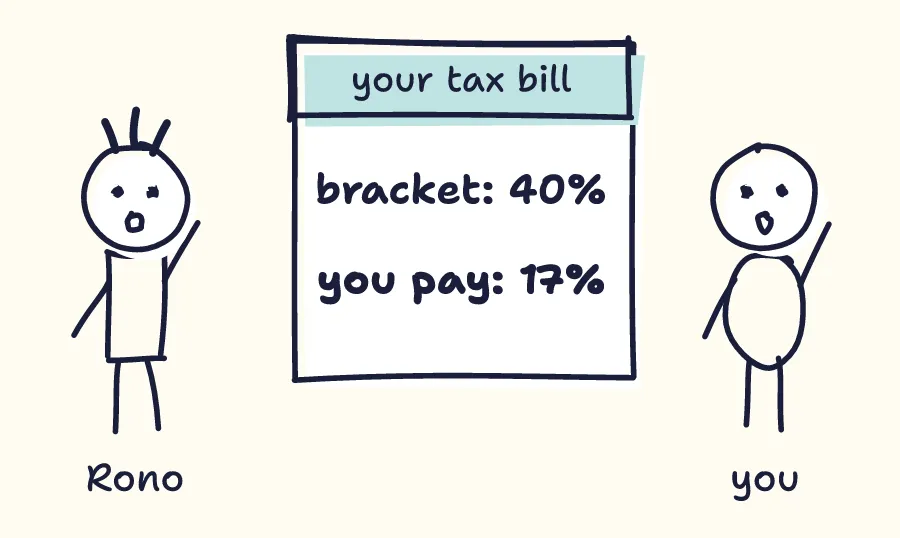
Rono is still not sure. And when your tax bill comes, it says something even stranger. You are in the 40% bracket, and you pay about 17% of your pay.
-
Quick check
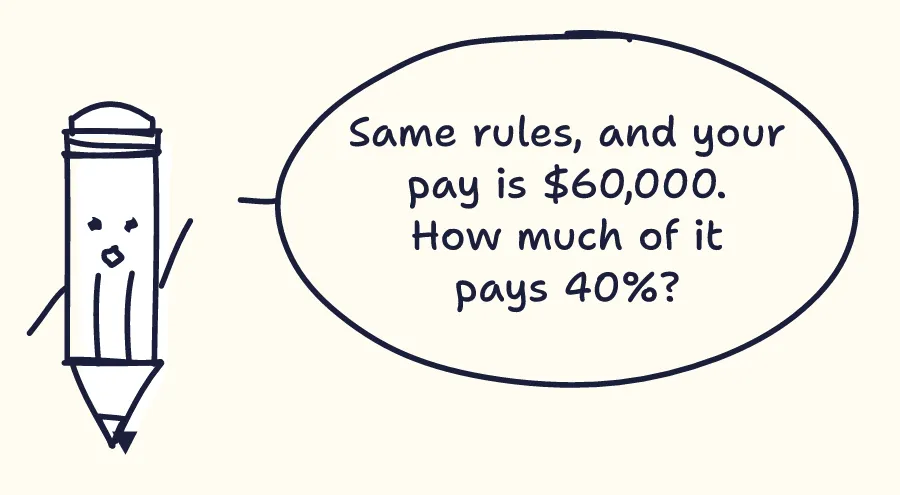
A bigger raise.
Show the answer
Only $10,000: the part above $50,000. The rest of your pay stays in the lower slices, at 0% and 20%.
-
Go further
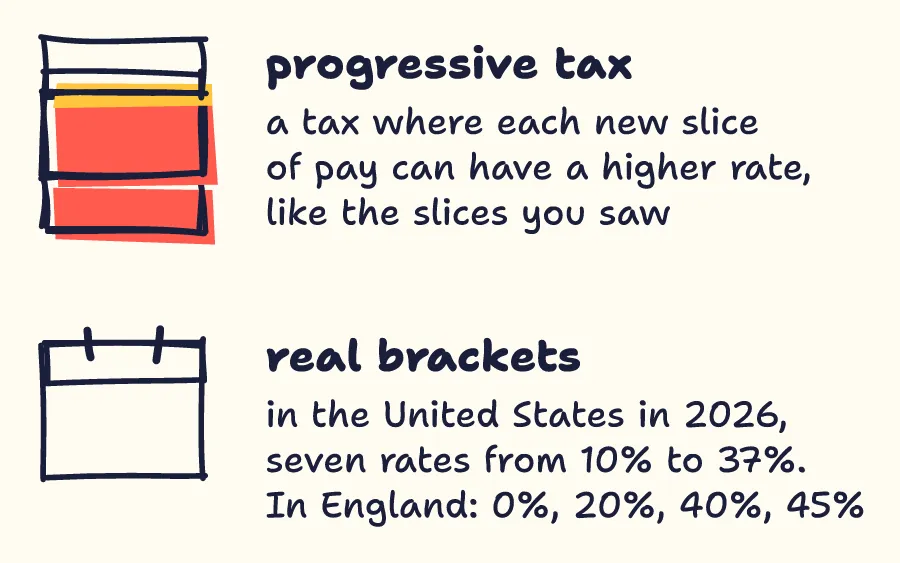
Two real names.