How tax brackets work: why a raise never lowers your take-home pay
Marginal vs effective tax rate: why you pay less than your tax bracket
You can be in the 40% tax bracket and still pay only a small share of your pay in tax. The two tax rates that explain it are not the same number, and each one answers its own question.
-
1
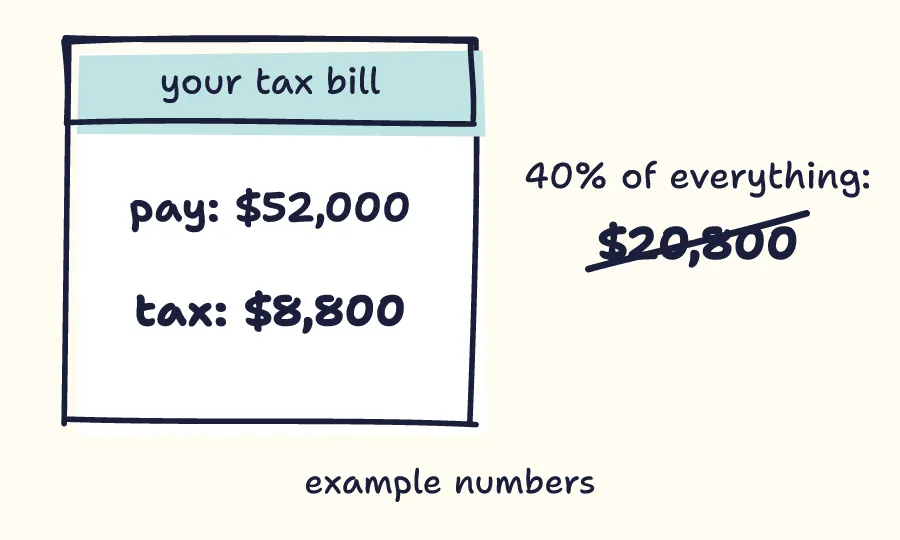
Here is your tax bill. Your pay is $52,000, and your tax is $8,800. If all your pay paid 40%, the tax would be $20,800. So where did the 40% go?
-
2
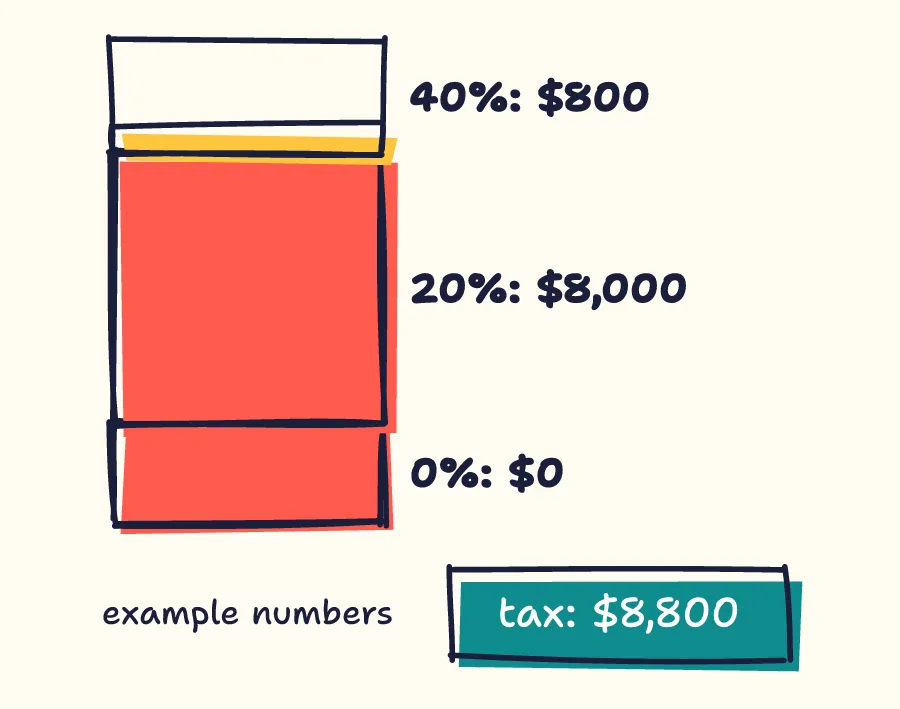
Add up the slices. The first one gives $0, the middle one $8,000, and the thin top one $800. Most of your pay sits in the cheap slices. The 40% only touches the top.
-
3
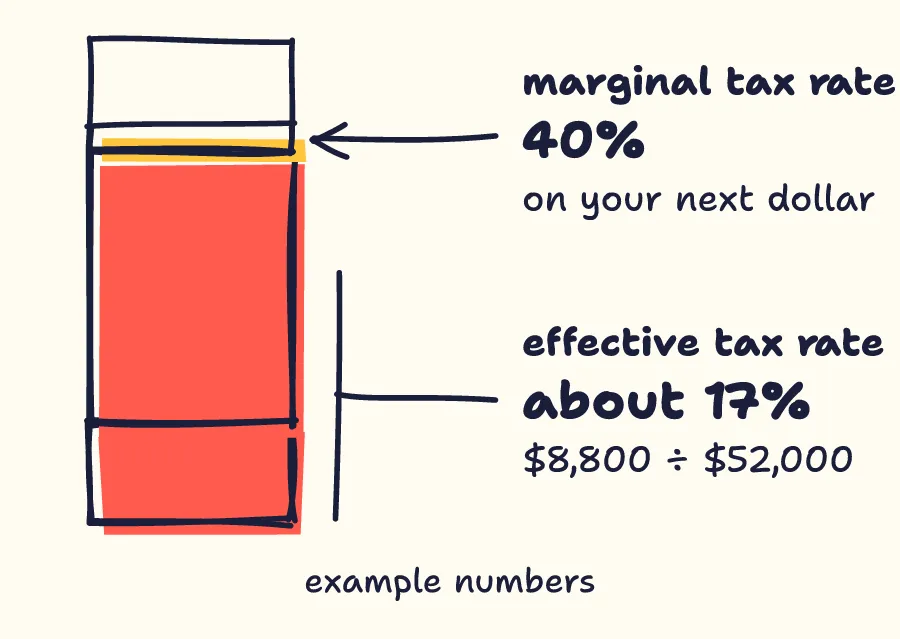
So you have two tax rates. The rate of your top slice is your marginal tax rate: 40%. All your tax divided by all your pay is your effective tax rate: about 17%.
-
4
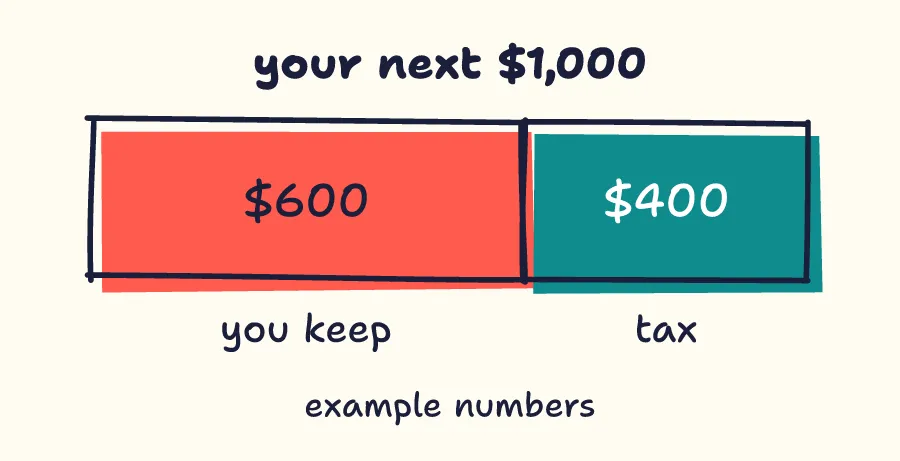
Each rate answers its own question. The marginal rate says what you keep from your next raise: 60 cents of each dollar. The effective rate says what share of all your pay goes to tax.
-
5
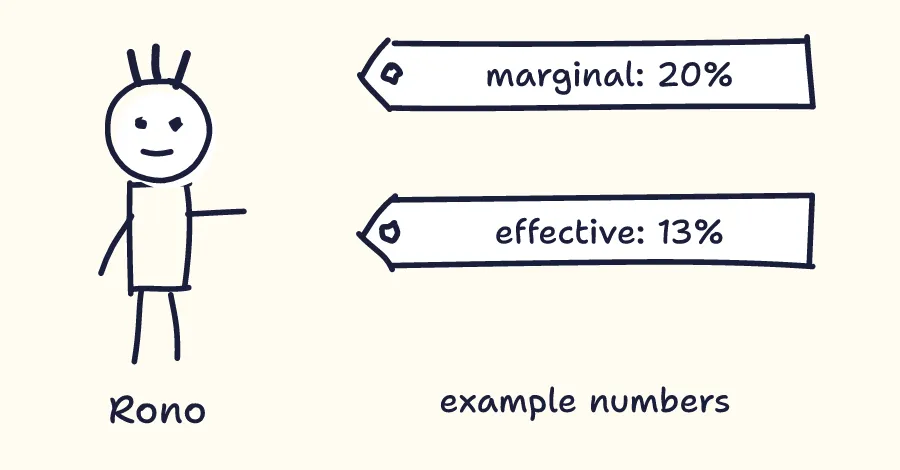
Rono works it out for his own pay of $30,000. His top slice pays 20%. His tax is $4,000, about 13% of his pay. With brackets like these, the effective rate is always below the marginal rate.
-
6
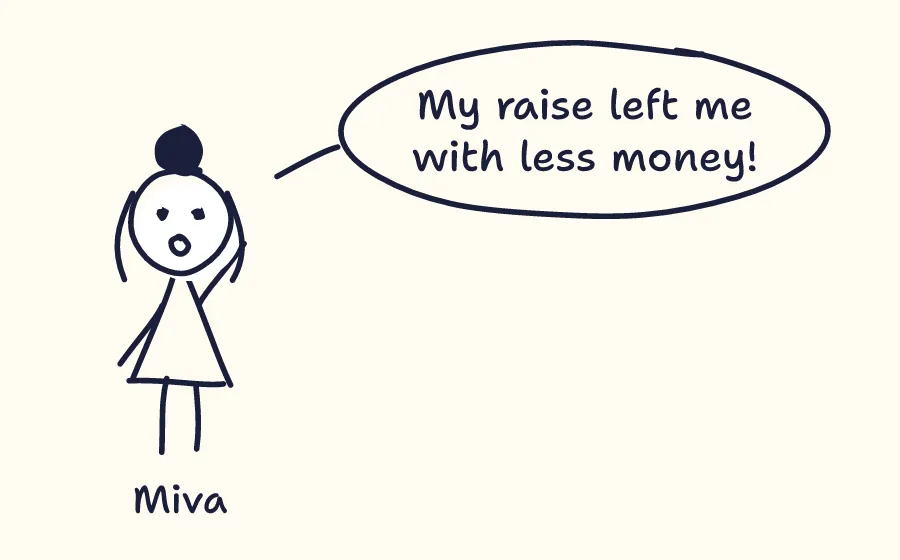
Then your friend Miva laughs at all this. Last year, she got a raise of $2,000, and at the end of the year she had less money than before. Tax brackets cannot do that. So what took her money?
-
Quick check
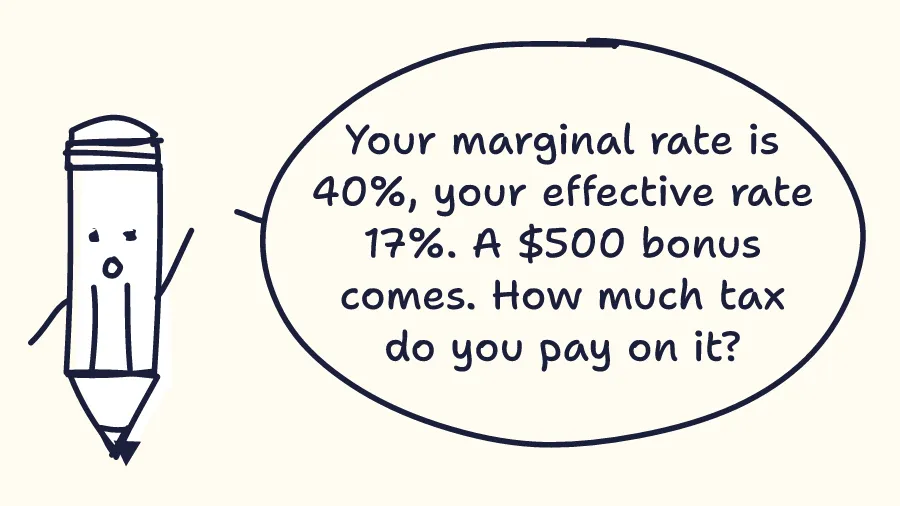
A bonus.
Show the answer
$200. A bonus is more pay on top of your pay, so it lands in your top slice and pays your marginal rate, 40%.
-
Go further
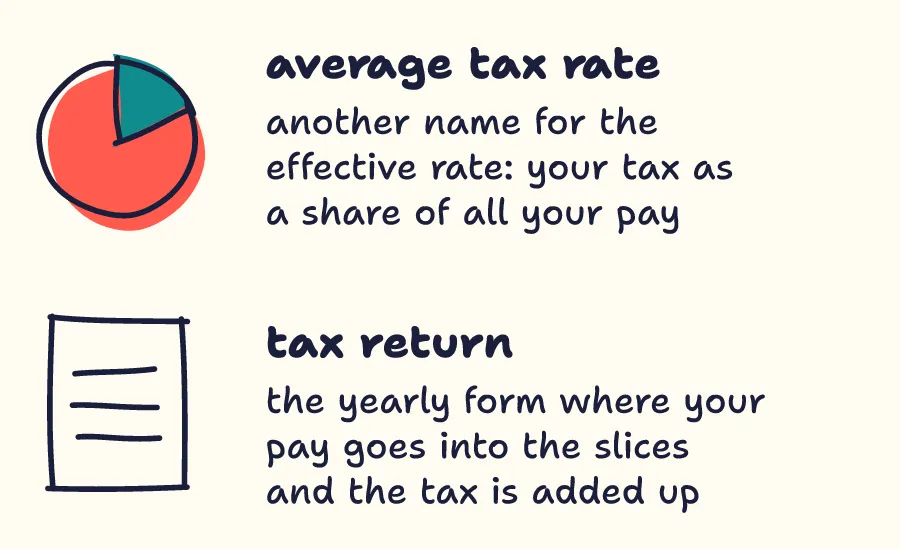
Two more names.