How does money laundering work? A simple example
Placement: how criminals get dirty cash into a bank
Banks report big cash deposits to the government. Yet huge amounts of cash from crime still end up in bank accounts every year. Where do criminals hide it?
-
1
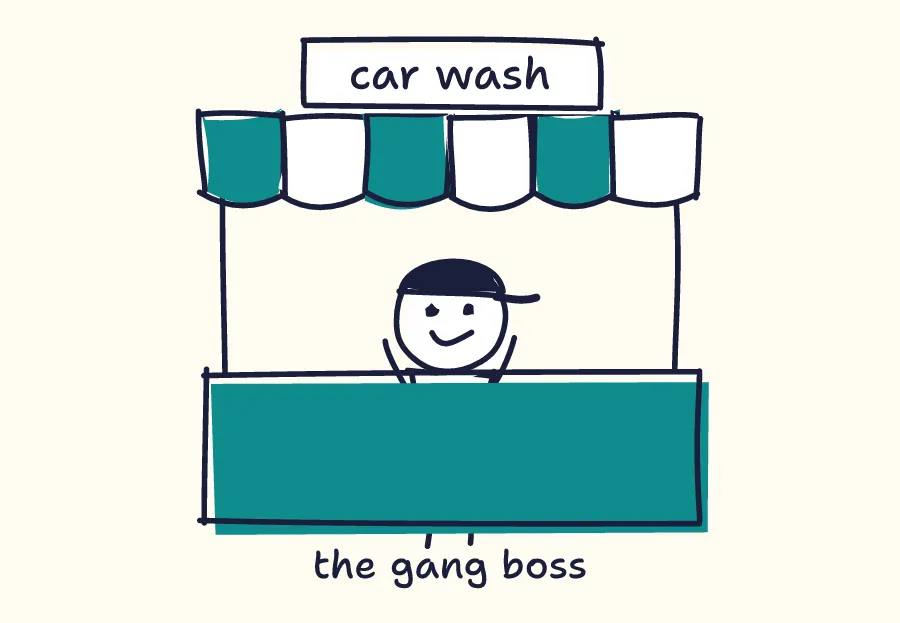
The gang boss has an idea. He buys a car wash. It is a real business, with real customers, and many of them pay in cash.
-
2
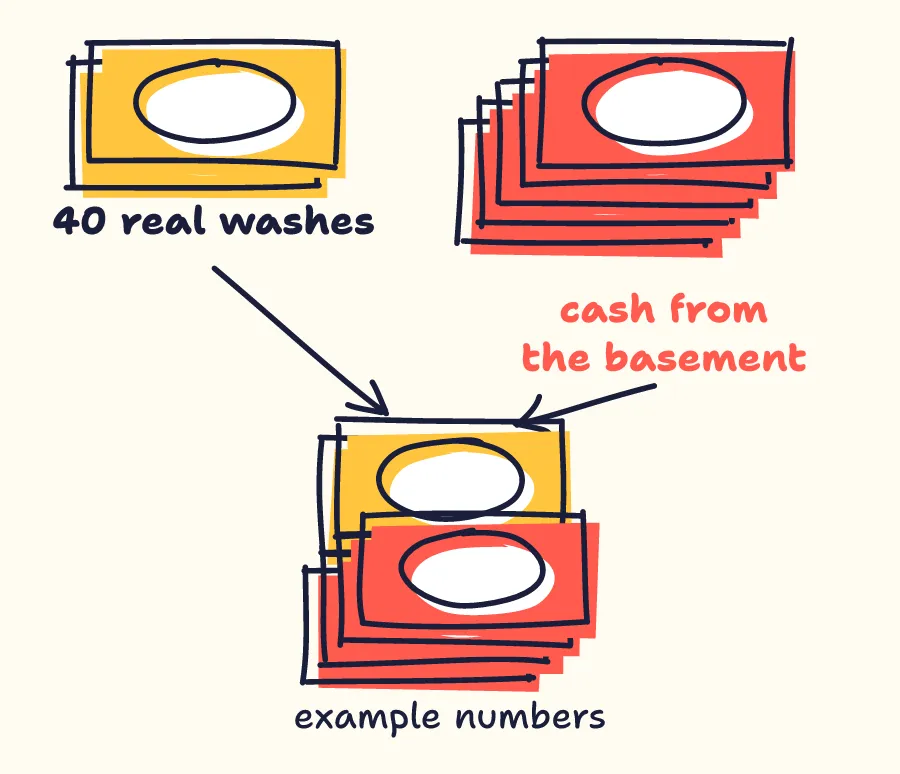
Today, 40 cars come in. At night, the boss counts the cash of 40 washes. Then he adds cash from his basement, as if 120 cars had come.
-
3
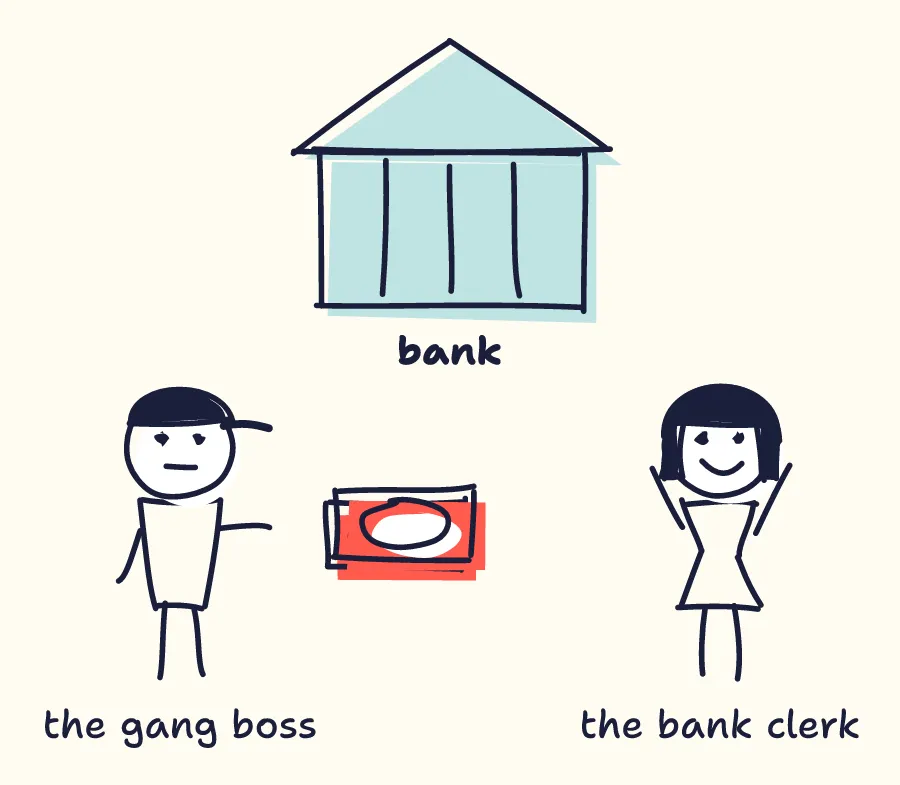
The next morning, he takes all the cash of the day to the bank of the car wash. A car wash that brings in cash is normal, so the bank clerk puts it in the account.
-
4
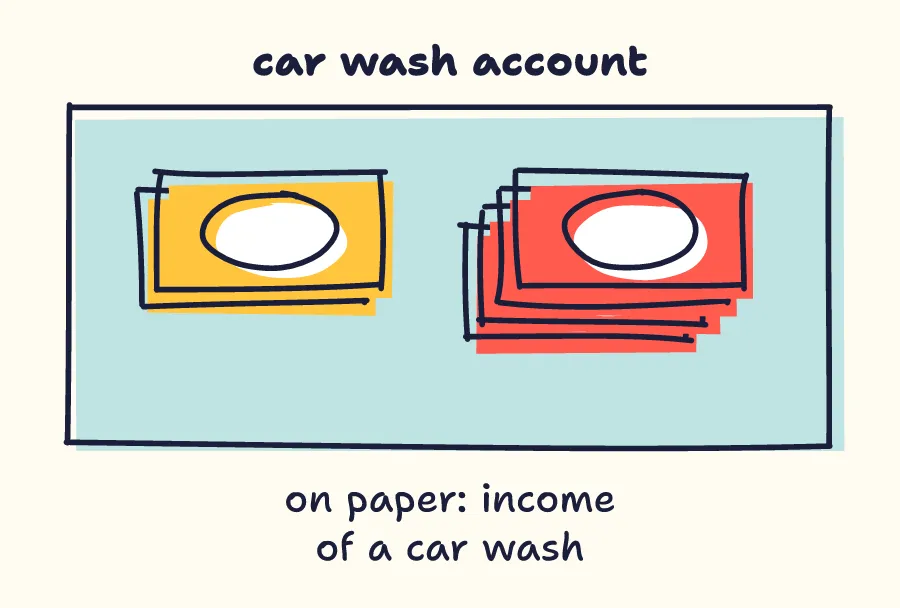
This first move is called placement: the dirty cash is now in a bank, mixed with real money. On paper, it is the income of a car wash. The car wash even pays tax on it.
-
5
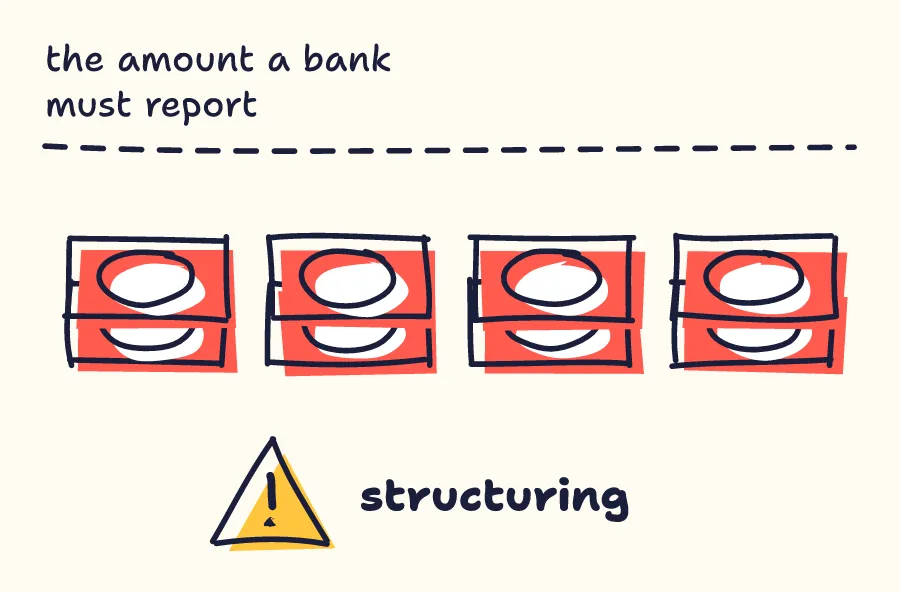
Some criminals try another way: many small deposits, each one under the amount a bank must report. This has a name, structuring, and it is a crime on its own. Banks look for it.
-
6
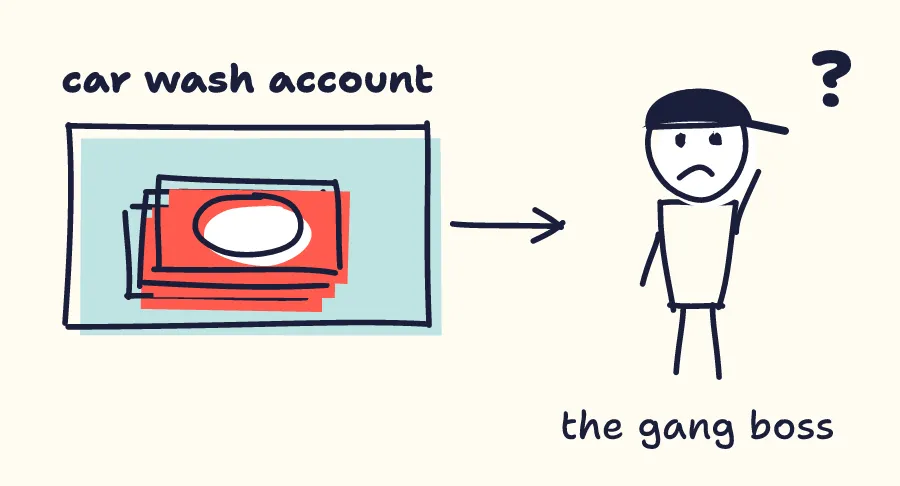
But the boss has a new problem. The money sits in the account of his own car wash, one short step from him. How can he move it so far that nobody can follow it, and still get it back?
-
Quick check
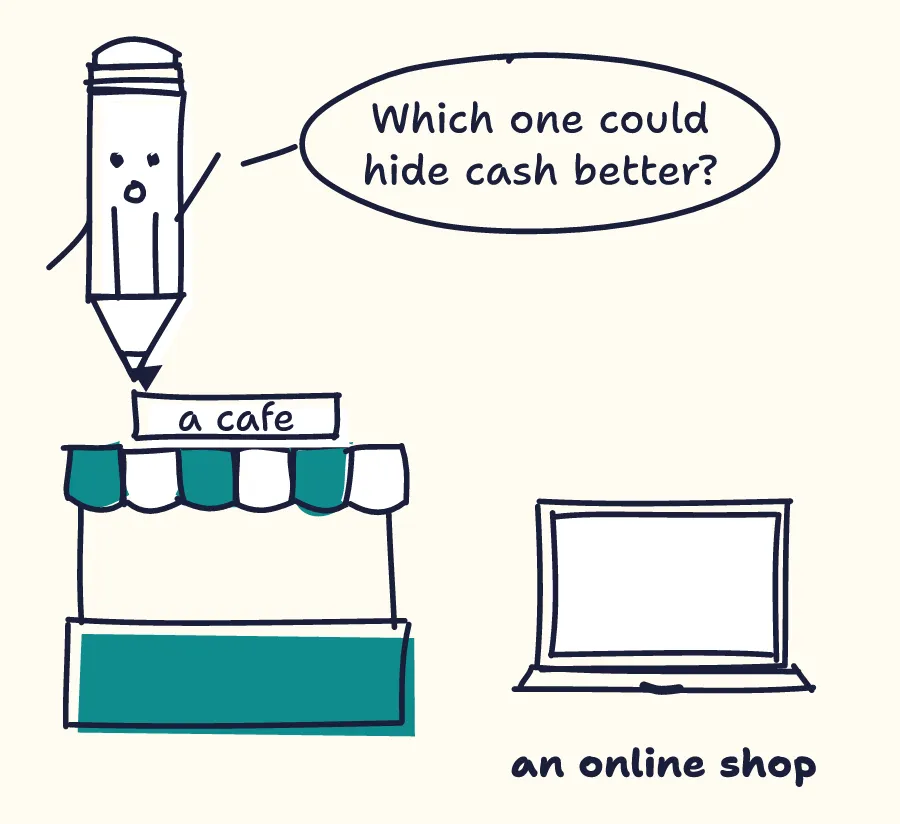
Two businesses.
Show the answer
The cafe. Many of its customers pay in cash, so a lot of cash fits its story. The online shop is paid by card, so a pile of cash would not fit at all.