How credit scores work: who decides you can be trusted with a loan
Why a good salary is not enough to get a credit card: what a credit score really measures
You can earn well, pay every bill, and still hear no from a bank. The reason is not your money. So what does a lender really look at before it lends?
-
1
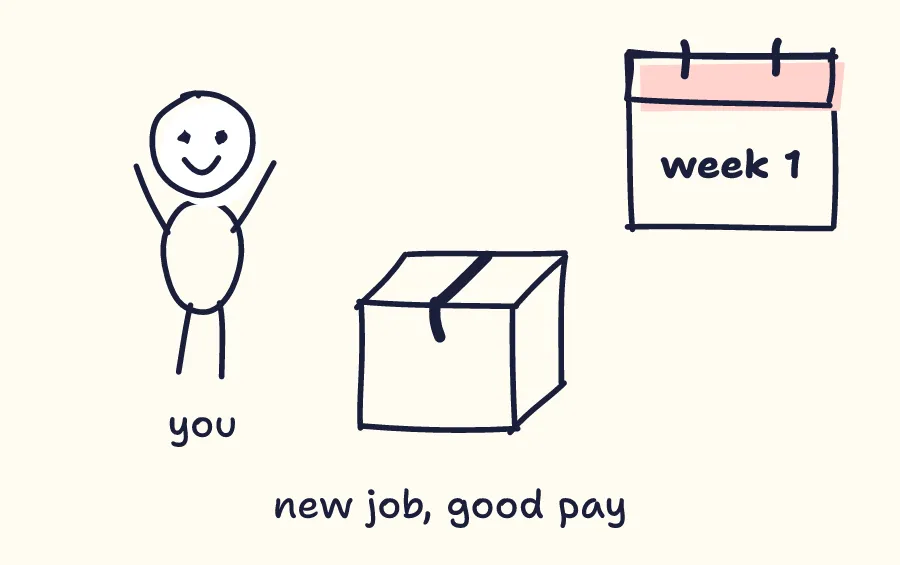
You move to the United States for a new job, with good pay. In your first week, you need a credit card. Here, it is hard to rent a car or book a hotel without one.
-
2
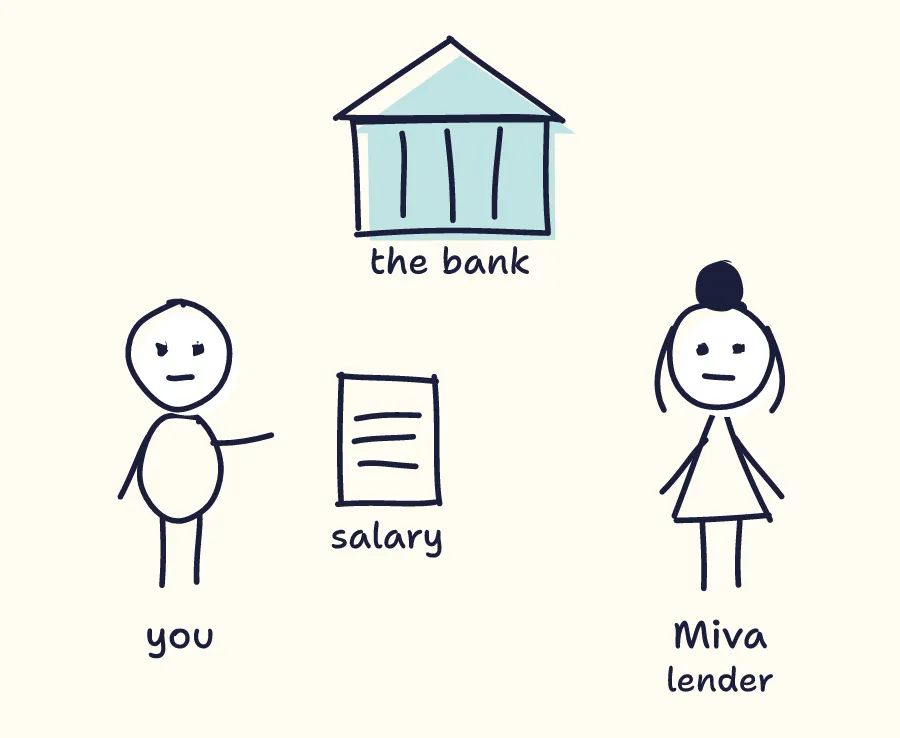
You go to a bank near your new home. Miva works there. She decides who the bank lends money to, so she is a lender. You show her your contract and your salary.
-
3
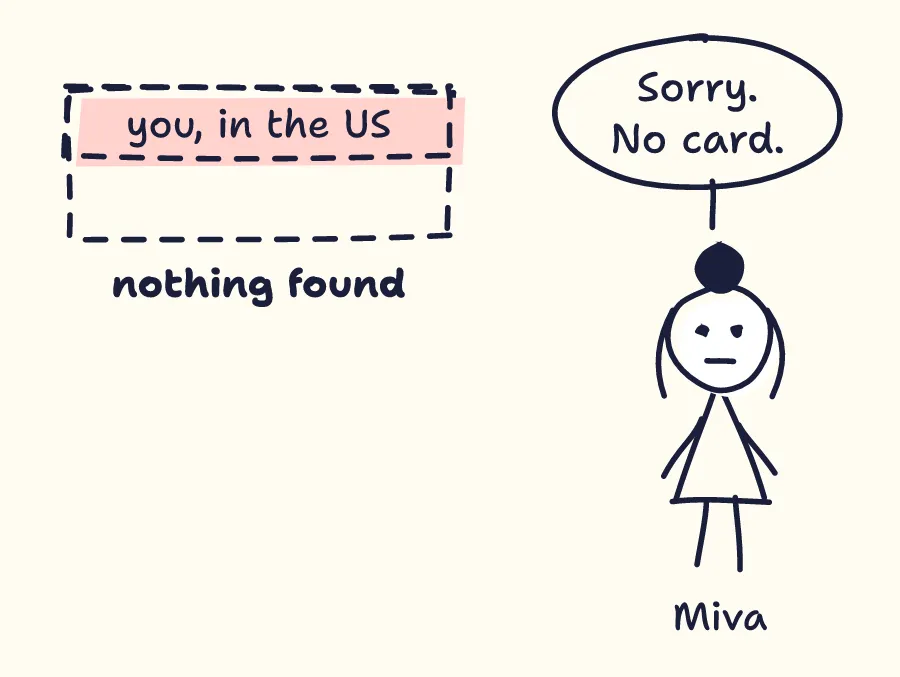
Miva types your name. Her screen finds nothing about you. Not a bad record: no record at all. So she says no.
-
4
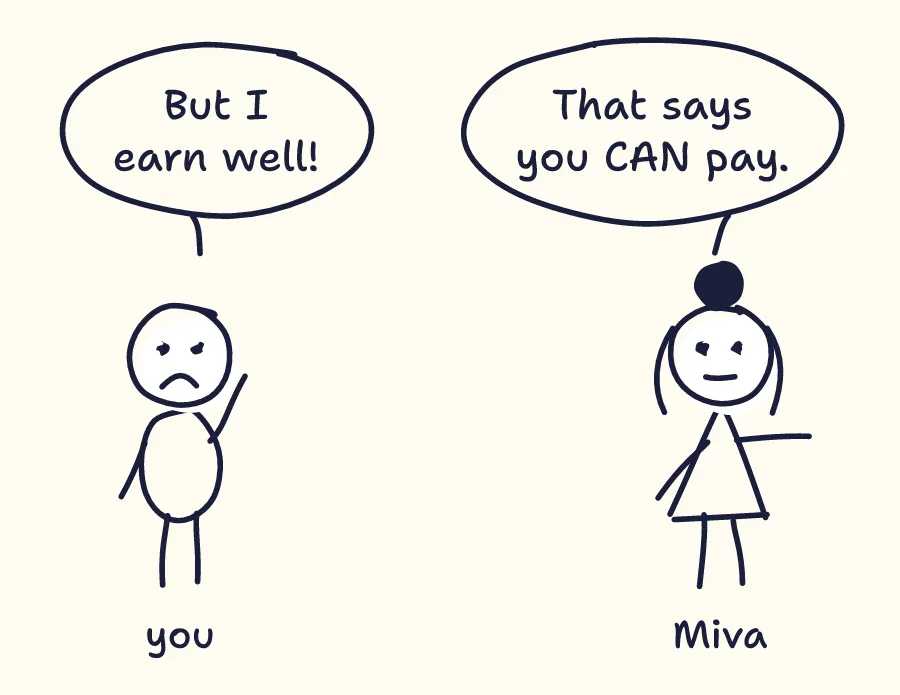
You point at your salary. Miva nods. A salary tells her that you can pay back. It does not tell her that you will.
-
5
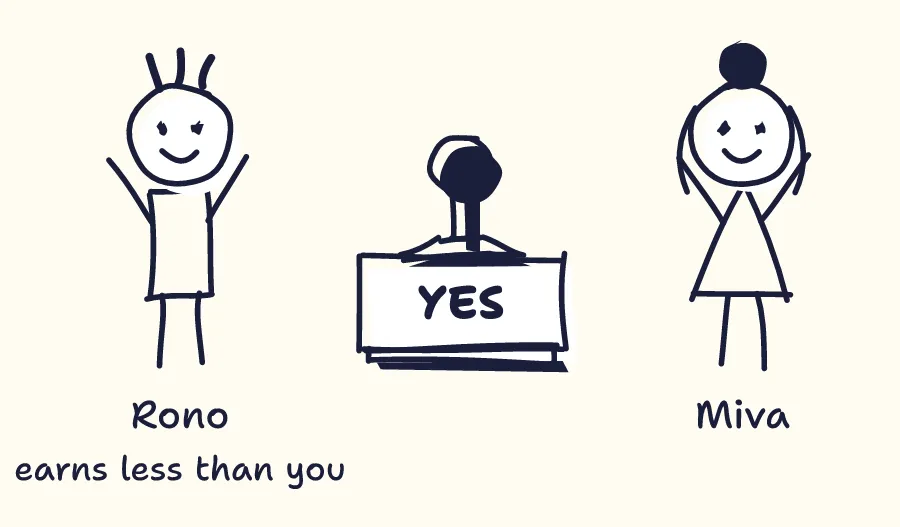
Then your new neighbour Rono walks in for a card too. He earns less than you. Miva looks at her screen and says yes in one minute.
-
6
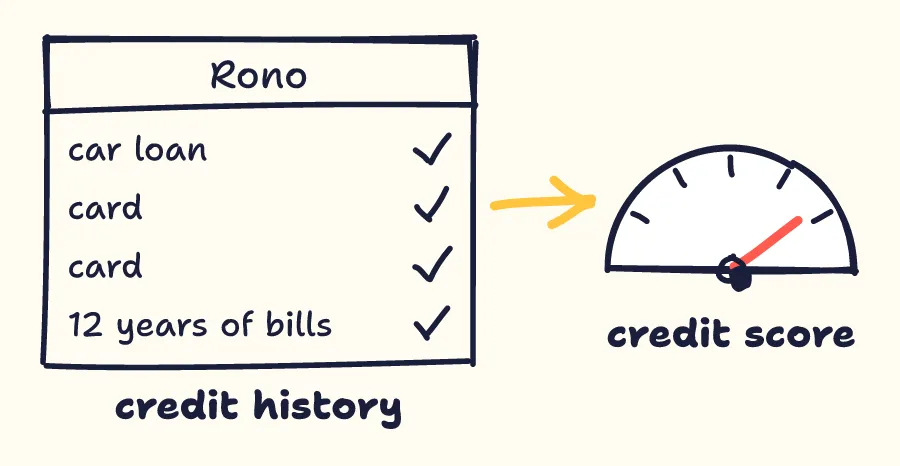
Rono has borrowed before: a car loan, two cards, 12 years of bills. He paid almost all of them on time. This record is his credit history. From it comes one number, his credit score.
-
7
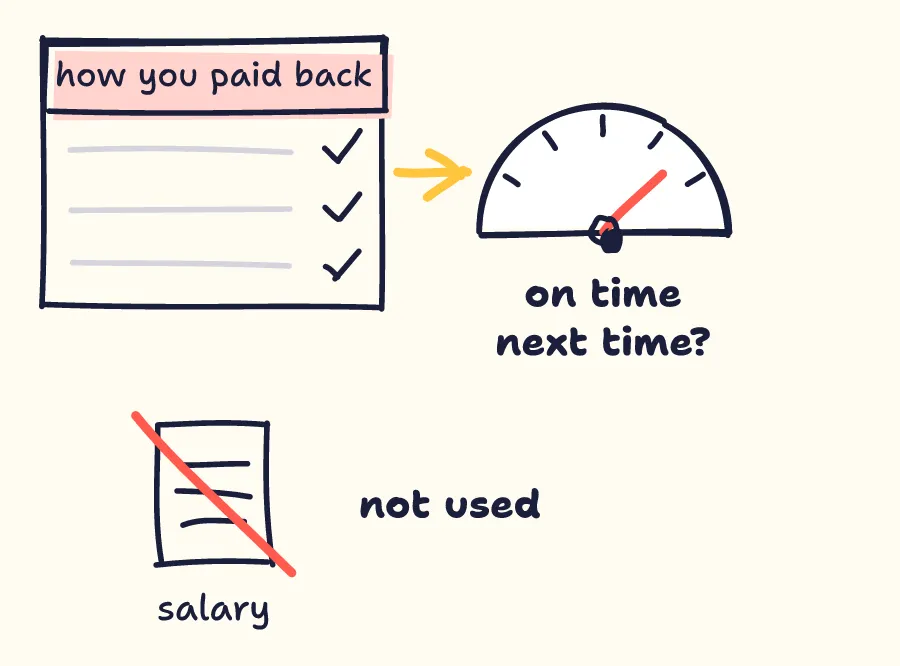
So a credit score is a guess about the future, made from the past. It looks at how you paid back money you borrowed, and guesses if you will pay on time again. Your salary is not even part of it.
-
8
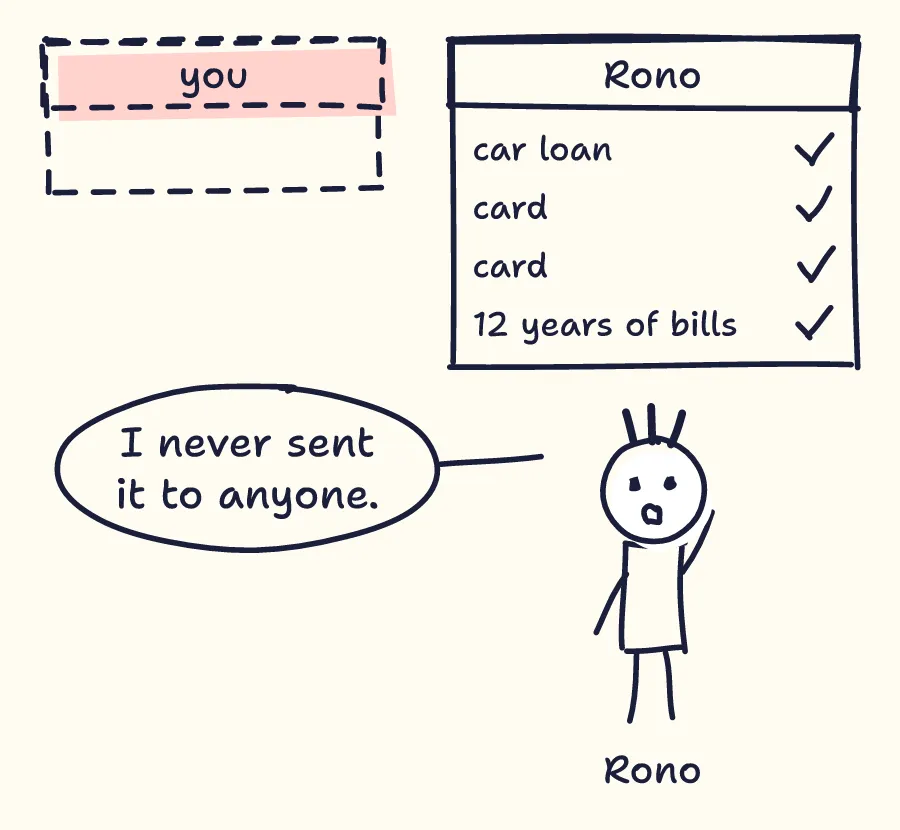
But Rono never gave anyone this record. He never filled in a form about his 12 years of bills. Yet Miva had all of it on her screen in seconds.
-
Go further
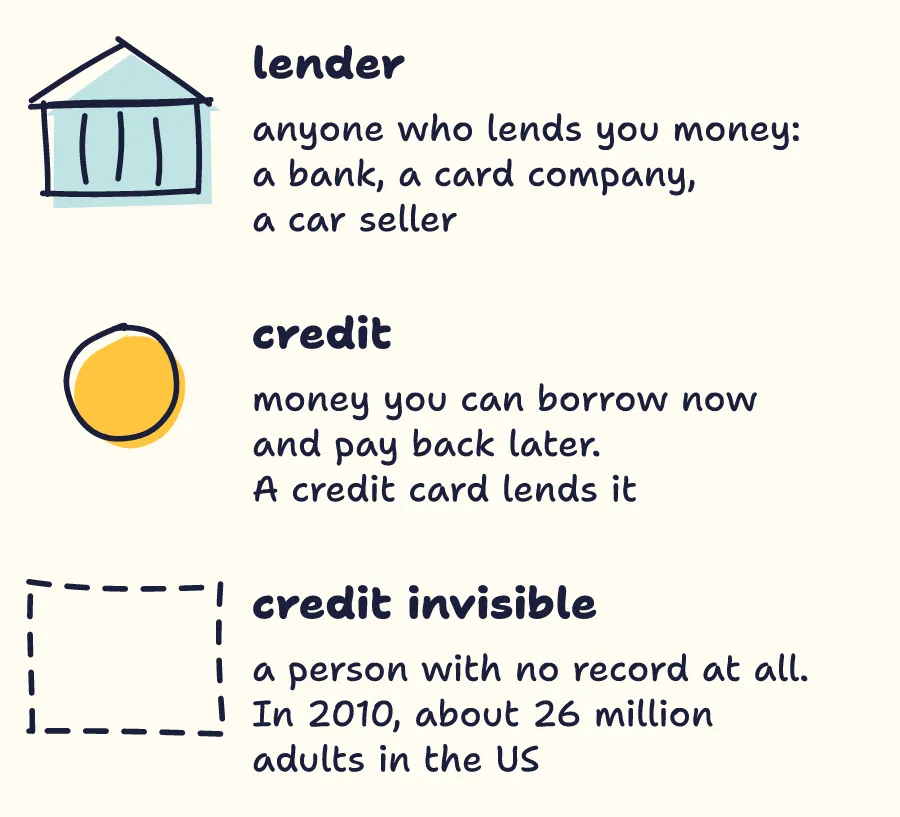
Three more words.