How credit scores work: who decides you can be trusted with a loan
Credit bureaus: the companies that keep a file on how you pay back loans
Somewhere, there is a file about every loan and card you ever had in the US, and you never filled it in. Who writes it, who reads it, and how does a newcomer get one?
-
1
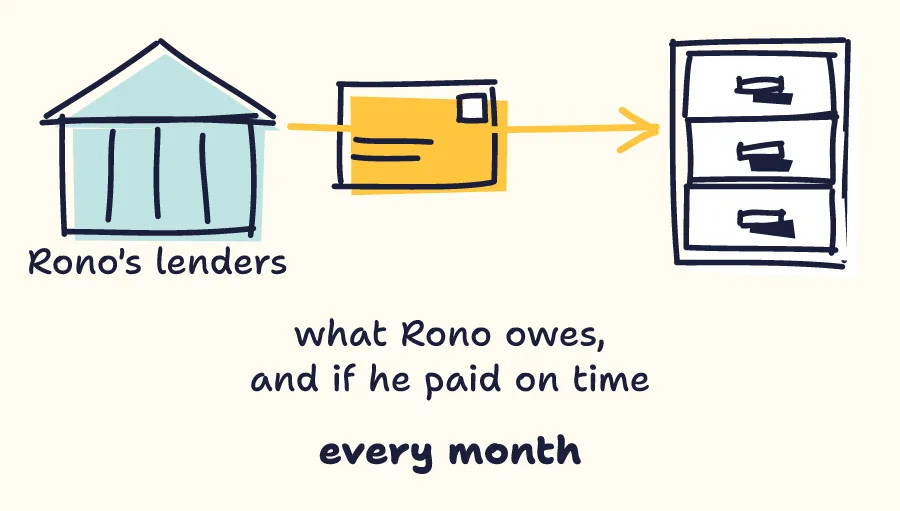
Here is how. Every month, each bank that lends to Rono sends a short note about him. It says how much he owes, and if he paid on time.
-
2
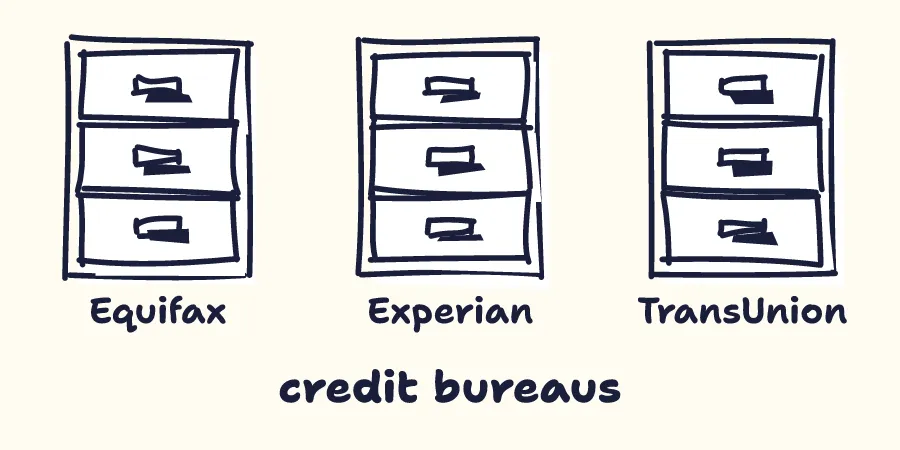
The notes go to three private companies: Equifax, Experian and TransUnion. They are called credit bureaus. Each one keeps a file on almost every adult who ever borrowed in the US.
-
3
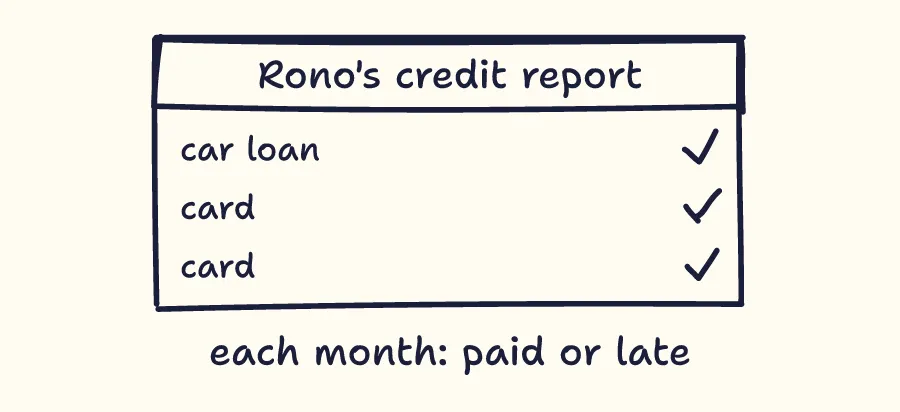
That file is called a credit report. Rono's holds his cards, his car loan, and a line for every month of each one: paid on time, or late.
-
4
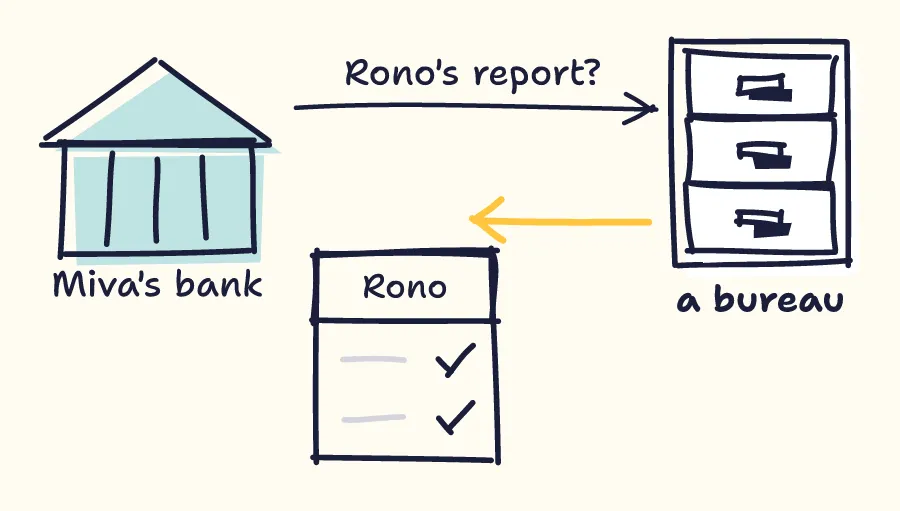
When Rono asked for his card, Miva's bank asked a bureau for his report. That is why it was on her screen in seconds. Rono did not have to bring a thing.
-
5
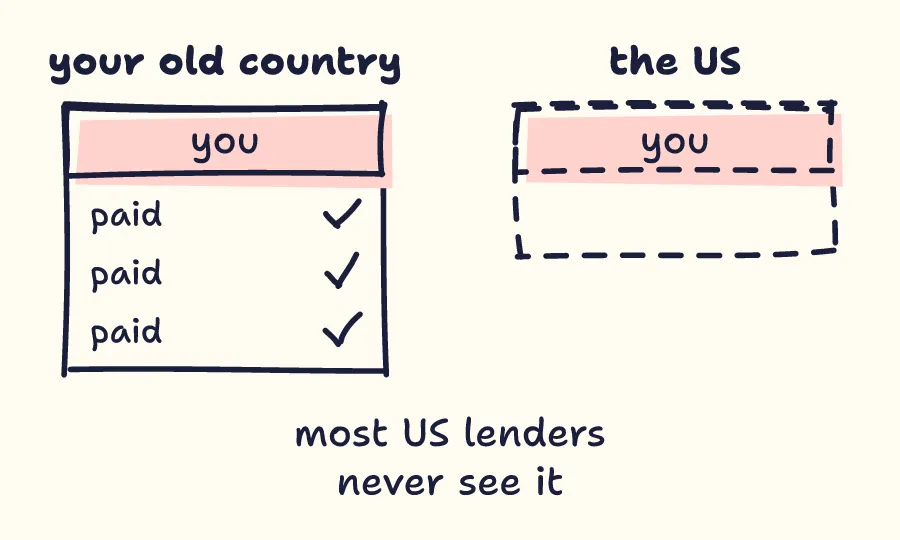
Your old country may keep a file on you too. But most US lenders never see it. In the US, your file starts empty.
-
6
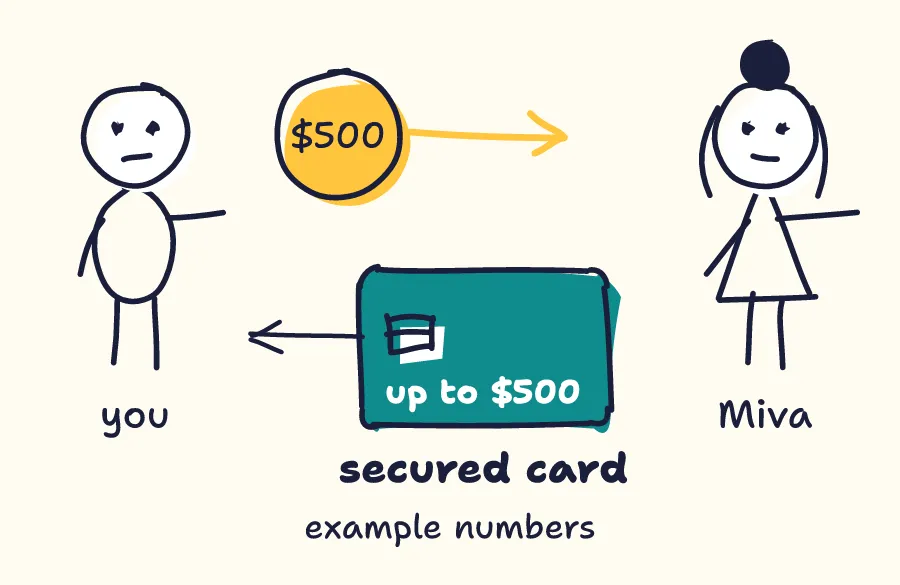
Miva knows a way in. You leave $500 at the bank, and she gives you a card that can borrow up to $500. It is called a secured card. If you never pay, the bank keeps your $500.
-
7
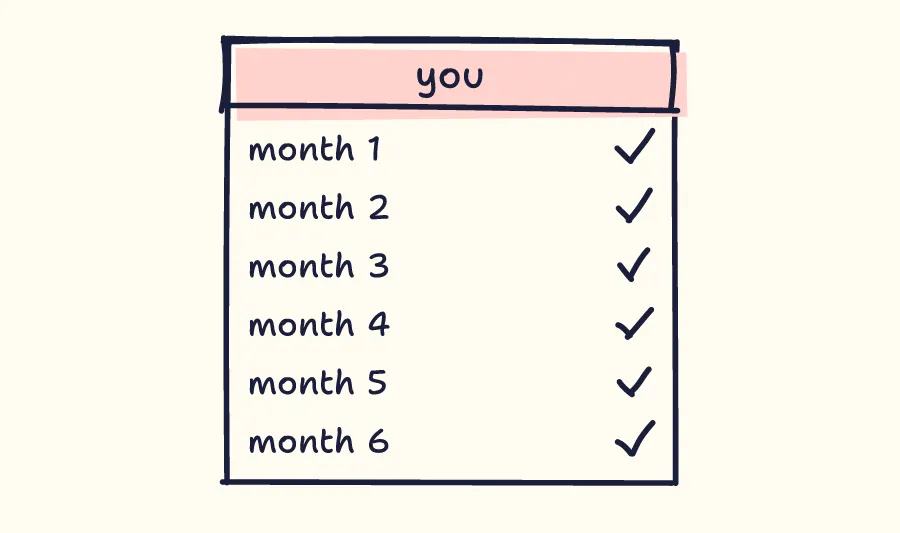
Now your card company sends notes about you too. You pay each bill on time. Month after month, your empty file gets its first lines.
-
8

After six months, Miva's computer turns your few lines into one number between 300 and 850. But how does it pick the number? And which line of a file can pull it down the most?
-
Quick check
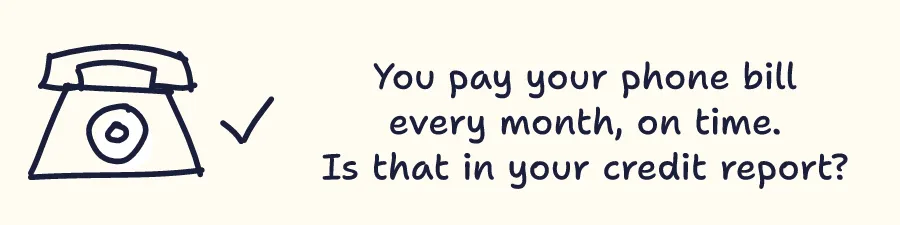
A phone bill.
Show the answer
Most of the time, no. Phone and power companies do not lend you money, so most of them send a note to a bureau only when a bill stays unpaid for a long time.
-
Go further
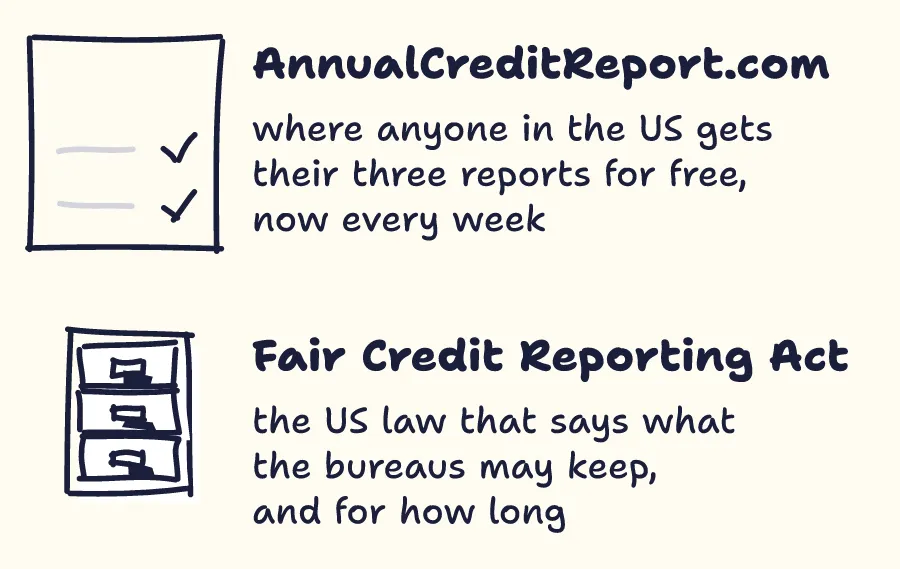
Two more names.