Why can you remember that you forgot something, but not what it was?
The feeling of knowing: how your brain knows it knows before it finds the answer
You see a face on the bus and you are sure you have met this man. His name, his job, the place? Nothing. How can a memory feel sure and be empty at the same time?
-
1
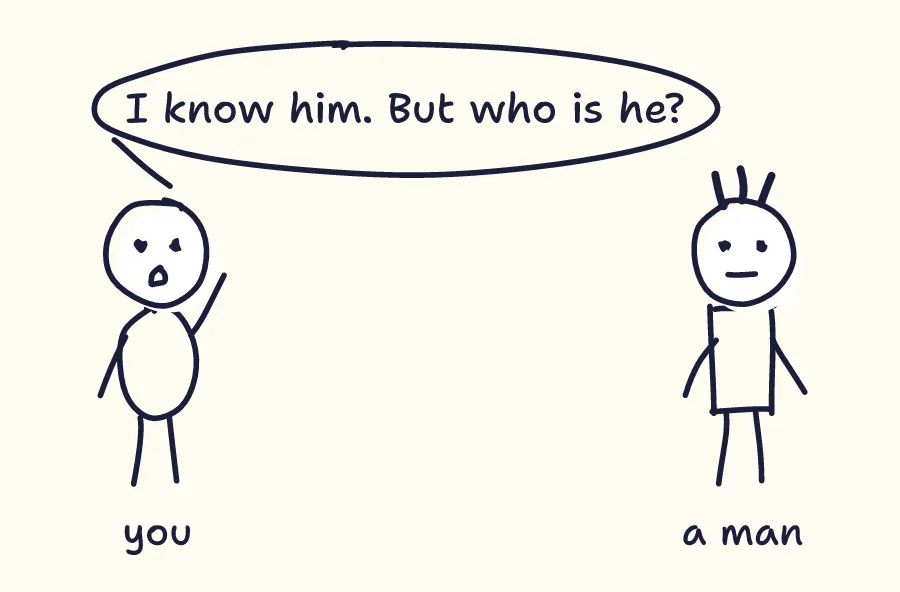
Think of another day. You sit on a bus. A man gets on, and at once you feel it: you know him. But who is he? You have no idea.
-
2

Your brain starts to look. Is he from work? From school? A neighbour? Each guess feels wrong, and still the feeling of "I know him" does not go away.
-
3
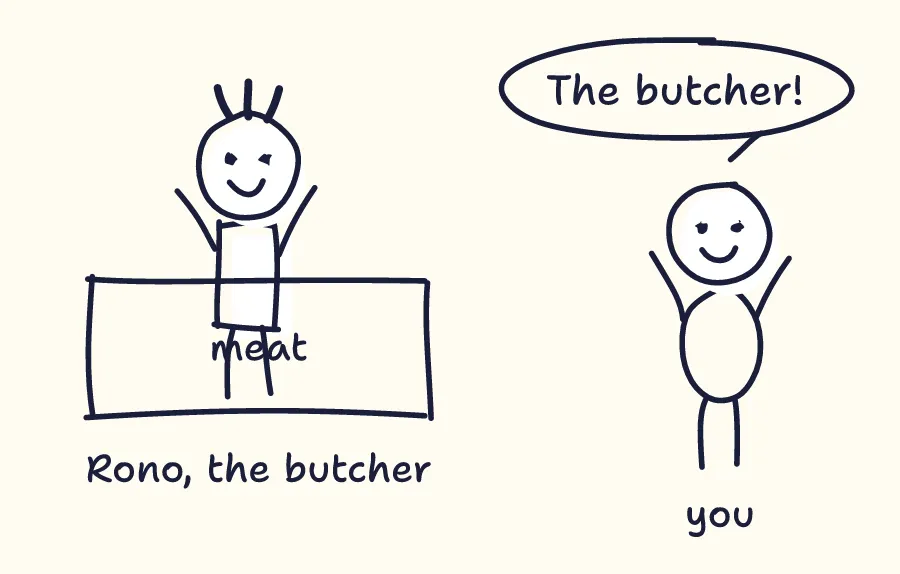
Then it comes: he is Rono, the butcher where you buy your meat! You always see him behind his counter, never on a bus. In 1980, the psychologist George Mandler told the same kind of story, with a butcher on a bus.
-
4
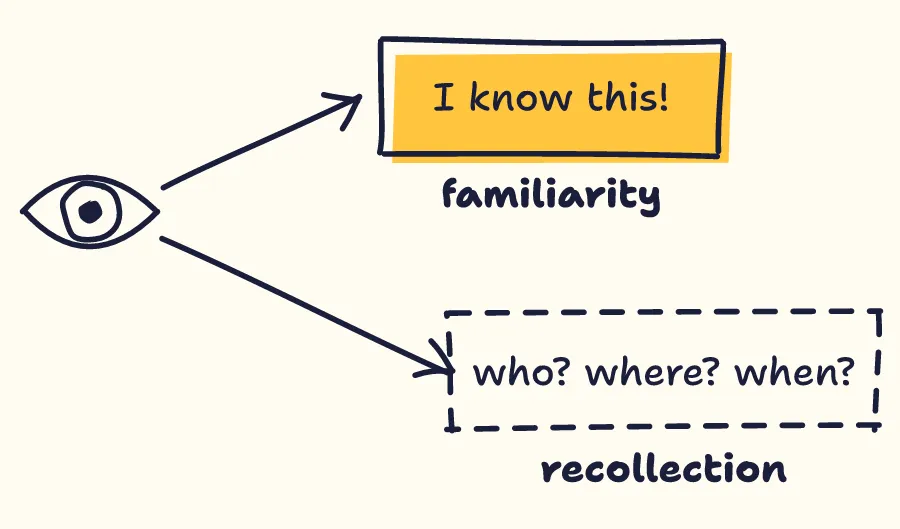
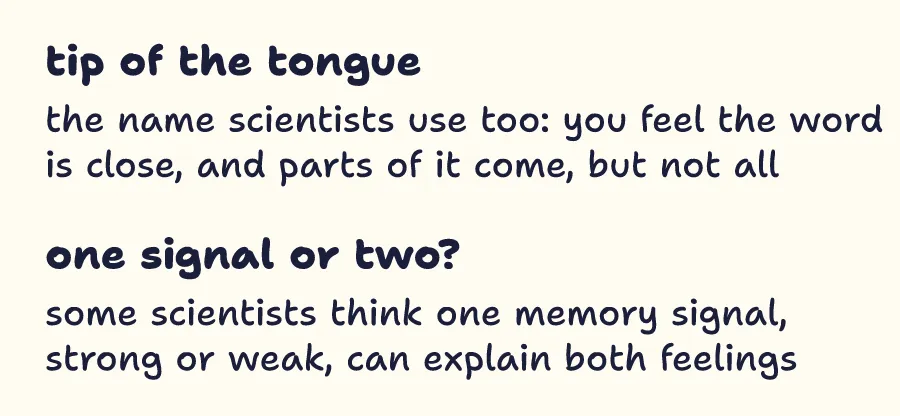
Mandler saw two jobs in it. One job is fast: a feeling that says "I know this". The other job is slow: a search for who, where and when. Scientists call them familiarity and recollection, and the fast one can arrive alone.
-
5
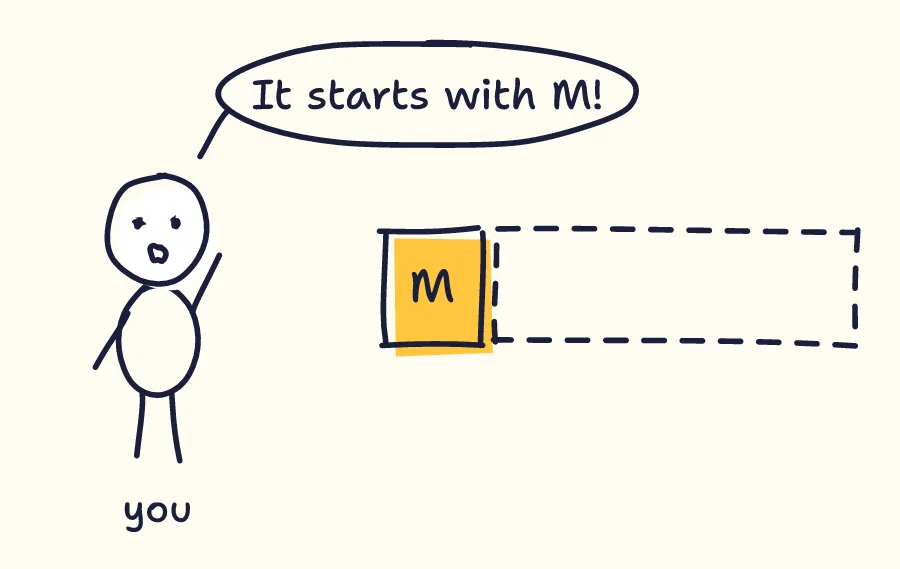
The same split happens with a word on the tip of your tongue. Scientists call this the feeling of knowing: you are sure you know it, before you find it. In a 1966 study, people in that state could often guess the first letter of the word, and how many syllables it had. The word itself would not come.
-
6
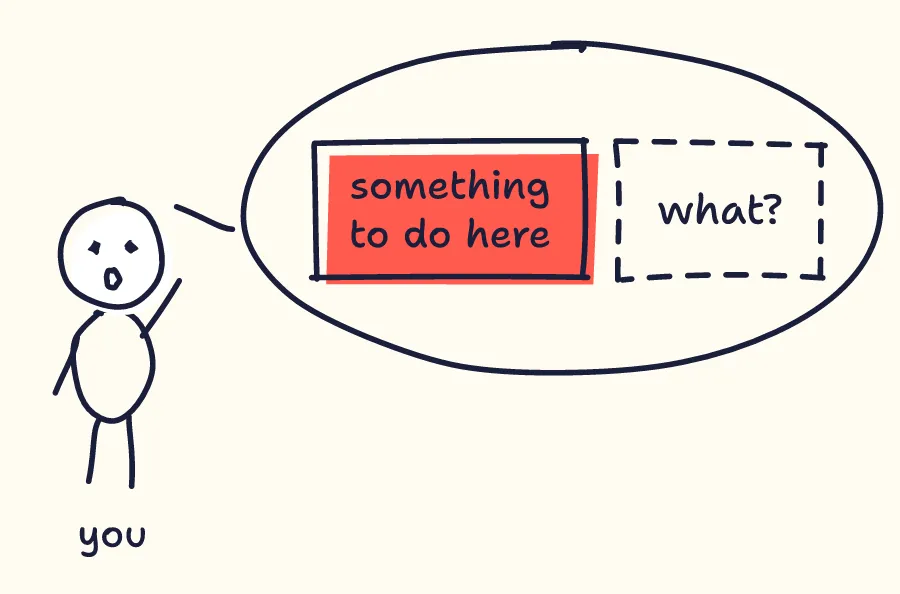
So in the kitchen, the "something" was the fast feeling. But you did not even need a search there: ten seconds before, "scissors" was right in your head. What took it away between the sofa and the kitchen?
-
Quick check
A song on the radio.
Show the answer
Familiarity, the fast feeling of "I know this". Recollection, the slow search for the name, has not found it yet.
-
Go further
Two more names.