Why can't you talk when you hear your own voice with a delay?
How your ears check your own voice while you talk
In a noisy bar, people start to shout, and none of them decided to. That small fact says something big about how you talk. What are your ears doing while your mouth works?
-
1
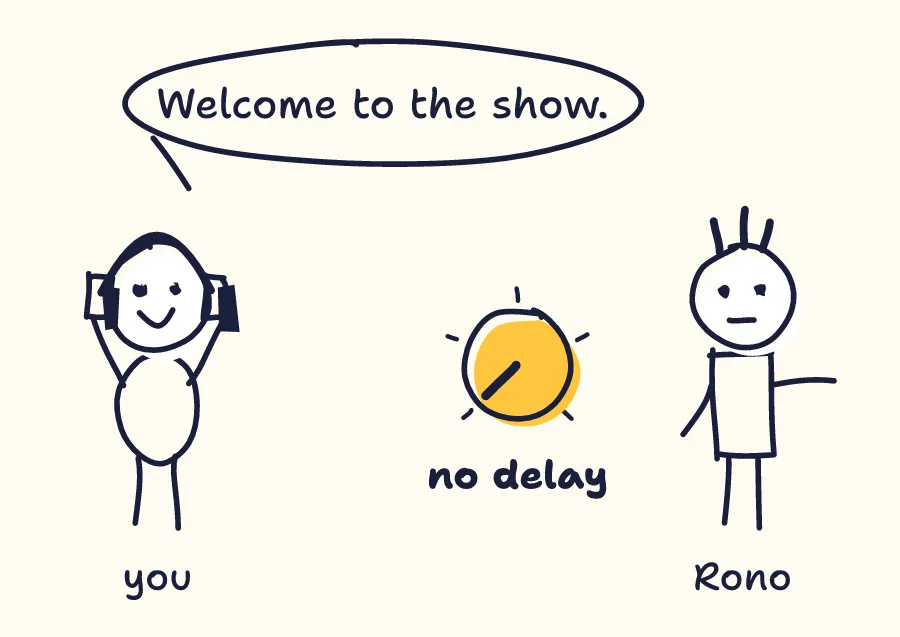
Rono turns the knob back to zero, and at once you speak well again. So your ears take part in talking. But what are they doing in there?
-
2
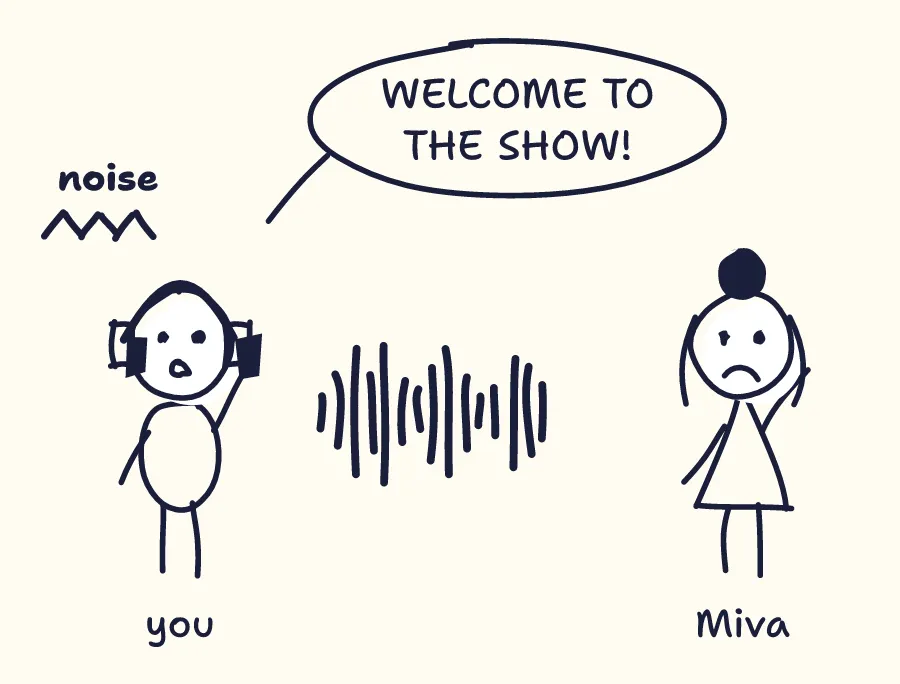
Next, loud noise fills your headphones while you read the same line. Rono is playing it from his desk. Your voice gets louder and louder. You never chose to. Miva has to cover her ears.
-
3
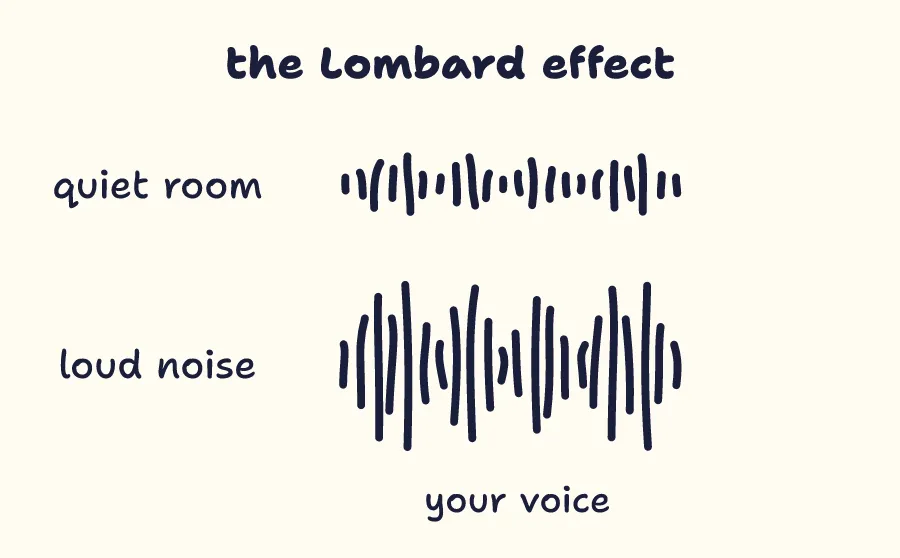
This has a name: the Lombard effect, after a French doctor who saw it more than 100 years ago. It is why everyone shouts in a noisy bar, then talks softly again when the music stops.
-
4
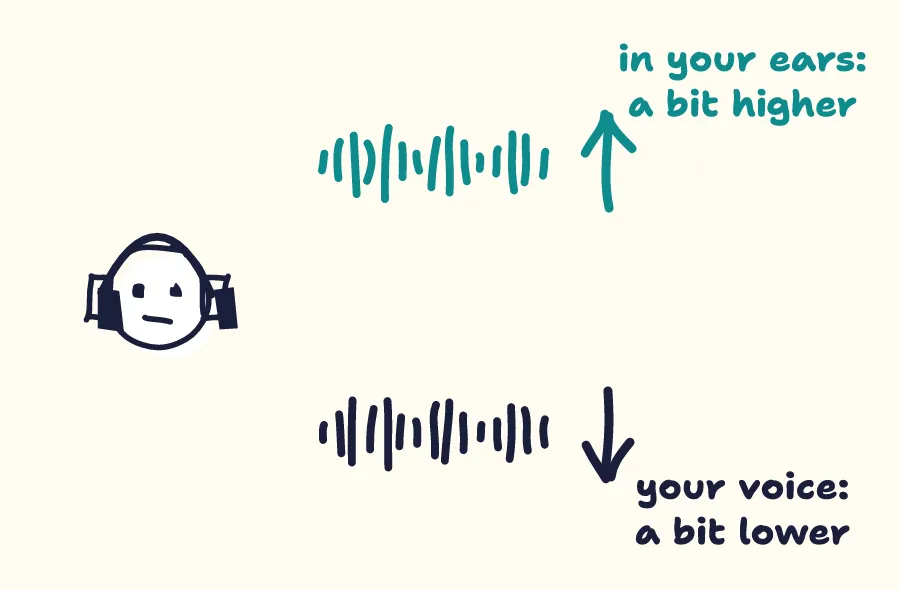
Then Rono makes your voice in the headphones sound a little higher than it really is. You do not notice a thing. But within a fraction of a second, your voice goes a little lower, as if to fix it. Scientists have measured this in many people.
-
5
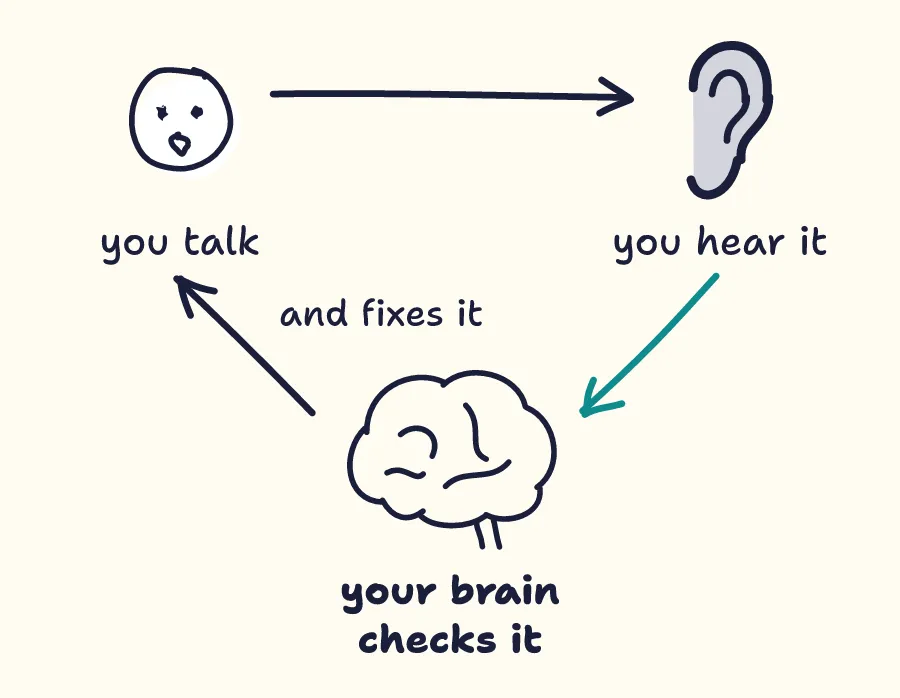
So all the time you talk, your brain listens to your own voice and checks it. Too quiet? Louder. Too high? Lower. Scientists call this auditory feedback, and it works so fast that you never feel it.
-
6
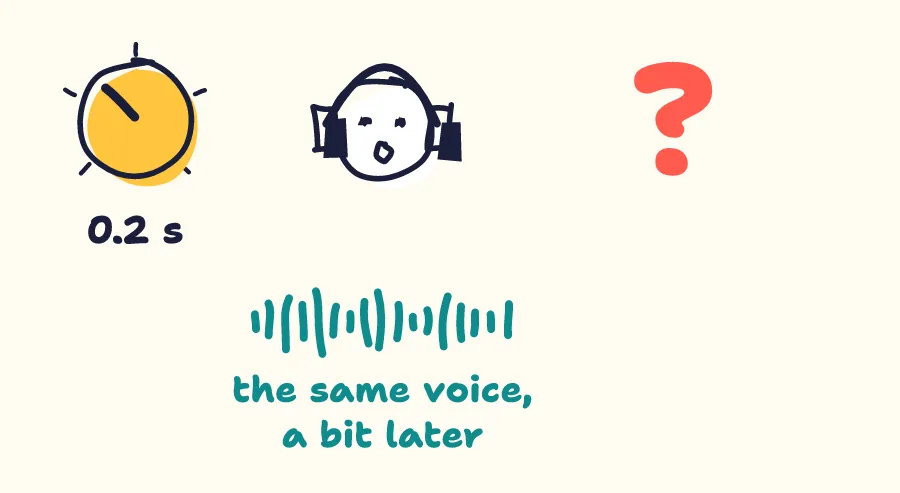
But a check should make your speech better, not worse. With the delay, your brain got the very same voice, only a little later. Why would that break your speech, when your brain could just ignore it?
-
Quick check

Loud music in your headphones.
Show the answer
You talk louder than you think. The music covers your own voice, so your brain turns your voice up, and your friend hears you almost shout.
-
Go further
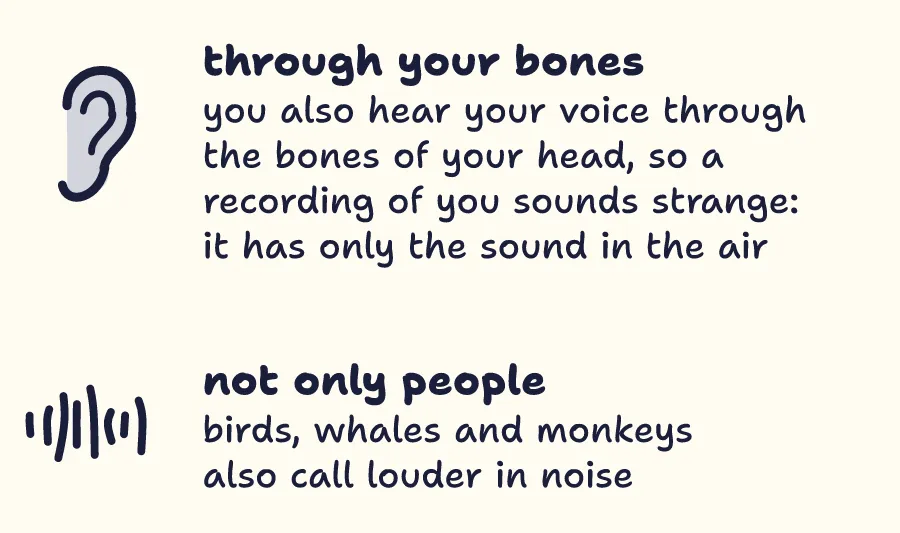
Two more things your ears do.