You are signed in. Close

You are signed out. Close

Thank you. Your subscription has started. Close

Thank you. You will get an email when a new comic comes out. Close

Almost done. Check your inbox and press the button in our email to confirm. Close

We could not check that you are a person. Please try again. Close

We could not confirm your payment. If you paid, use the link "Sign in" at the bottom of the page. Close

Something went wrong on our side. Please try again in a moment. Close

Previous episode Context in an AI prompt: why a few details change the whole answer

Prompt engineering: why the same question gets a better answer when you ask it well

Few-shot prompting: how two examples teach an AI chatbot a new style

Paste two examples into an AI chatbot, ask for nothing, and it writes a third one in the same style. Nobody explained the style, and the model is not changed by it. How can it learn so fast?

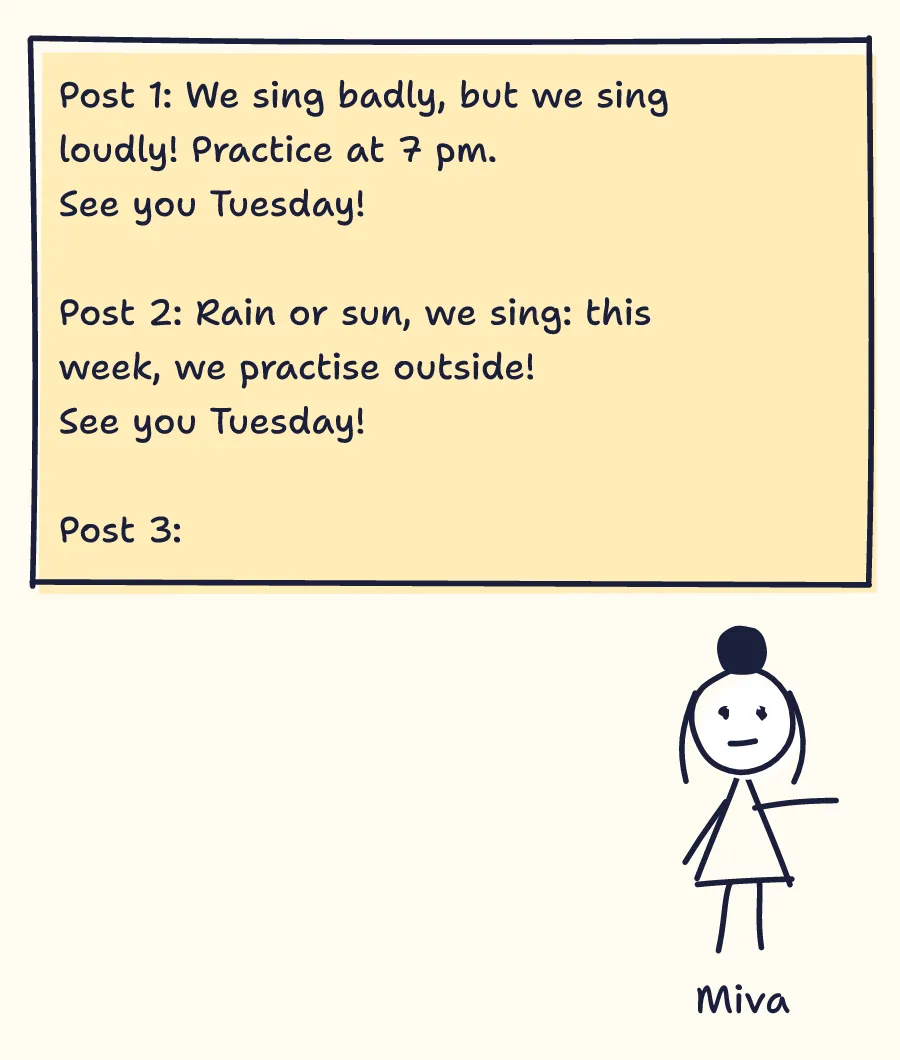
  1. 1 Here is what Miva pastes into the chatbot: two of her old posts for the choir, then "Post 3:" and nothing after it. She asks for nothing. She does not say what the post is about.

    Here is what Miva pastes into the chatbot: two of her old posts for the choir, then "Post 3:" and nothing after it. She asks for nothing. She does not say what the post is about.

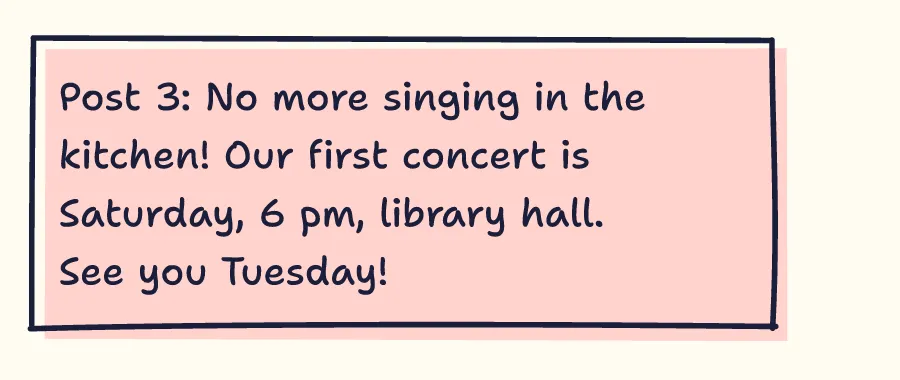
  2. 2 The model writes post 3 about the concert. It opens with a music joke and ends with "See you Tuesday!", like hers. Nobody wrote "use a joke". Nobody wrote "end like this".

    The model writes post 3 about the concert. It opens with a music joke and ends with "See you Tuesday!", like hers. Nobody wrote "use a joke". Nobody wrote "end like this".

The rest of this episode is for subscribers

4 episodes left in this comic, up to “Why no prompt trick makes an AI chatbot know something new”.

Subscribe to read every premium episode. You can cancel when you want.

Paid yearly: $99 instead of $119.88

Next episode Role prompts: what "you are an expert" really changes in an AI answer

Share this comic

More comics