You are signed in. Close

You are signed out. Close

Thank you. Your subscription has started. Close

Thank you. You will get an email when a new comic comes out. Close

Almost done. Check your inbox and press the button in our email to confirm. Close

We could not check that you are a person. Please try again. Close

We could not confirm your payment. If you paid, use the link "Sign in" at the bottom of the page. Close

Something went wrong on our side. Please try again in a moment. Close

Previous episode 2 and 20: how hedge fund managers get paid, even in a losing year

What is a hedge fund, and what does it actually do?

LTCM: how borrowed money nearly sank a hedge fund run by Nobel winners

In 1998, a hedge fund run by star traders and two Nobel winners lost 44% of its money in one month, and 14 banks had to step in. How can such a smart fund fall so fast?

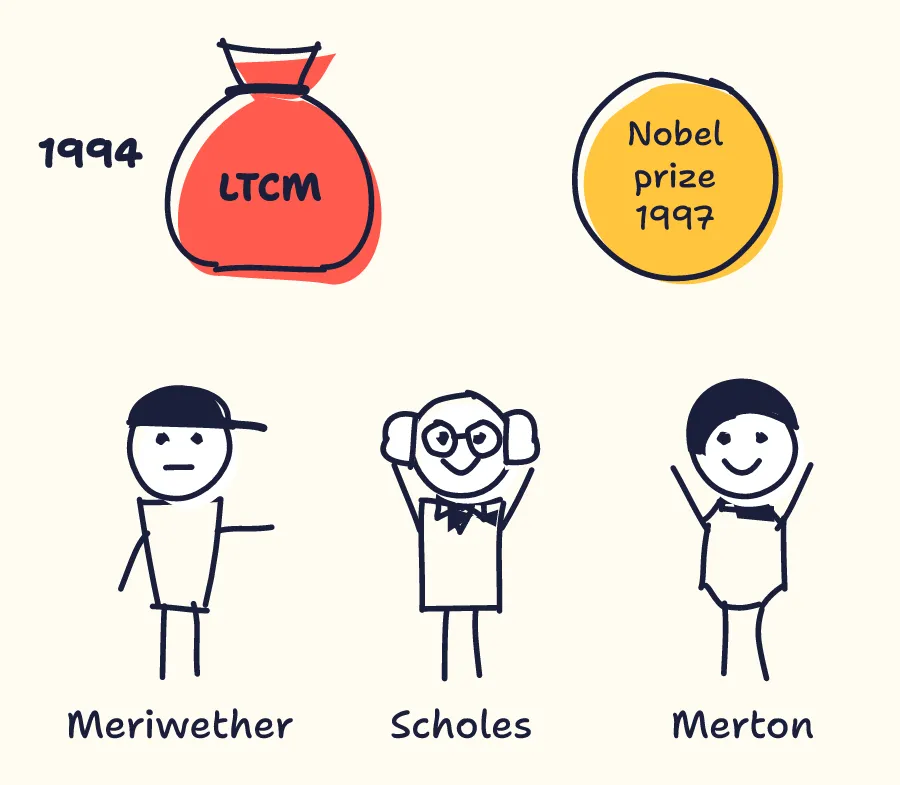
  1. 1 In 1994, John Meriwether, a famous bond trader (someone who buys and sells loans made to governments and companies), opened a hedge fund called Long-Term Capital Management, or LTCM. Its partners included top professors. In 1997, two of them, Myron Scholes and Robert Merton, won the Nobel prize in economics.

    In 1994, John Meriwether, a famous bond trader (someone who buys and sells loans made to governments and companies), opened a hedge fund called Long-Term Capital Management, or LTCM. Its partners included top professors. In 1997, two of them, Myron Scholes and Robert Merton, won the Nobel prize in economics.

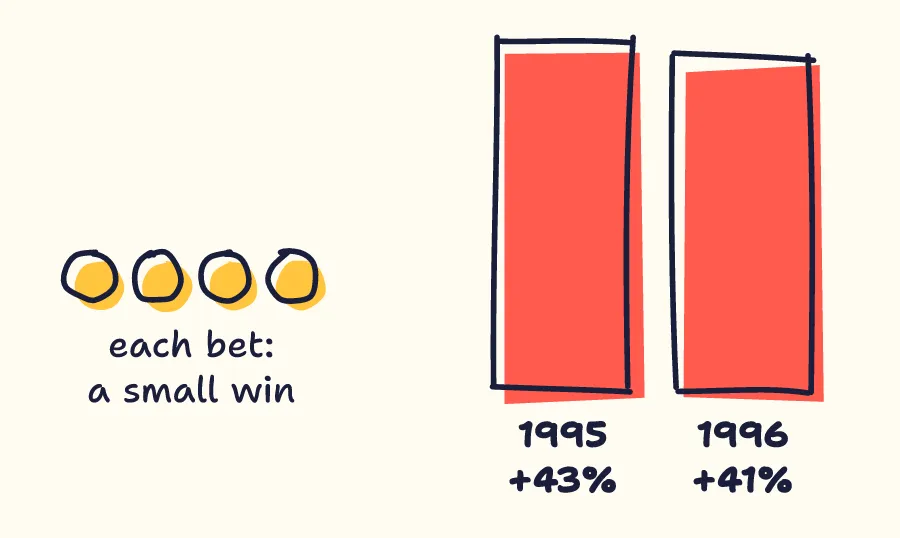
  2. 2 Each of its bets was careful, and each one won only a little. Yet the fund grew by more than 40% in 1995, and again in 1996. Something made each small win much bigger.

    Each of its bets was careful, and each one won only a little. Yet the fund grew by more than 40% in 1995, and again in 1996. Something made each small win much bigger.

The rest of this episode is for subscribers

2 episodes left in this comic, up to “GameStop 2021: how a short squeeze cost a hedge fund half its money”.

Subscribe to read every premium episode. You can cancel when you want.

Paid yearly: $99 instead of $119.88

Next episode GameStop 2021: how a short squeeze cost a hedge fund half its money

Share this comic

More comics