How mortgages work: why you can pay back twice the price of the house
Mortgage interest: why you pay back far more than you borrowed
A 30-year home loan can cost more than twice the price written on the house. There is no hidden fee and no trick. So where does all that extra money come from?
-
1
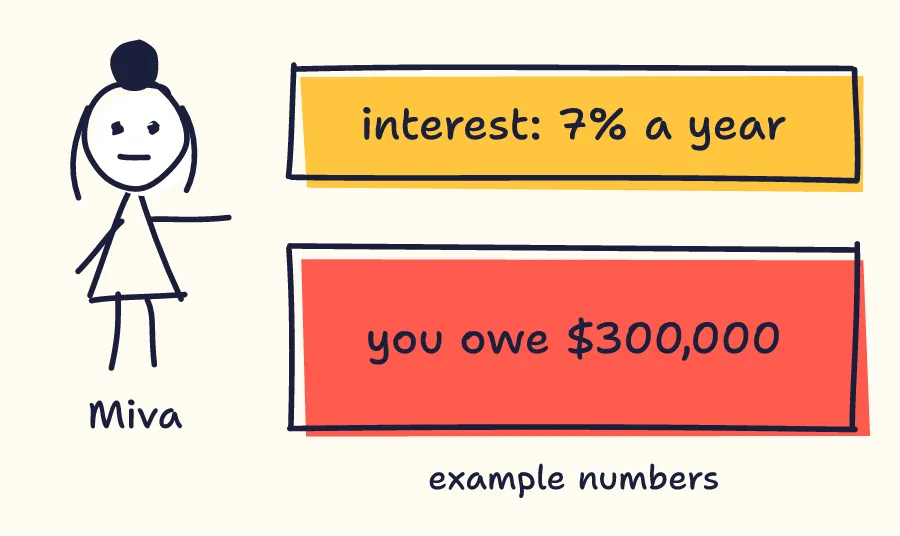
Miva's bank does not lend for free. It charges interest: 7% a year on the money you still owe. On the first day, you still owe all of it.
-
2
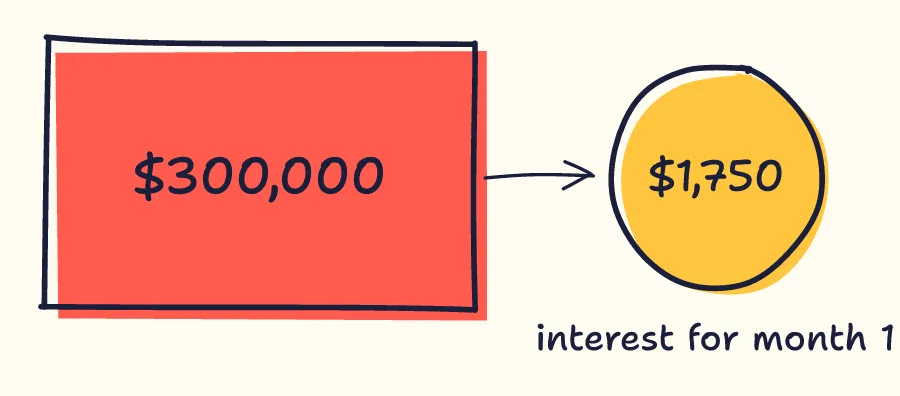
Each month, the bank takes one twelfth of that 7%. On $300,000, the first month's interest alone is $1,750. It is the price of using the bank's money for one month, and it is charged again every month, on whatever you still owe.
-
3
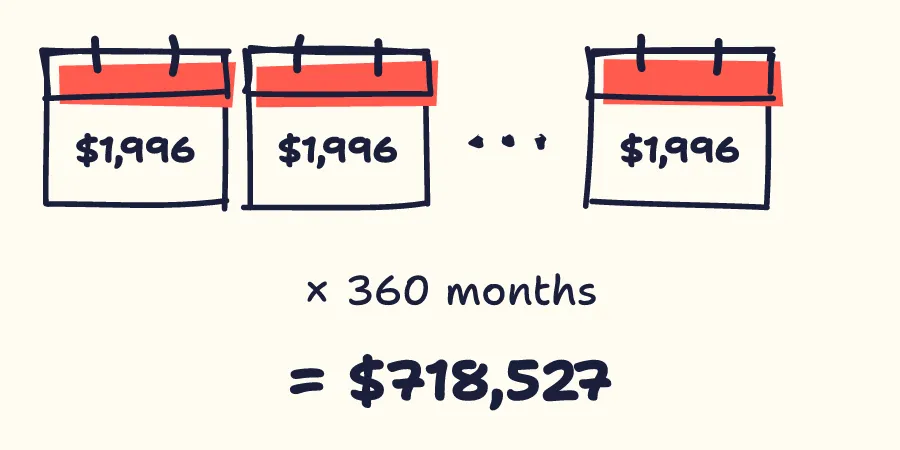
The bank sets your payment so that the loan is gone in exactly 30 years: $1,996 a month, the same every month. Add up all 360 payments, and you get $718,527.
-
4
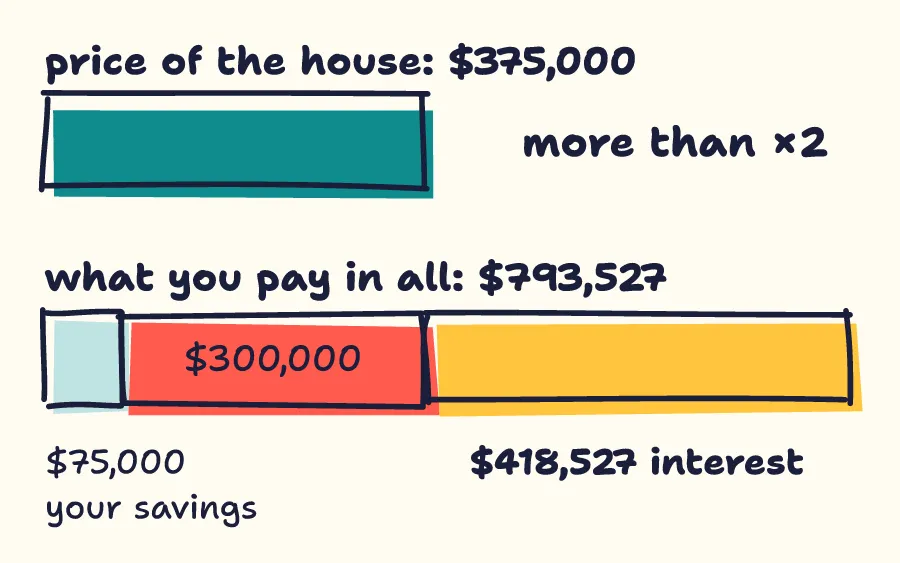
Now add the $75,000 you paid on day one. In the end, the house costs you $793,527. That is more than twice its price. The extra $418,527 is interest, more than the whole loan.
-
5
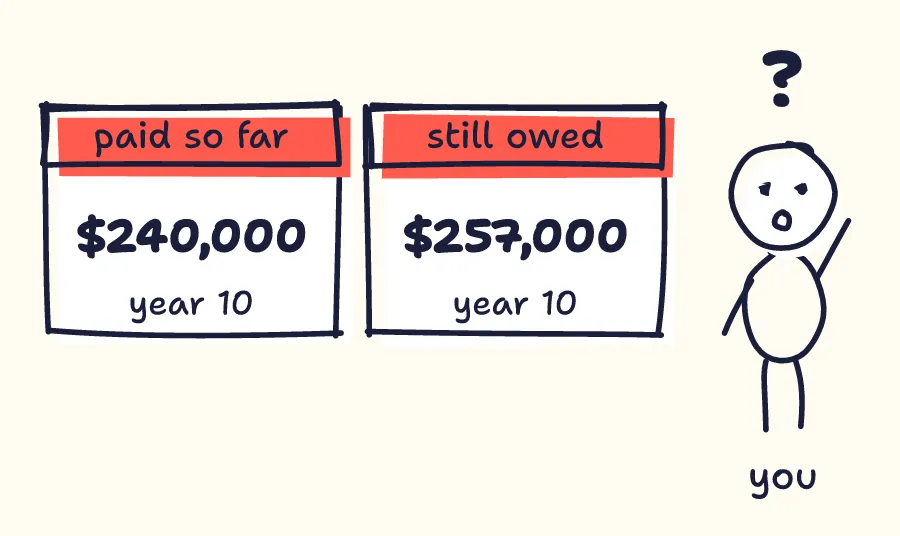
Ten years later, you open your loan statement. You have paid the bank almost $240,000. You still owe $257,000 of the $300,000. Where did your money go?
-
Quick check
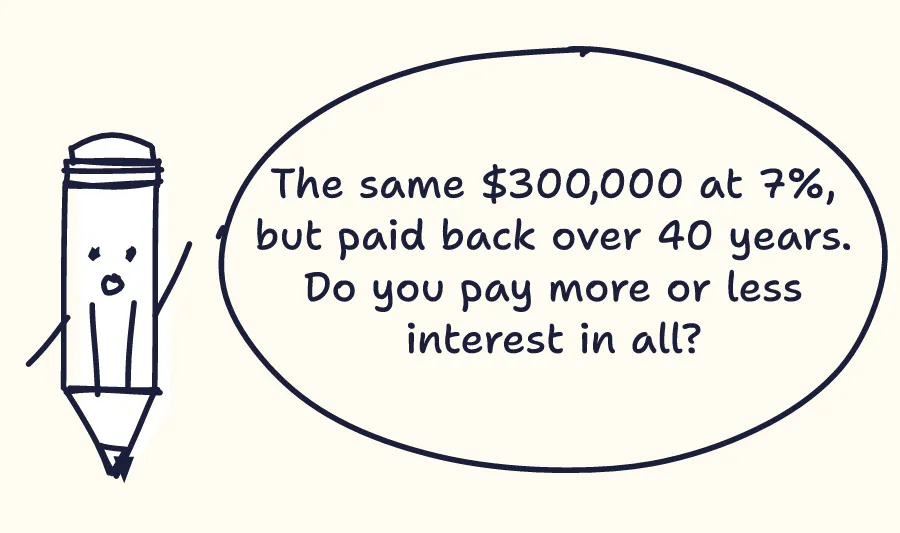
The same loan, for longer.
Show the answer
More interest. You owe money for ten more years, and the bank charges interest every month on what you still owe.
-
Go further
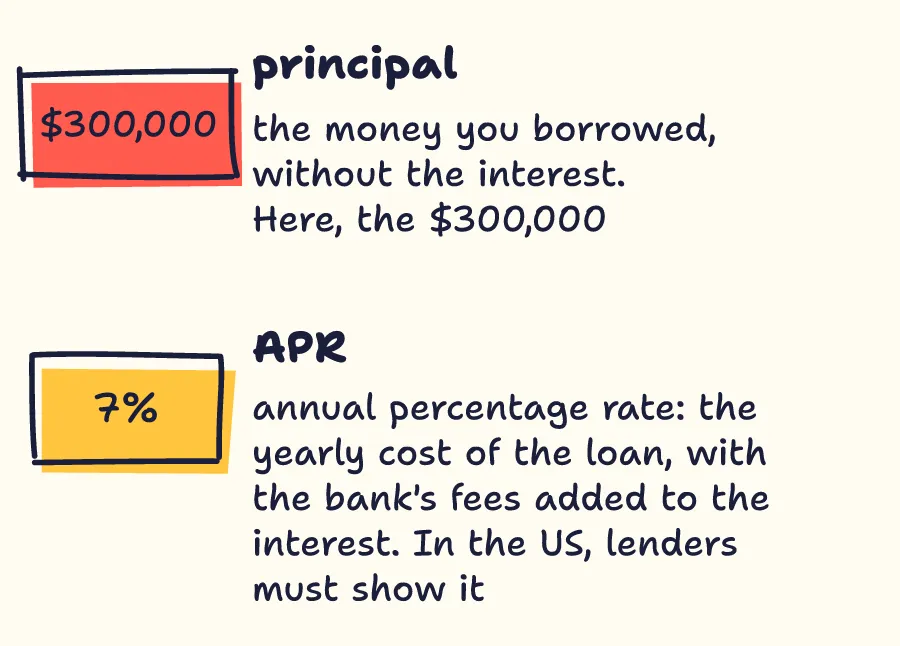
Two words on a loan offer.