You are signed in. Close

You are signed out. Close

Thank you. Your subscription has started. Close

Thank you. You will get an email when a new comic comes out. Close

Almost done. Check your inbox and press the button in our email to confirm. Close

We could not check that you are a person. Please try again. Close

We could not confirm your payment. If you paid, use the link "Sign in" at the bottom of the page. Close

Something went wrong on our side. Please try again in a moment. Close

How do free mobile games make money? Who really pays for the game you play for free

Free-to-play: how a mobile game that costs nothing still makes money

Millions of people play mobile games that cost nothing to download. The studios that make them still pay rent and salaries. So where does the money come from?

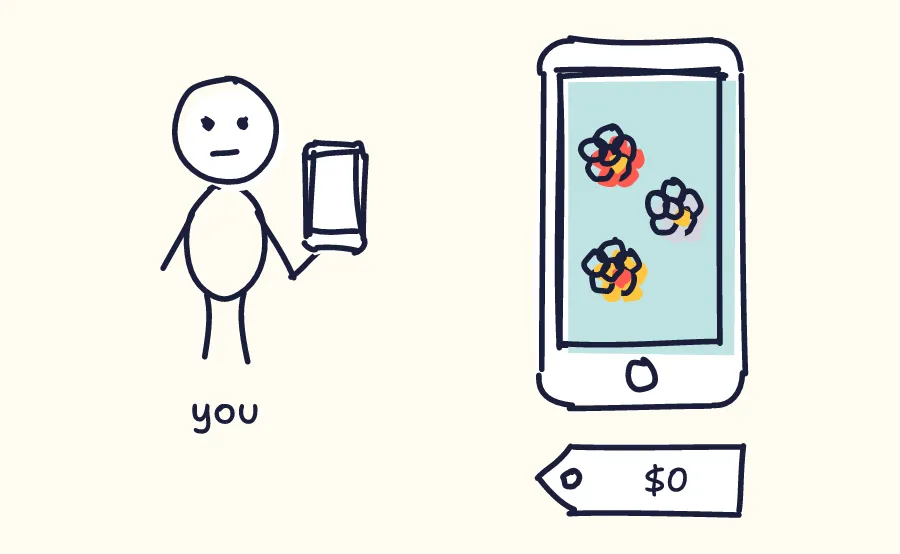
  1. 1 You play a flower puzzle game on the bus. It cost nothing to download. Your friend Miva made it with the small game studio where she works.

    You play a flower puzzle game on the bus. It cost nothing to download. Your friend Miva made it with the small game studio where she works.

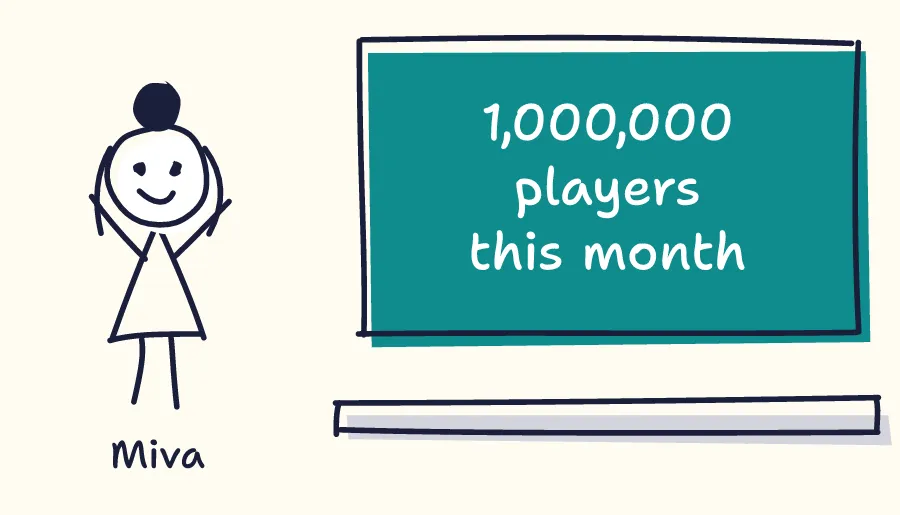
  2. 2 Miva is proud: one million people played it this month. But the studio still pays rent and salaries every month. So where does its money come from, if the game costs nothing?

    Miva is proud: one million people played it this month. But the studio still pays rent and salaries every month. So where does its money come from, if the game costs nothing?

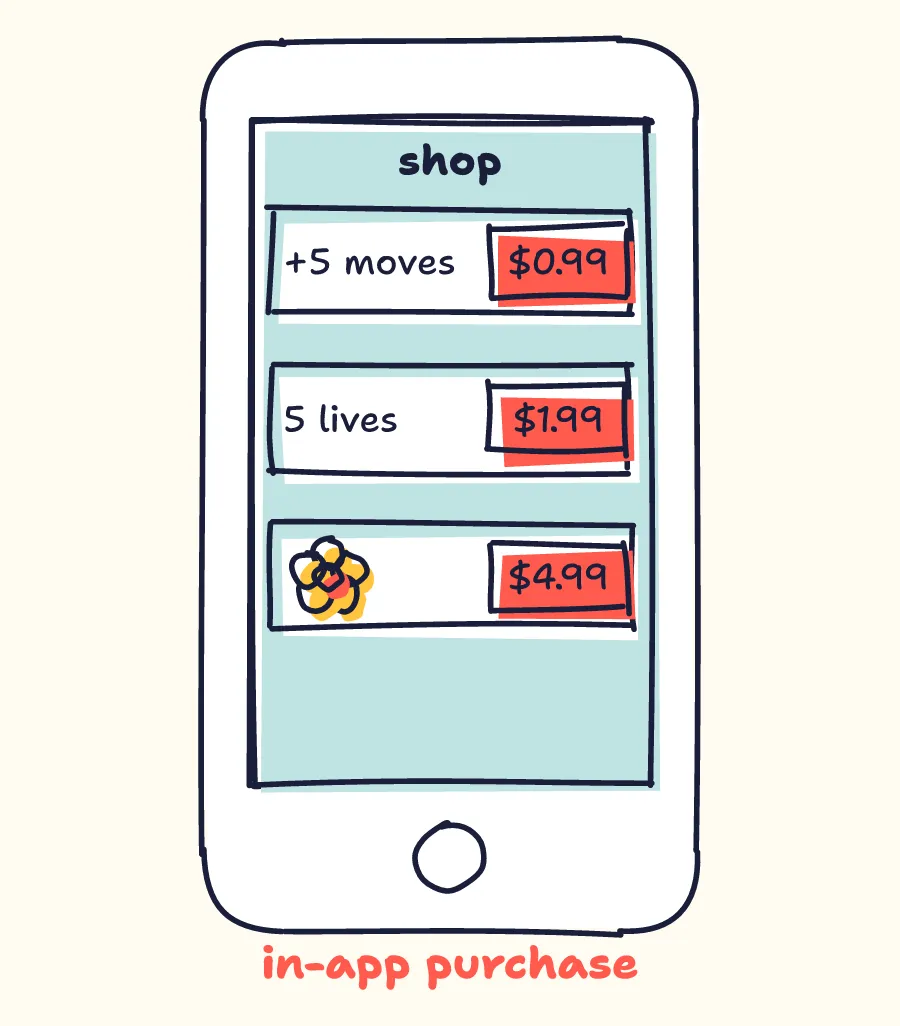
  3. 3 The money comes from a small shop inside the game. There a player can buy extra moves, more lives or a rare flower, with real money. Each of these buys is called an in-app purchase.

    The money comes from a small shop inside the game. There a player can buy extra moves, more lives or a rare flower, with real money. Each of these buys is called an in-app purchase.

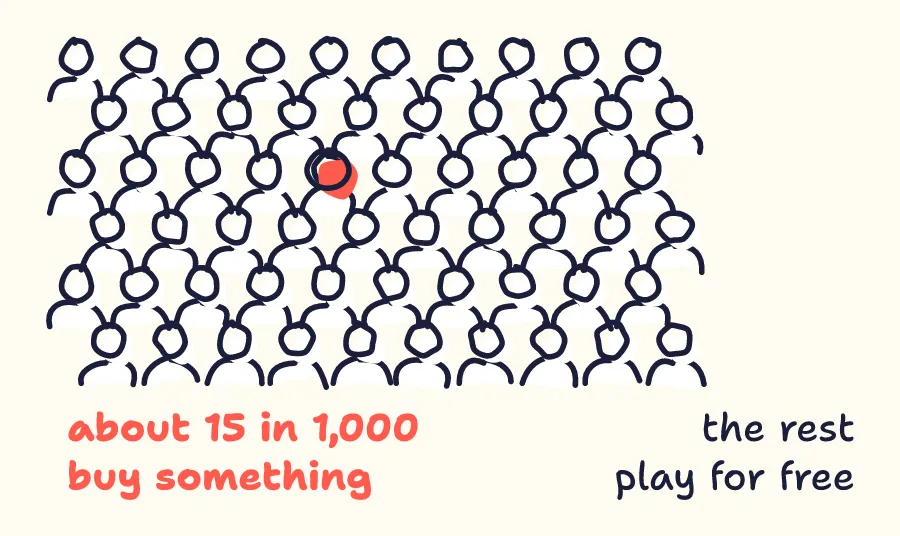
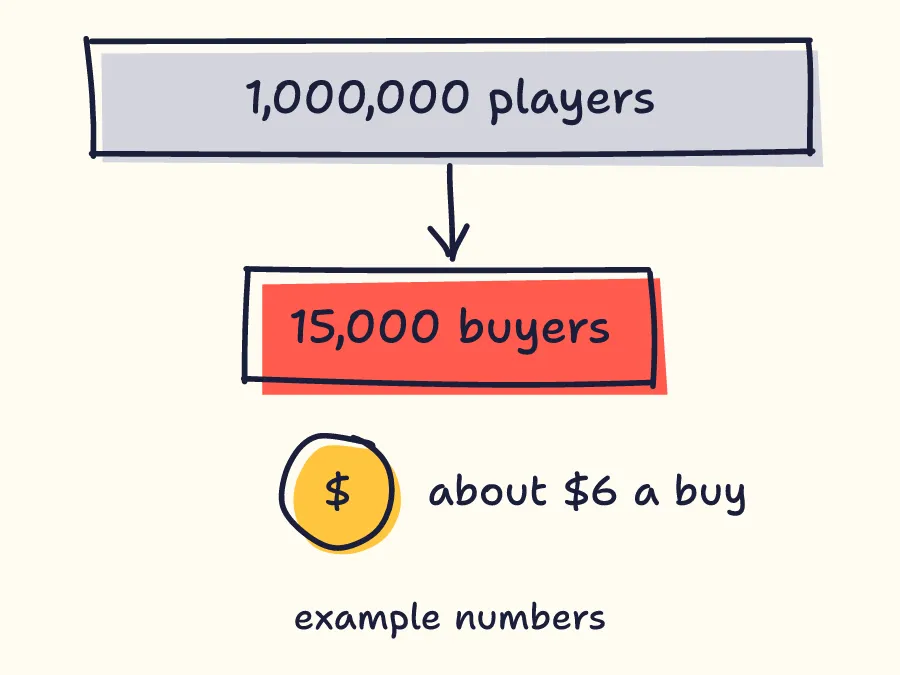
  4. 4 But most players never buy anything. In 2014, a study looked at tens of millions of players of free games. In one month, only about 15 players in 1,000 bought something. All the others played for free.

    But most players never buy anything. In 2014, a study looked at tens of millions of players of free games. In one month, only about 15 players in 1,000 bought something. All the others played for free.

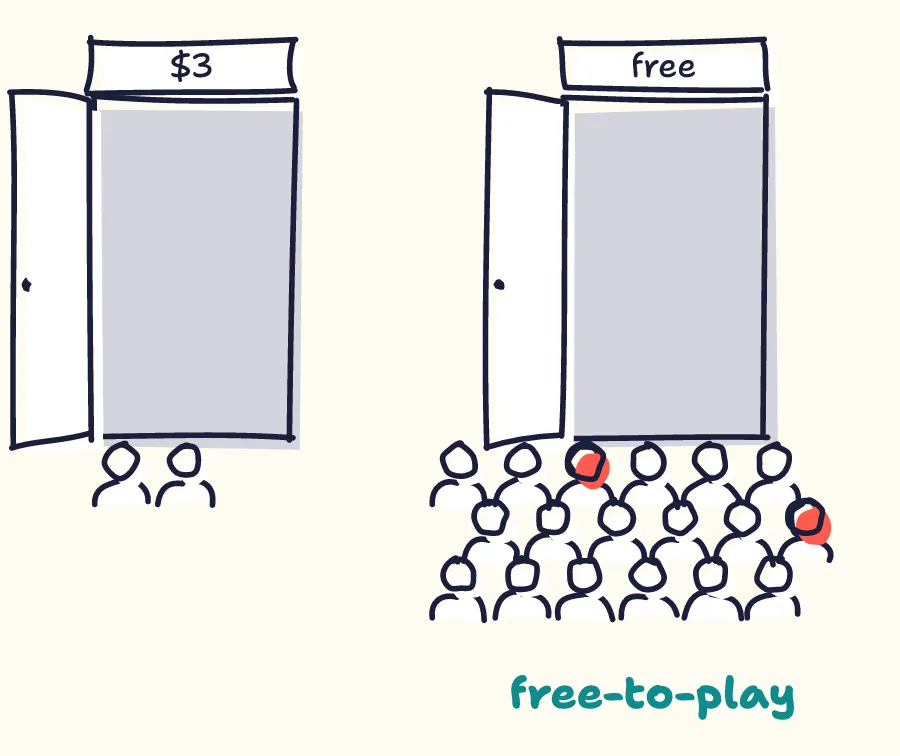
  5. 5 So why not sell the game for $3 instead? Because a price stops most people at the door. A free game gets a huge crowd, and a small share of a huge crowd is still a lot of buyers. This way of selling games is called free-to-play.

    So why not sell the game for $3 instead? Because a price stops most people at the door. A free game gets a huge crowd, and a small share of a huge crowd is still a lot of buyers. This way of selling games is called free-to-play.

  6. 6 For Miva's game, that makes about 15,000 buyers in one month. In that study, a buy was worth about $6 on average. Small buys from a big crowd keep the studio going.

    For Miva's game, that makes about 15,000 buyers in one month. In that study, a buy was worth about $6 on average. Small buys from a big crowd keep the studio going.

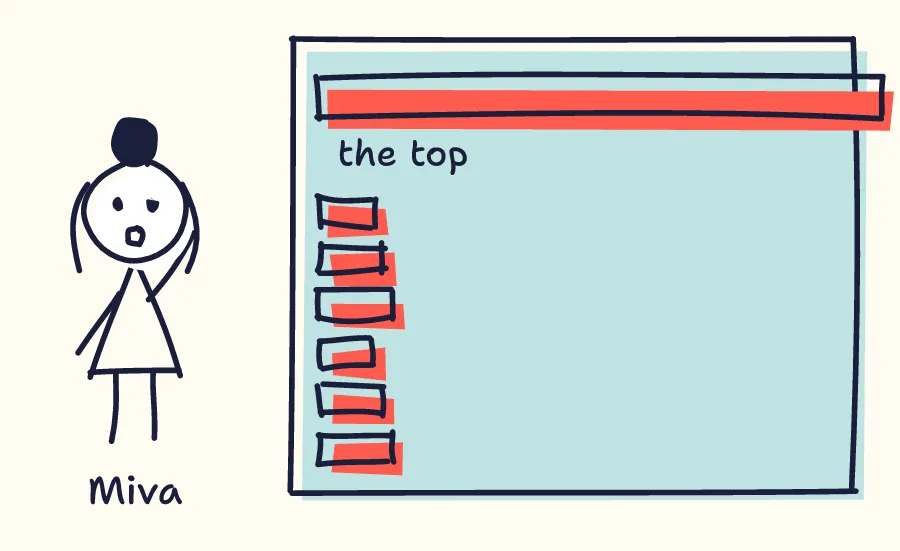
  7. 7 Then Miva sorts the buyers by how much each one spent. Most of the list looks the same. But the top of the list looks nothing like the rest.

    Then Miva sorts the buyers by how much each one spent. Most of the list looks the same. But the top of the list looks nothing like the rest.

  8. Go further

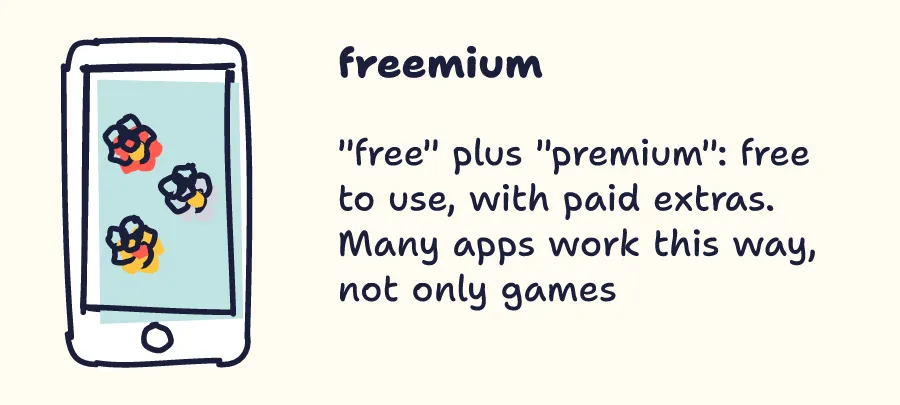
    One name for this way of selling.

    One name for this way of selling.

Next episode Whales: the few players who pay for everyone's free mobile game

Share this comic

More comics