You are signed in. Close

You are signed out. Close

Thank you. Your subscription has started. Close

Thank you. You will get an email when a new comic comes out. Close

Almost done. Check your inbox and press the button in our email to confirm. Close

We could not check that you are a person. Please try again. Close

We could not confirm your payment. If you paid, use the link "Sign in" at the bottom of the page. Close

Something went wrong on our side. Please try again in a moment. Close

Previous episode Burn rate and runway: how a startup that loses money every month still pays its bills

How can a company lose money for years and still keep going?

Customer acquisition cost: why startups lose money on purpose to win customers

Many young companies spend more to win a new customer than that customer pays them for weeks. Is that a mistake, or the plan?

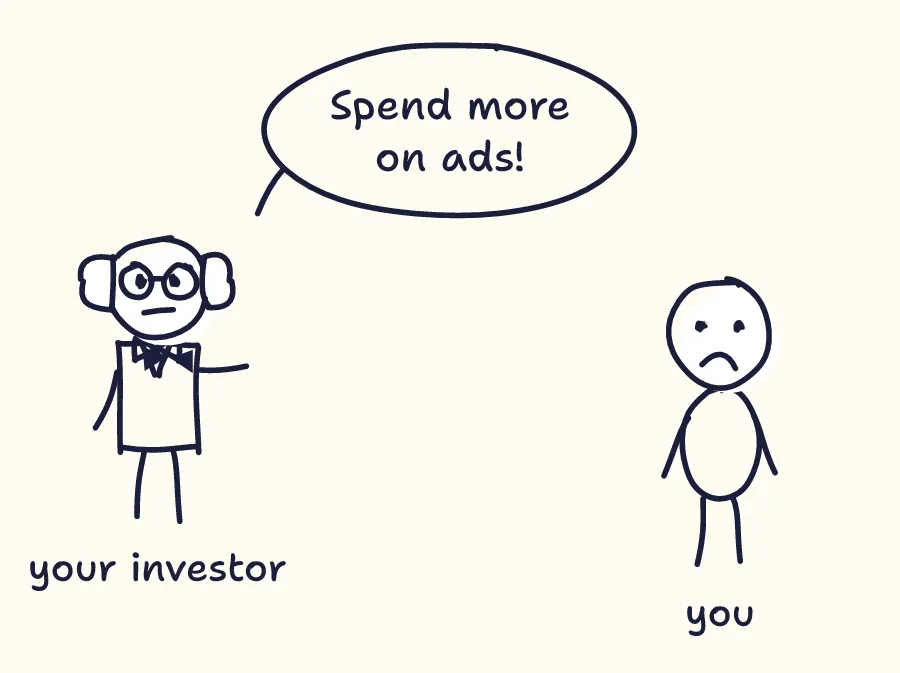
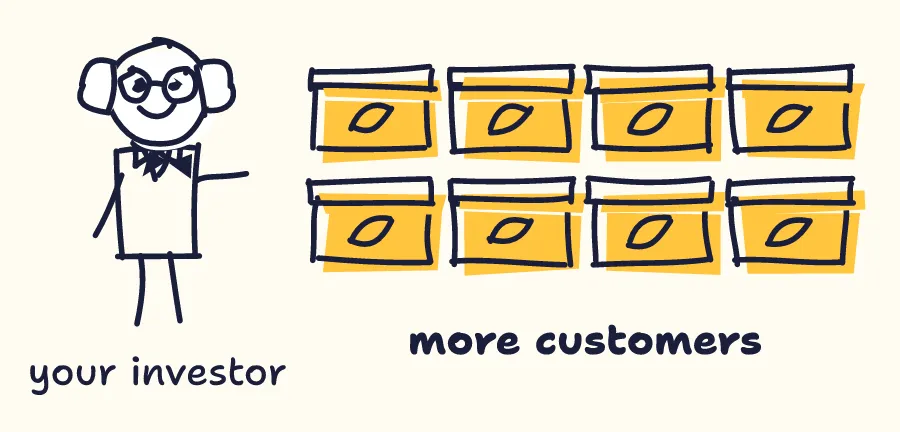
  1. 1 Six months in, you show your investor the burn rate. You expect him to be angry. Instead, he asks you to spend more on ads. Why would he want you to lose money faster?

    Six months in, you show your investor the burn rate. You expect him to be angry. Instead, he asks you to spend more on ads. Why would he want you to lose money faster?

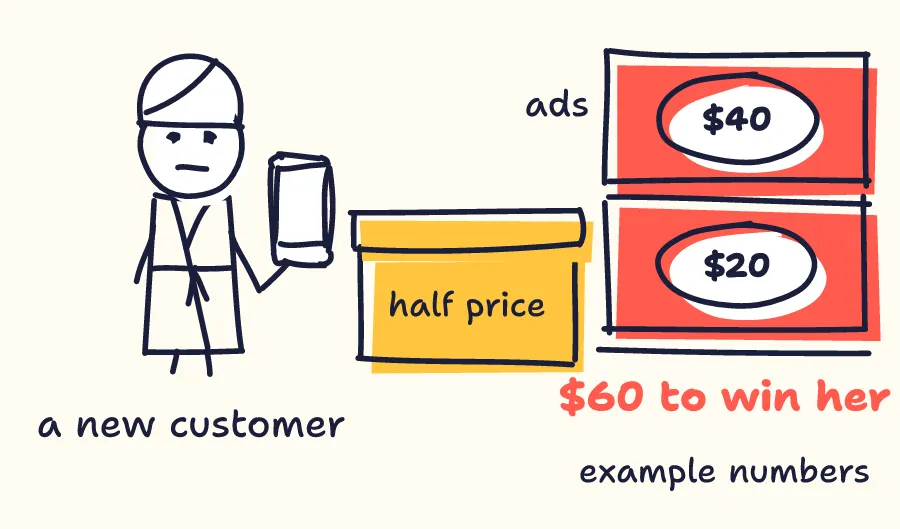
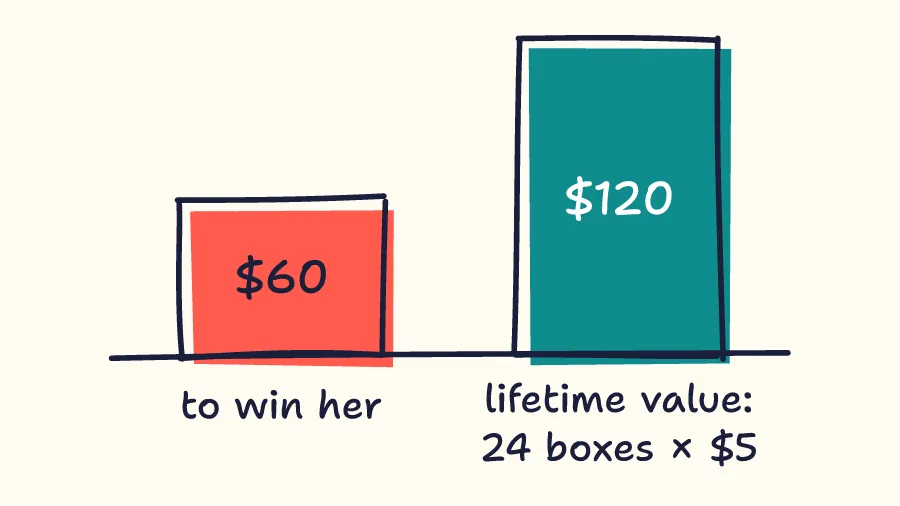
  2. 2 Look at one new customer. Your ads cost money, and her first box is half price. In all, winning her costs you $60. This is called the customer acquisition cost.

    Look at one new customer. Your ads cost money, and her first box is half price. In all, winning her costs you $60. This is called the customer acquisition cost.

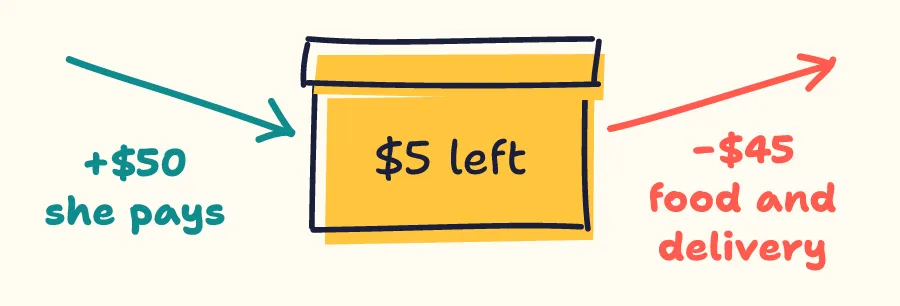
  3. 3 After that, she orders a box every week. She pays $50 for each one. The food and the delivery cost you $45. So each box leaves you $5.

    After that, she orders a box every week. She pays $50 for each one. The food and the delivery cost you $45. So each box leaves you $5.

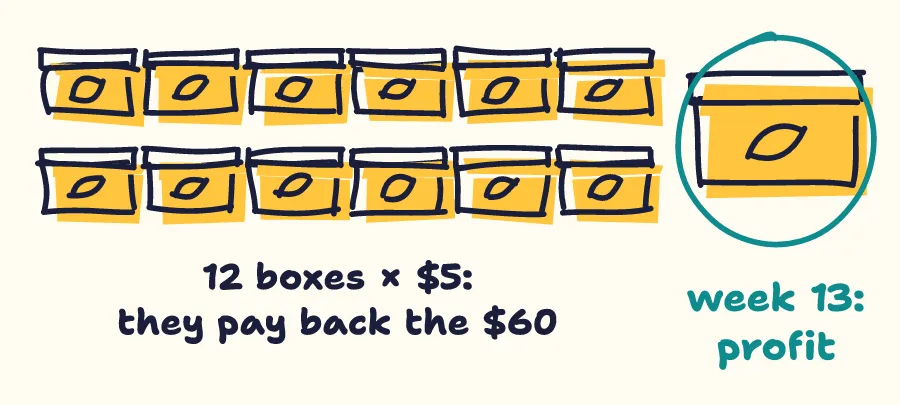
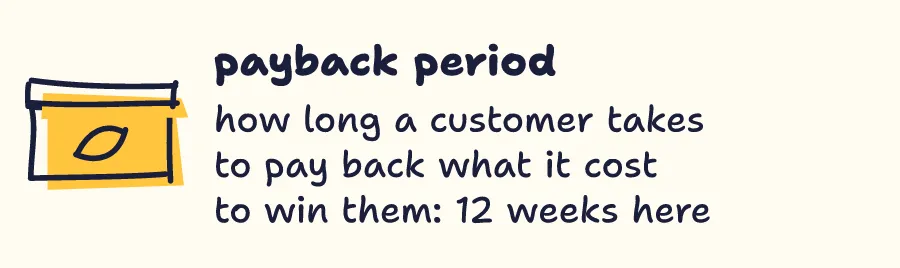
  4. 4 So for 12 weeks, her boxes only pay back the $60 it cost to win her. From week 13 on, she brings you profit.

    So for 12 weeks, her boxes only pay back the $60 it cost to win her. From week 13 on, she brings you profit.

  5. 5 Your customers stay about 24 weeks. Over that time, she leaves you $120 in all. Its name is her lifetime value. You paid $60 to get $120 back.

    Your customers stay about 24 weeks. Over that time, she leaves you $120 in all. Its name is her lifetime value. You paid $60 to get $120 back.

  6. 6 That is why your investor wants more ads. Each new customer makes this month's loss bigger, and the coming months better. Losing money now is the plan, as long as each customer brings back more than they cost.

    That is why your investor wants more ads. Each new customer makes this month's loss bigger, and the coming months better. Losing money now is the plan, as long as each customer brings back more than they cost.

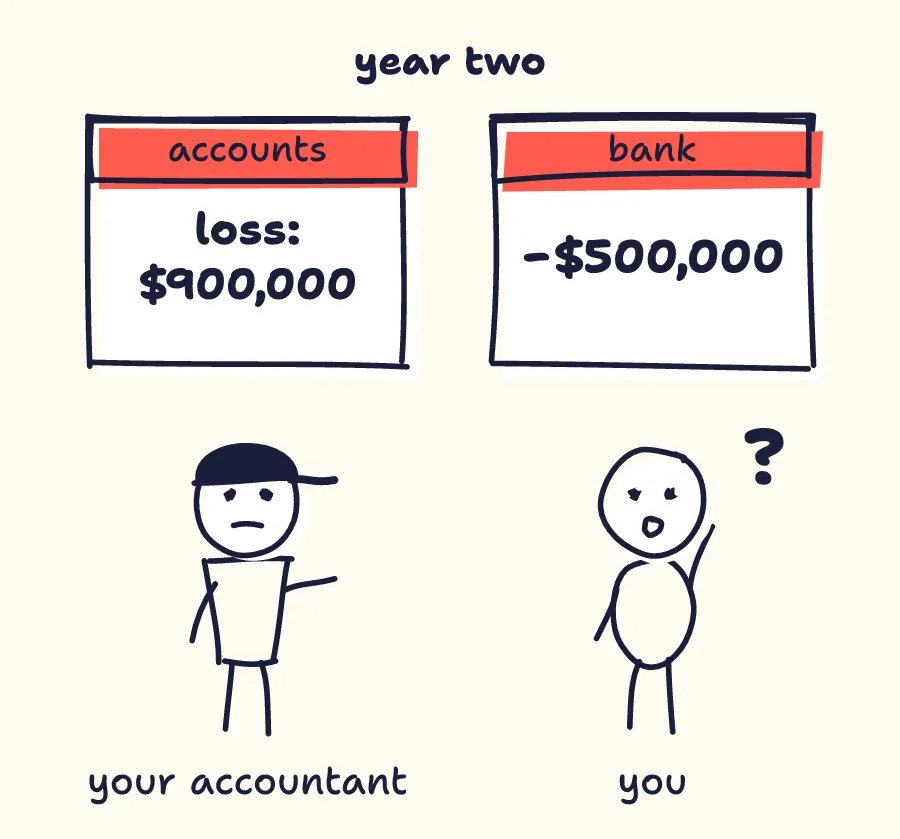
  7. 7 At the end of your second year, your accountant brings you two papers. The accounts say you lost $900,000 this year. Your bank says only $500,000 left your account. Both papers are right. How can you lose $900,000 when only $500,000 left the bank?

    At the end of your second year, your accountant brings you two papers. The accounts say you lost $900,000 this year. Your bank says only $500,000 left your account. Both papers are right. How can you lose $900,000 when only $500,000 left the bank?

  8. Quick check

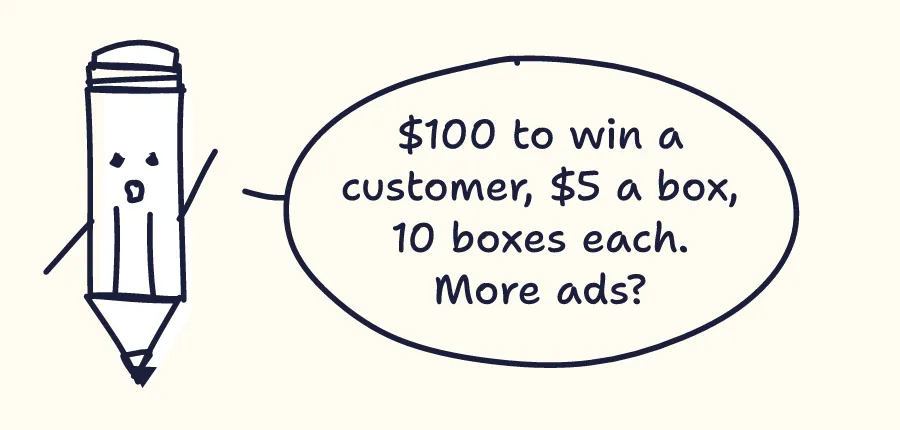
    Another company, other numbers.

    Another company, other numbers.

    Show the answer

    No. Each customer brings back $50 and cost $100 to win, so every new one adds $50 of loss that never comes back. More ads only make the loss bigger.

  9. Go further

    One more name for what you saw.

    One more name for what you saw.

Next episode Depreciation: why a company's loss can be bigger than the money it spent

Share this comic

More comics