Why does your brain miss the second "the" in a sentence?
How your eyes move when you read: the jumps that skip words
Reading feels like a smooth slide along the line. A camera that follows the eyes shows something very different, and whole words that nobody ever looked at.
-
1
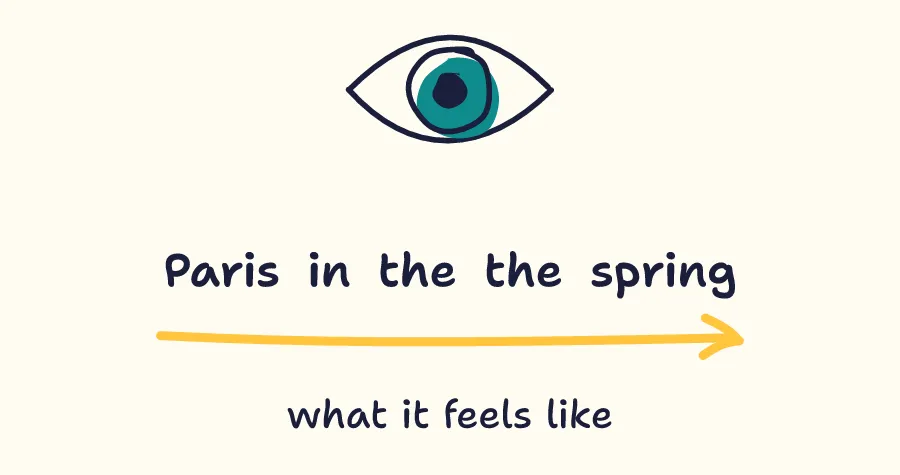
Back to the poster. When you read, it feels as if your eyes slide along the line, smooth, like a finger under the words. Rono is sure of it. Miva says this feeling is wrong, and that scientists have watched it happen.
-
2
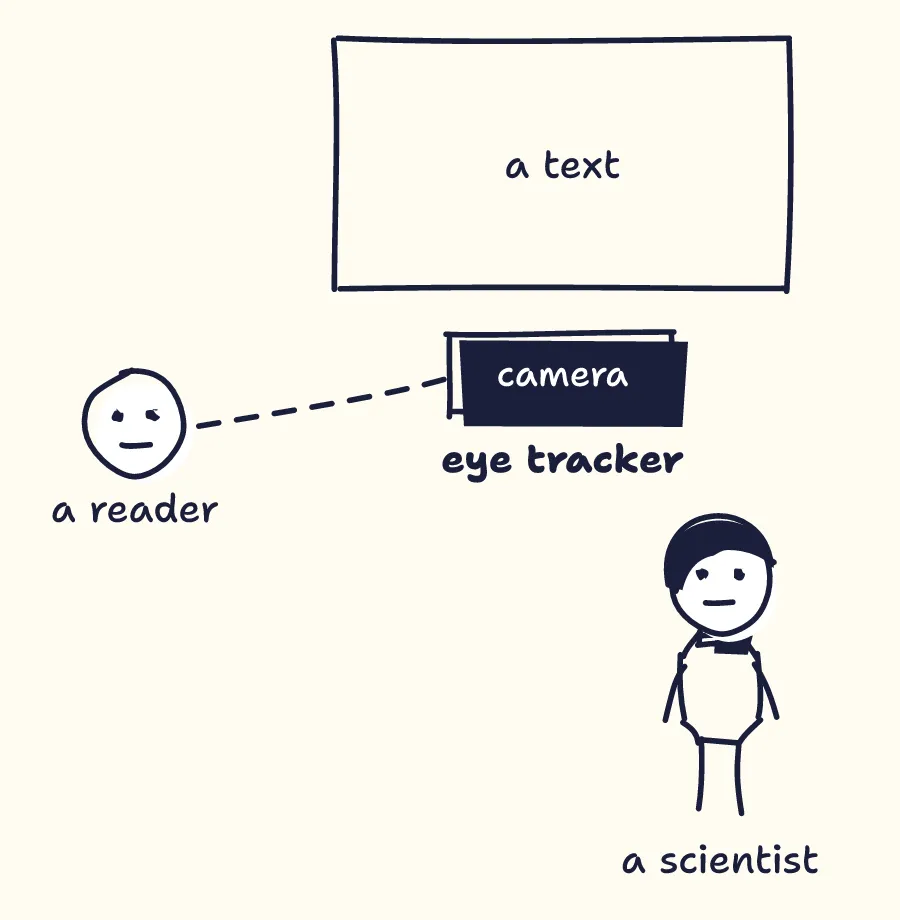
Scientists can follow the eyes of a person who reads. A small camera under the screen, called an eye tracker, sees where the eye points, many times every second.
-
3
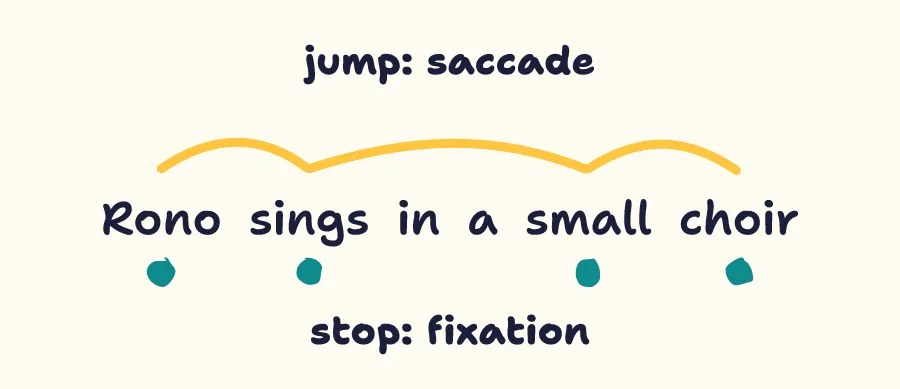
The eye tracker shows something odd. Your eyes do not slide at all. They stop on a word, jump, and stop again, about four times every second. A jump is called a saccade, and a stop is called a fixation.
-
4
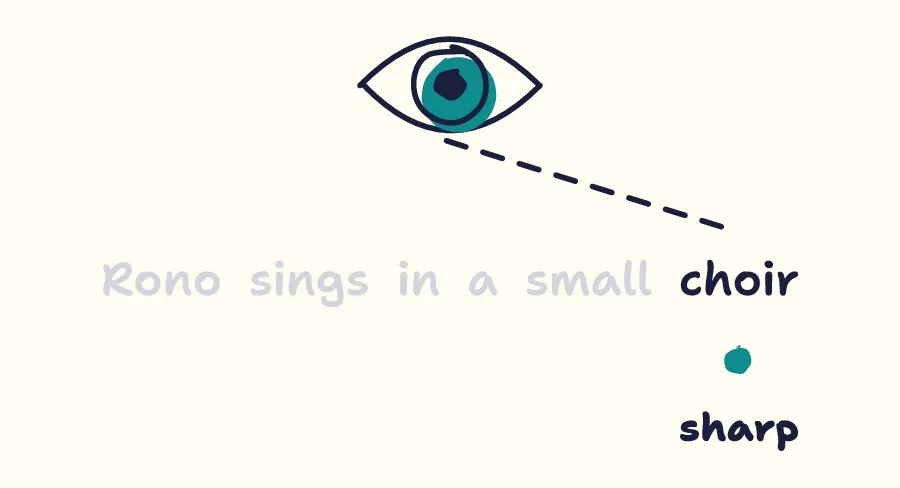
During a jump, you see almost nothing. Your eyes take in the words only during a stop. Even then, only a small spot is sharp: a few letters around the point where you look. The rest of the line is a blur.
-
5
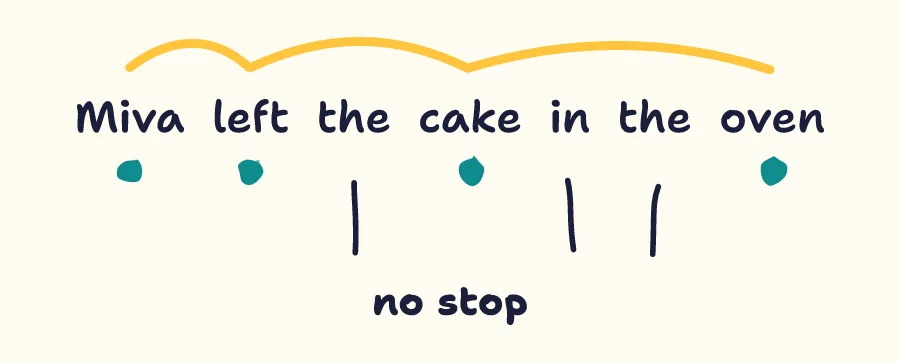
And many words get no stop at all. A grown-up reader skips about a third of the words in a text. Short, common words like "the" are skipped most of all, more often than not.
-
6

Here is the strange part. To skip a word, your eyes must decide to jump over it before they land on it. So how do they know that the next word is only a "the"?
-
Quick check
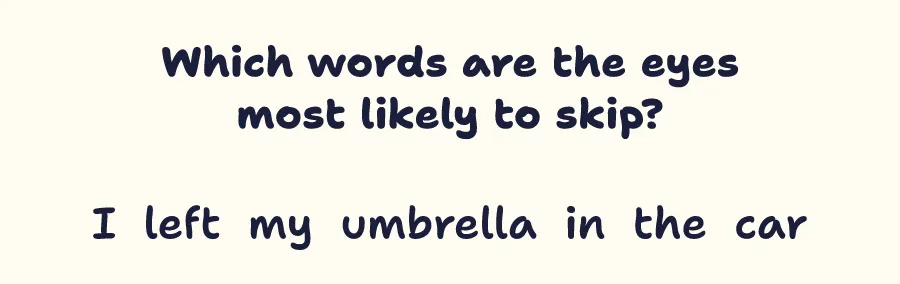
A new sentence.
Show the answer
The short, common ones: "I", "my", "in" and "the". A long word like "umbrella" almost always gets a stop.