How anxiety works: the alarm that rings when there is no fire
False alarms: why your brain's fear alarm is built to go off too often
A smoke alarm that screams at burnt toast is not broken. Your fear works the same way, and a doctor gave the idea a name. Why is a jumpy alarm the safe one?
-
1
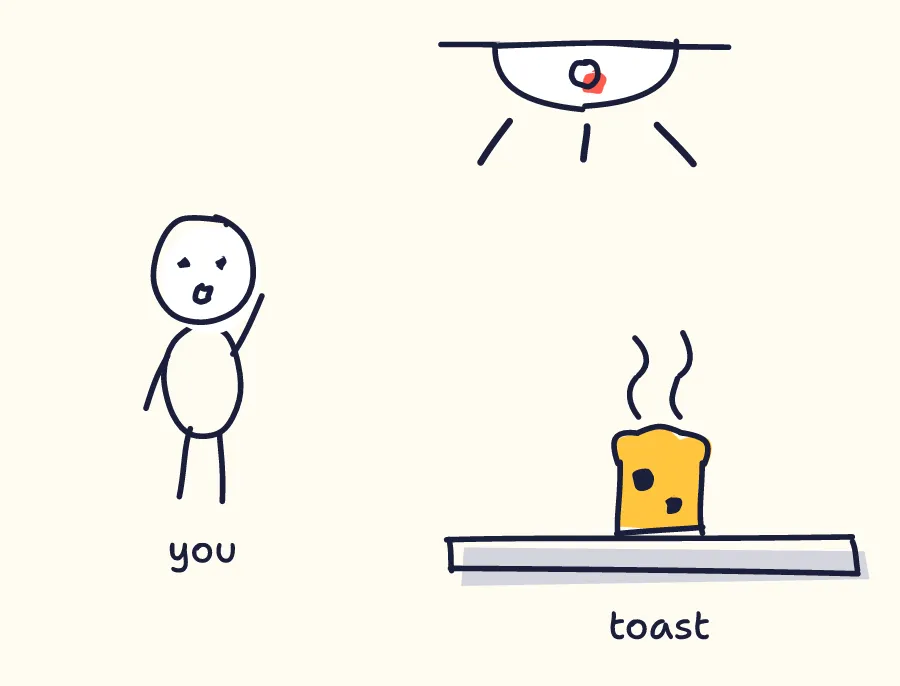
That evening, at your place, you burn your toast. The smoke alarm screams as if the whole house were on fire.
-
2
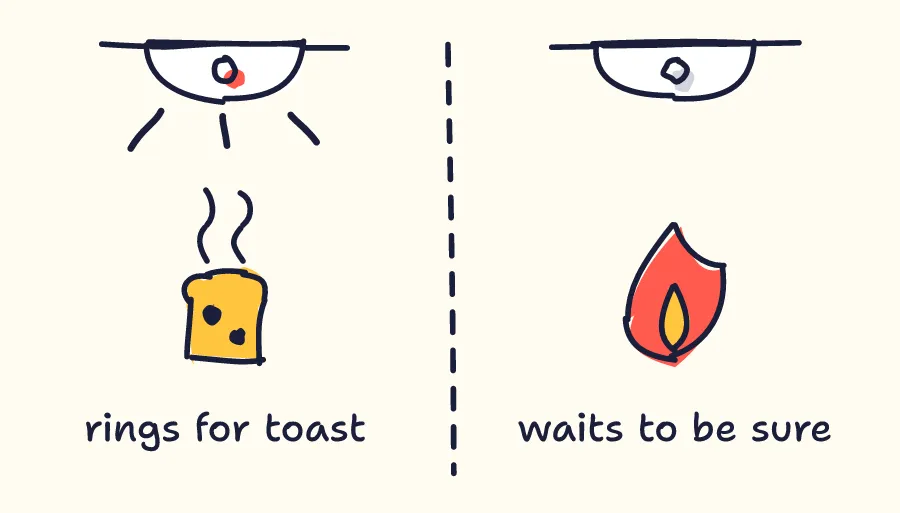
You could buy an alarm that waits until it is sure. But an alarm that waits for burnt toast also waits a little too long when the fire is real.
-
3
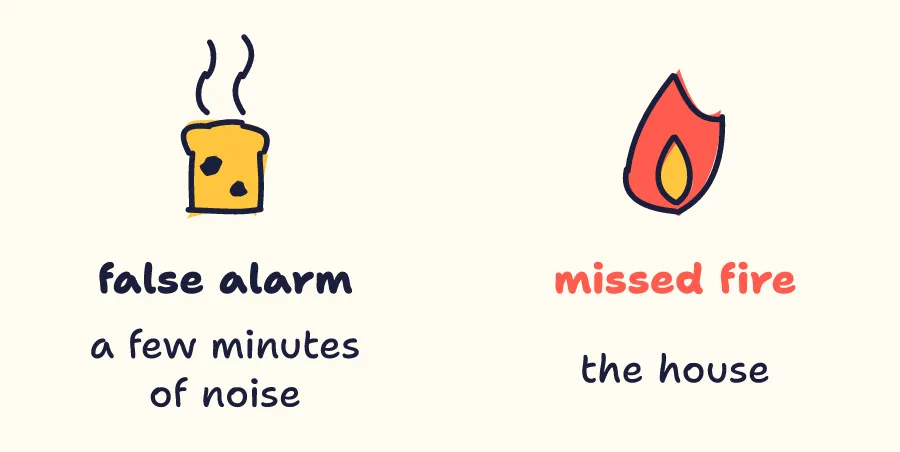
So smoke alarms are made to ring too often. A false alarm costs you a few annoying minutes. A missed fire can cost you everything.
-
4
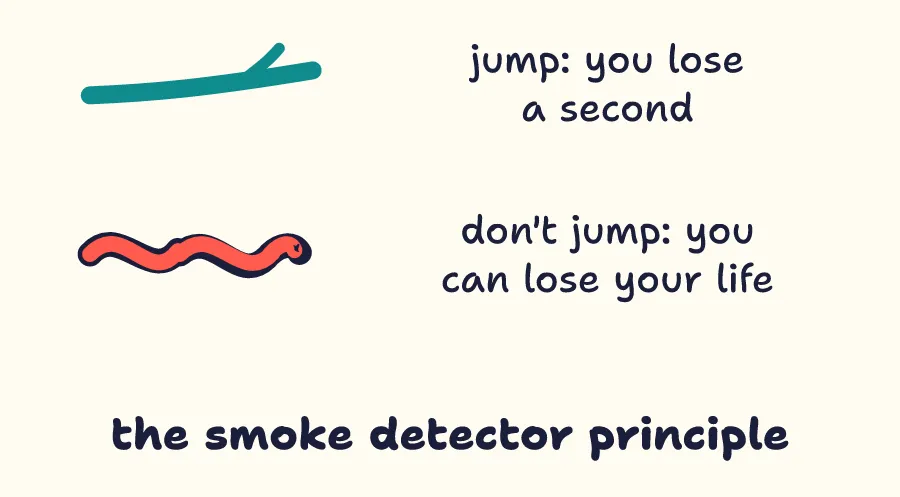
Your amygdala follows the same rule. To jump at a stick costs you a second. To walk on a snake can cost your life. A doctor, Randolph Nesse, calls this the smoke detector principle.
-
5
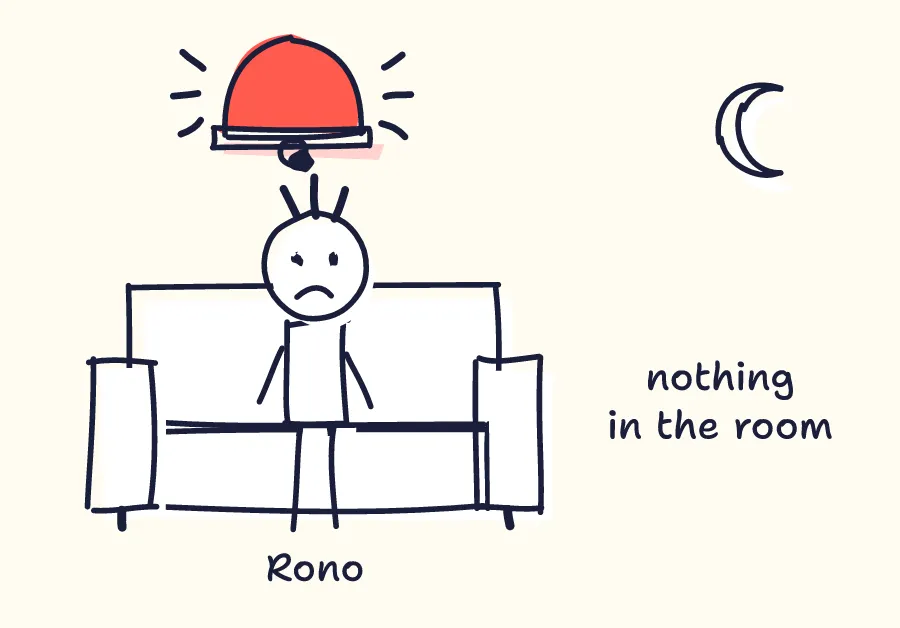
So a false alarm now and then is the price of a good alarm. Then, on a quiet Tuesday evening, Rono's alarm rings again. He is alone on his sofa. There is no hose, no smoke, no danger in the room. And still his heart races. What can set off the alarm when there is nothing there?
-
Go further
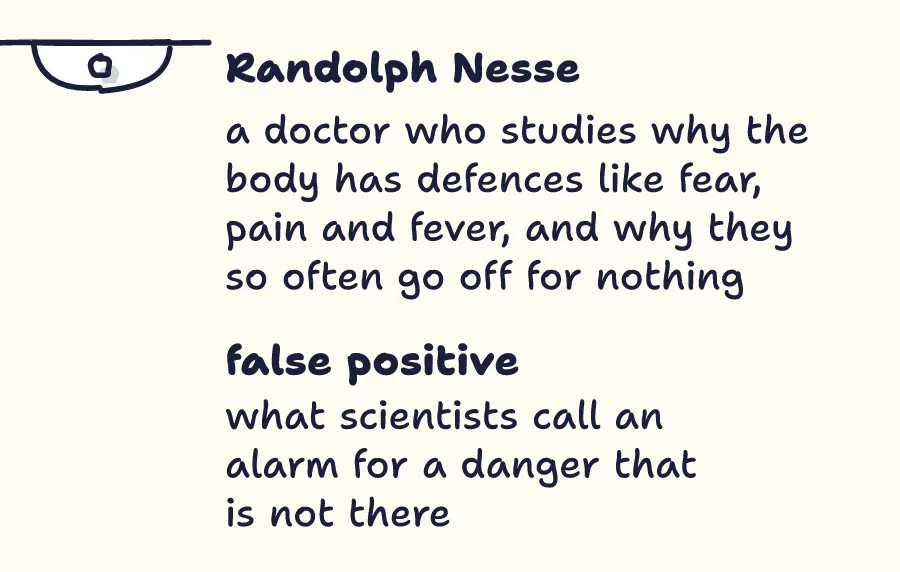
Two things to know about false alarms.