Why does running a mile burn so few calories when your body burns 2,000 a day?
Basal metabolic rate: why your body burns most of its calories while you do nothing
Lie on the sofa all day and you still burn well over a thousand calories. Which parts of your body spend most of that energy, and why are your big muscles so cheap?
-
1
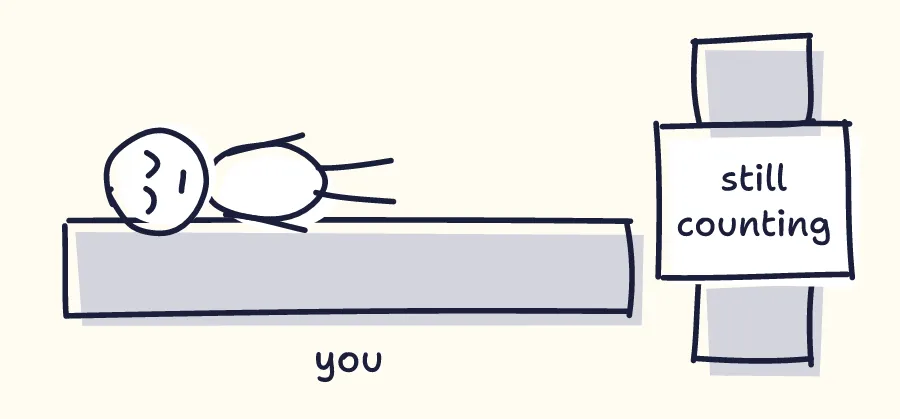
The same Sunday, after the run. You do nothing at all for the whole afternoon. You lie on the sofa and watch a show. And still your watch keeps counting calories, block after block.
-
2
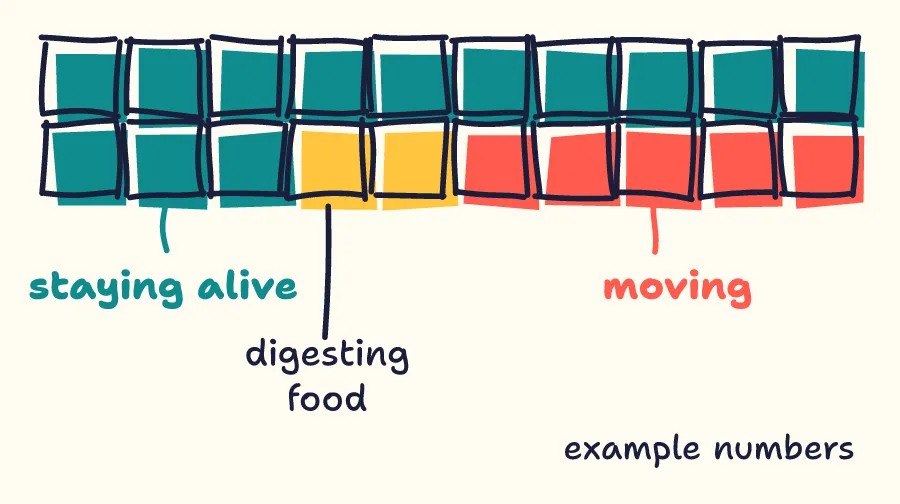
Here is where a day usually goes. About two thirds of the blocks only keep you alive: your heart beats, you breathe, your cells repair themselves. This share has a name: the basal metabolic rate. Digesting food takes about one block in ten. Moving gets the rest.
-
3
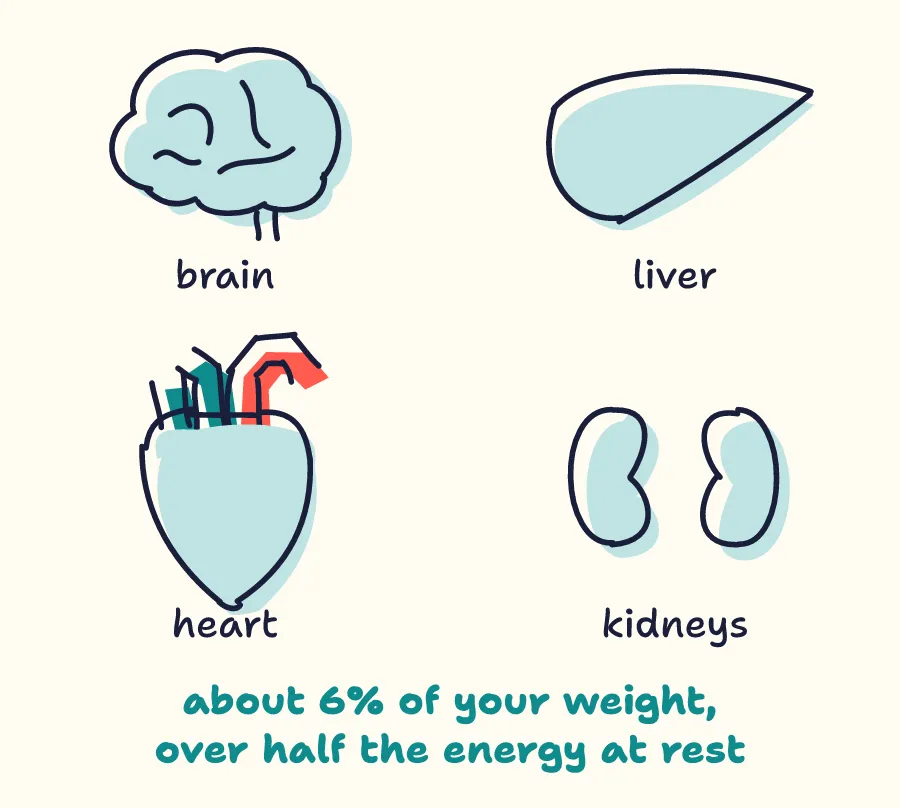
So who burns the basal metabolic rate? Mostly four small organs: the brain, the liver, the heart and the kidneys. Together they weigh only about 6 parts in 100 of your body. Yet they burn more than half of the energy you use at rest.
-
4
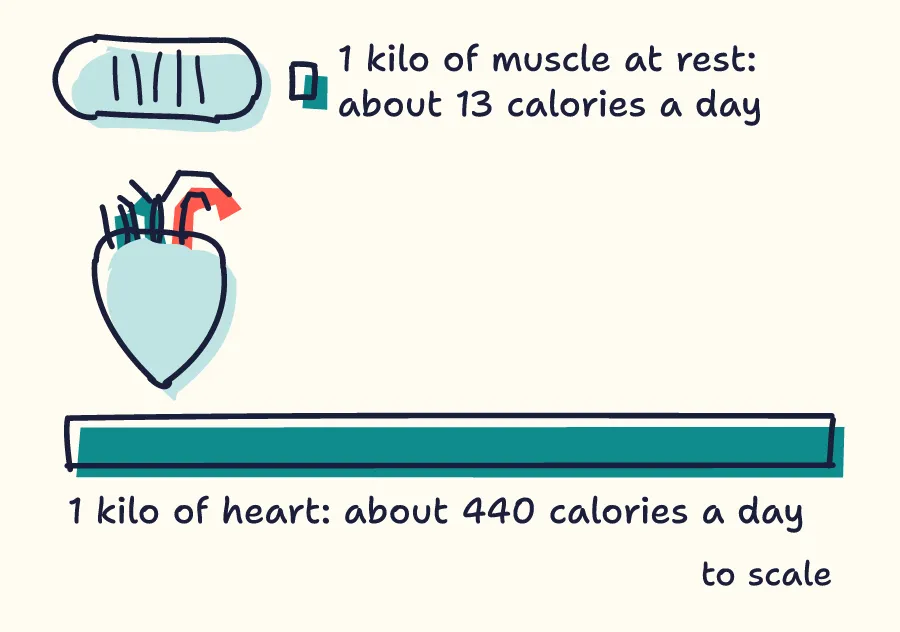
Your big muscles are the opposite. At rest, a kilo of muscle burns very little, about 13 calories a day. A kilo of heart burns more than 30 times that. Your muscles are cheap until you move them.
-
5

So a sofa day is far from zero. Your body keeps a big fire going all day, and moving adds a little on top. So you would guess that moving more adds more blocks on top. Scientists went to check that with people who walk all day.
-
Quick check
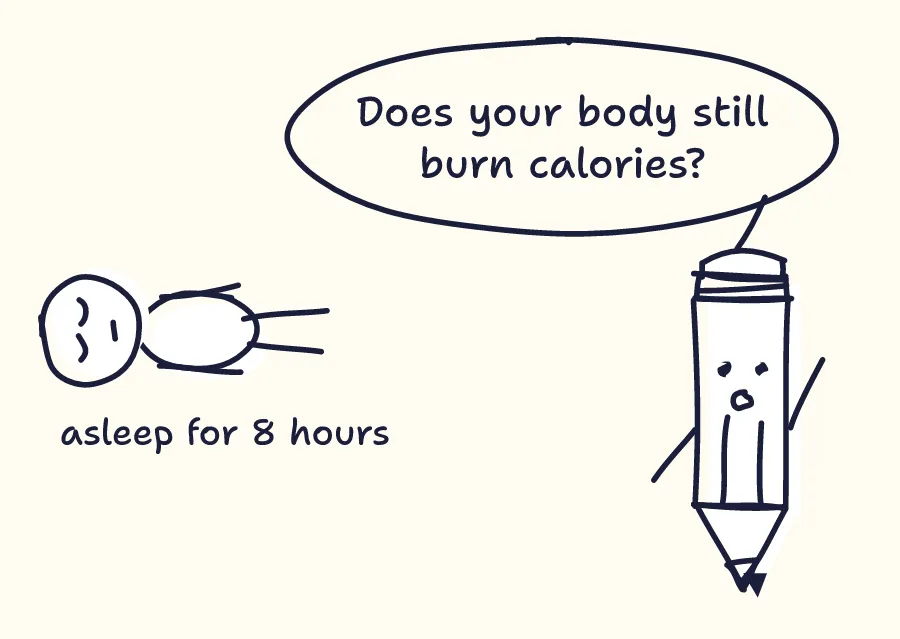
A night of sleep.
Show the answer
Yes. Your brain, liver, heart and kidneys keep working while you sleep, so the basal metabolic rate keeps burning calories all night.
-
Go further
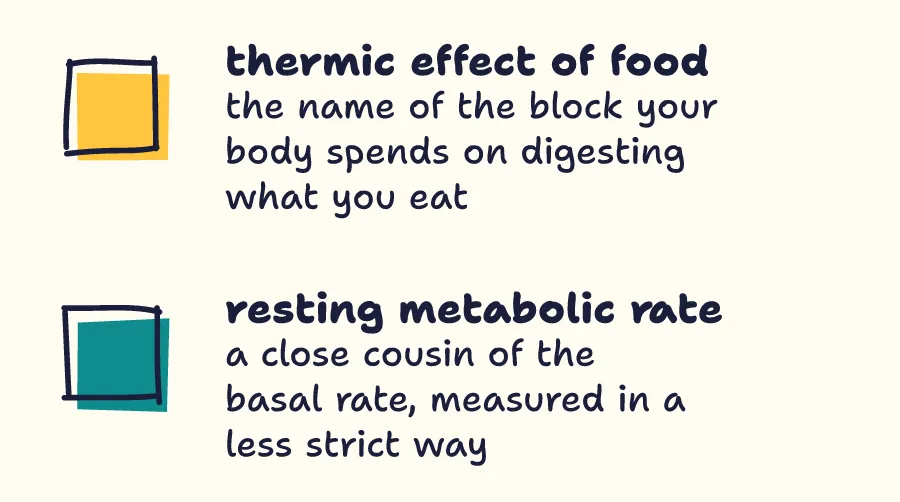
Two names for the blocks you saw.