You are signed in. Close

You are signed out. Close

Thank you. Your subscription has started. Close

Thank you. You will get an email when a new comic comes out. Close

Almost done. Check your inbox and press the button in our email to confirm. Close

We could not check that you are a person. Please try again. Close

We could not confirm your payment. If you paid, use the link "Sign in" at the bottom of the page. Close

Something went wrong on our side. Please try again in a moment. Close

Previous episode The Costco hot dog: why it still costs $1.50 after 40 years

How Costco makes money: why the $1.50 hot dog never changed price

Costco's 14% markup rule: why the shelves leave almost no profit

Most stores choose their prices to earn as much as they can. Costco has a rule that stops it: a cap on how much it may add to what it paid. So how much does a whole warehouse of goods really earn?

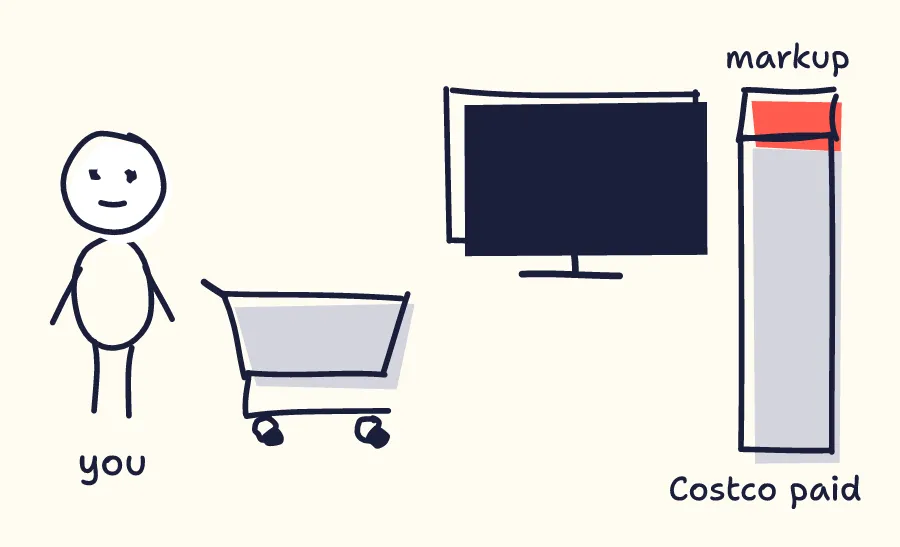
  1. 1 Back inside the warehouse, you push your cart past a big TV. Costco bought it from the company that makes it. Then it added a little money on top to make its price. That little extra is called the markup.

    Back inside the warehouse, you push your cart past a big TV. Costco bought it from the company that makes it. Then it added a little money on top to make its price. That little extra is called the markup.

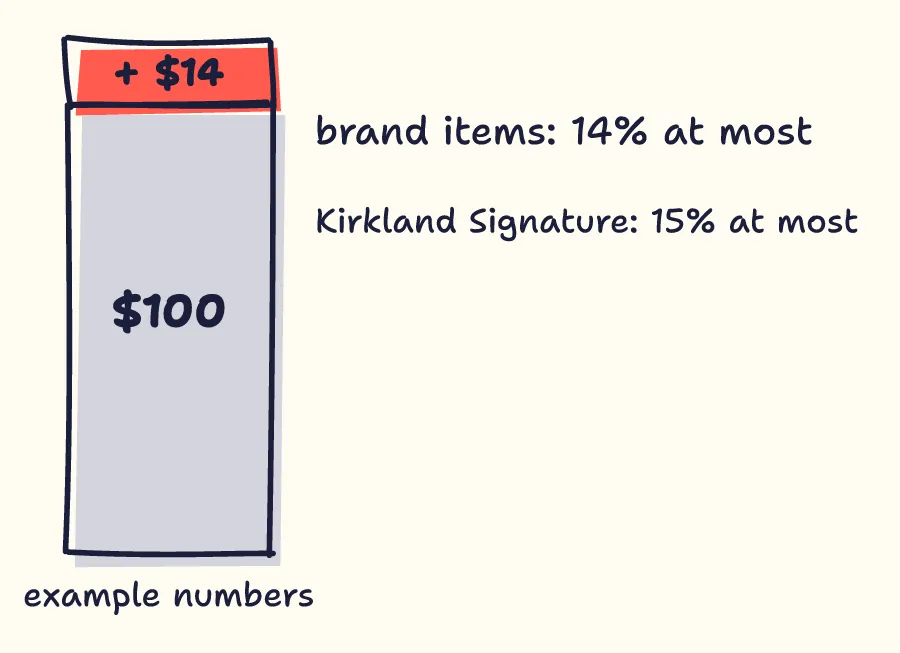
  2. 2 Costco has a rule for that extra. A brand item may cost you at most 14% more than Costco paid. For Kirkland Signature, Costco's own brand, the limit is 15%. So a TV that Costco buys for $100 costs you $114 at most.

    Costco has a rule for that extra. A brand item may cost you at most 14% more than Costco paid. For Kirkland Signature, Costco's own brand, the limit is 15%. So a TV that Costco buys for $100 costs you $114 at most.

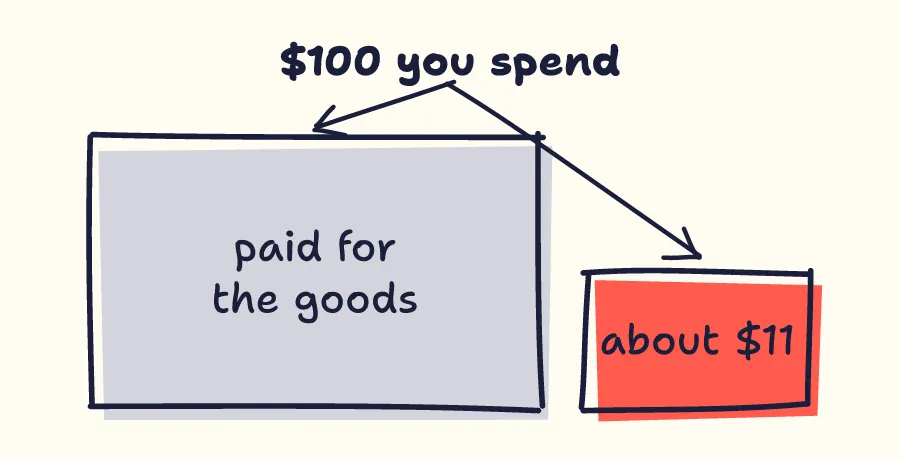
  3. 3 Most items get even less than the limit. Across the whole store, about $11 of every $100 you spend is left after Costco pays for the goods.

    Most items get even less than the limit. Across the whole store, about $11 of every $100 you spend is left after Costco pays for the goods.

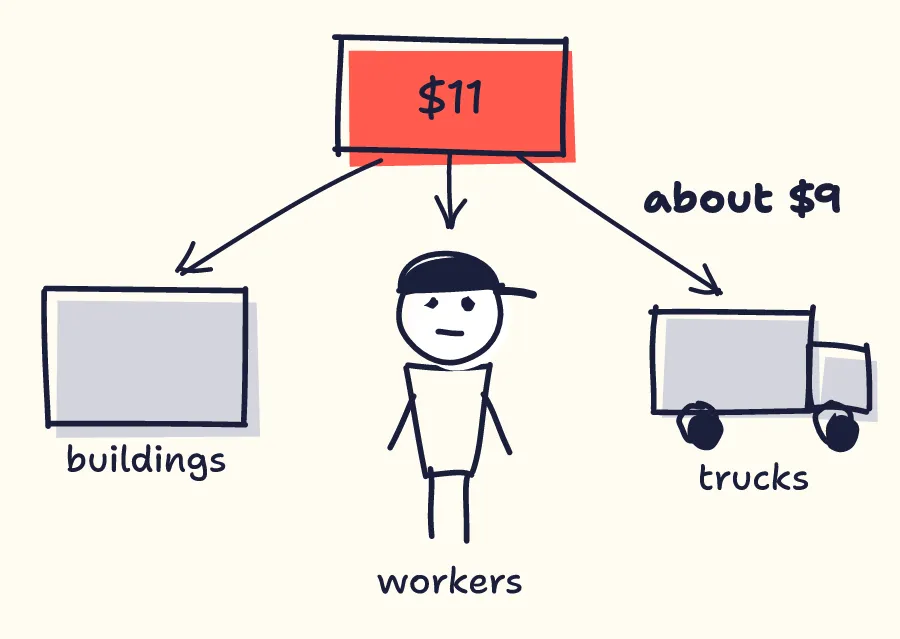
  4. 4 And those $11 must pay for a lot: the huge buildings, the workers, the lights, the trucks. That costs about $9.

    And those $11 must pay for a lot: the huge buildings, the workers, the lights, the trucks. That costs about $9.

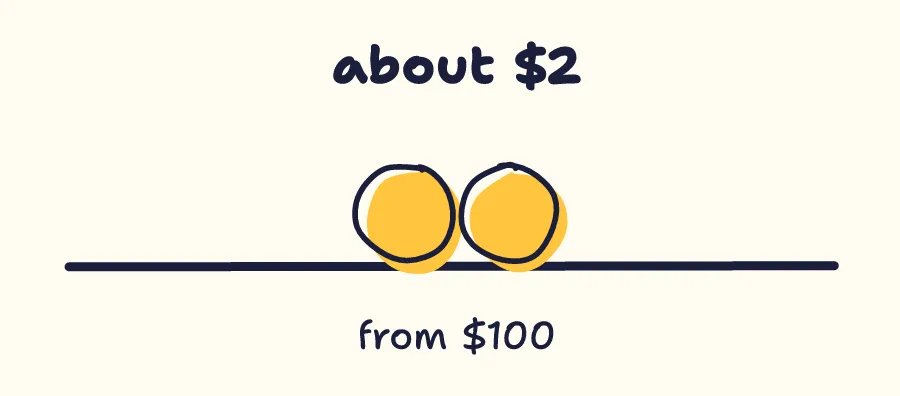
  5. 5 So from every $100 you spend on the shelves, about $2 is left as profit. Two coins, out of a hundred.

    So from every $100 you spend on the shelves, about $2 is left as profit. Two coins, out of a hundred.

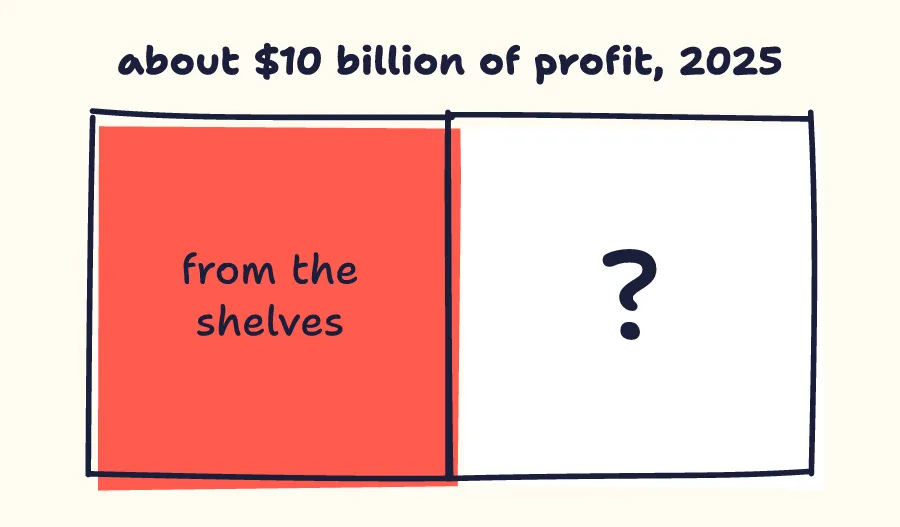
  6. 6 Yet in 2025, Costco made about $10 billion of profit from running its stores. The shelves bring only about half of it. Where does the other half come from?

    Yet in 2025, Costco made about $10 billion of profit from running its stores. The shelves bring only about half of it. Where does the other half come from?

  7. Quick check

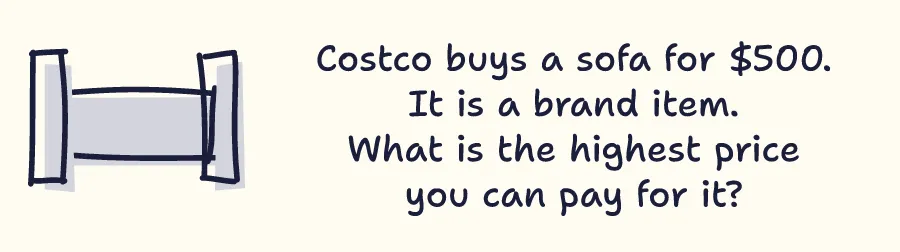
    A sofa, at a brand price.

    A sofa, at a brand price.

    Show the answer

    $570. The markup on a brand item is at most 14%, and 14% of $500 is $70.

  8. Go further

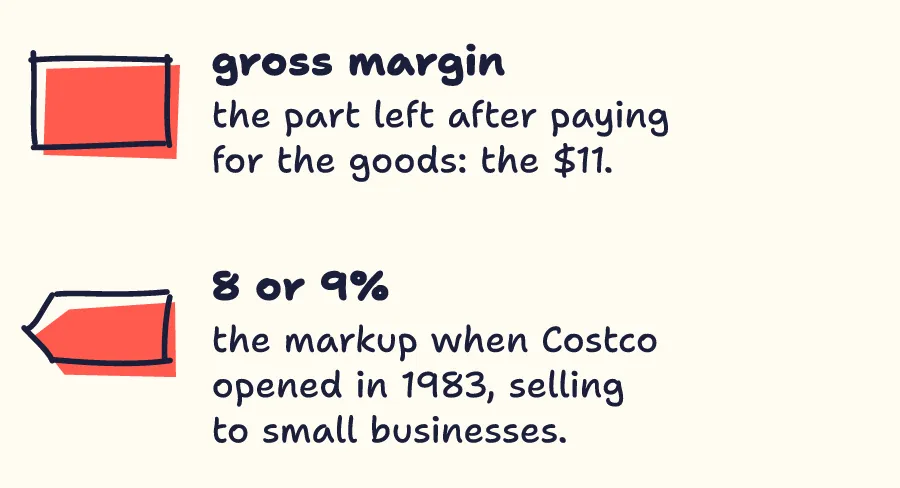
    Two names for what you saw.

    Two names for what you saw.

Next episode Costco membership fees: the money you pay before you buy anything

Share this comic

More comics