How Costco makes money: why the $1.50 hot dog never changed price
Why Costco sells so few products, in such huge packs
A big supermarket can offer dozens of kinds of ketchup. A Costco warehouse often has one or two, in giant bottles. Why would a store choose to sell less, and how does that cut its prices?
-
1
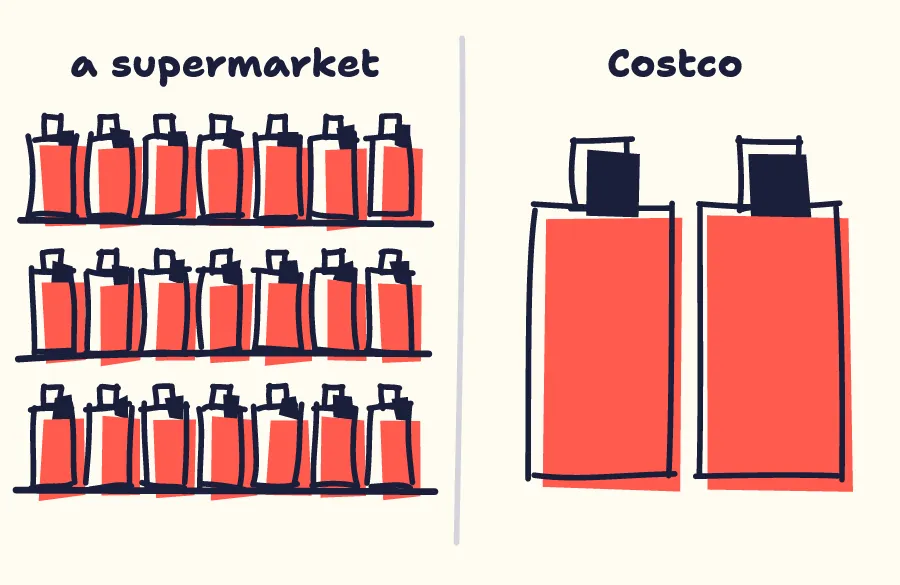
Walk the aisles again and something looks strange. A big supermarket can offer a whole wall of ketchup. Here you find one or two kinds, in giant bottles.
-
2
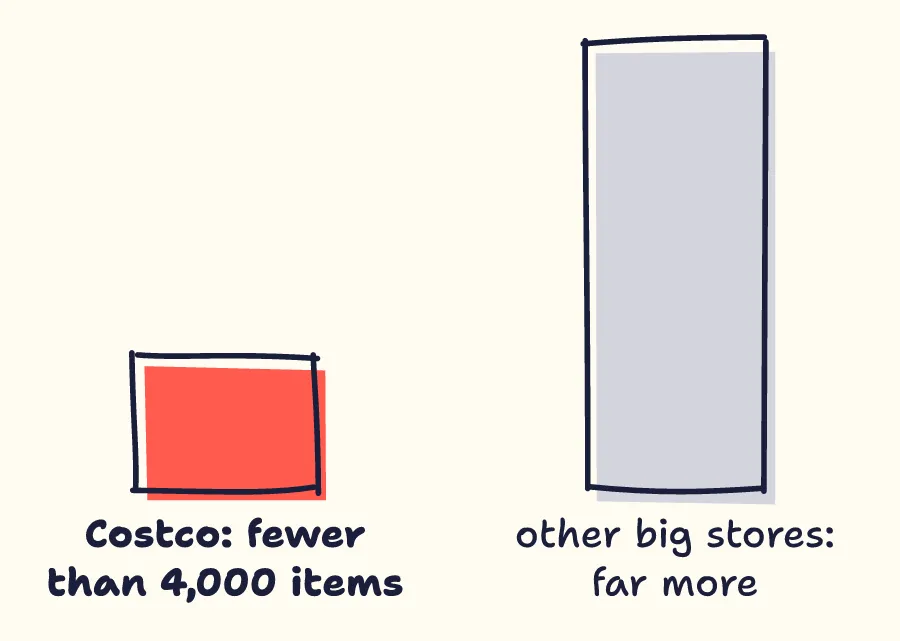
This is on purpose. A Costco warehouse sells fewer than 4,000 different items. Other big stores that sell a bit of everything carry far more.
-
3
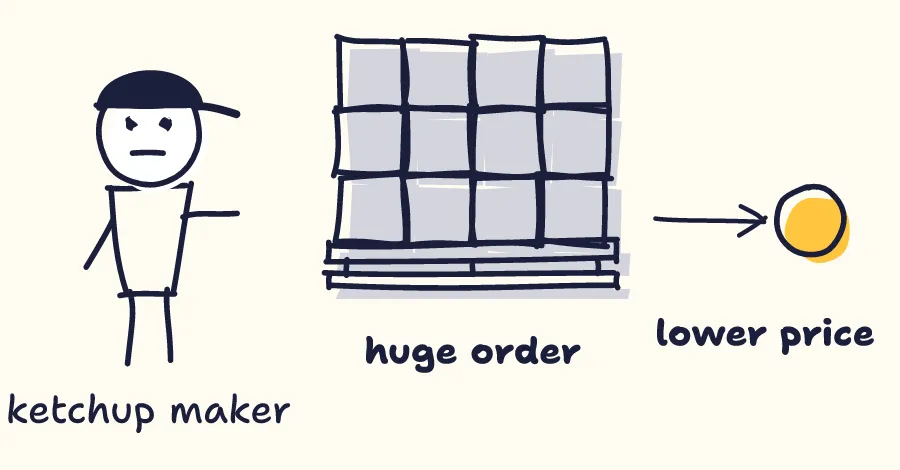
With so few items, each order is enormous. Costco does not buy a few boxes of one ketchup. It buys truckloads. And a maker that sells that much at once agrees to a lower price.
-
4
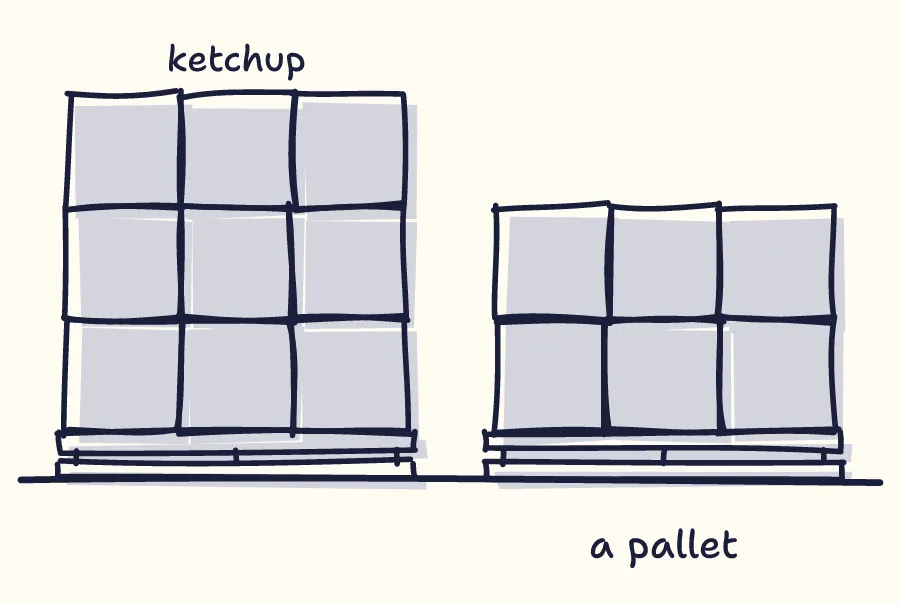
The goods also come on pallets, wooden platforms piled with boxes. A forklift puts them on the floor, and the wrap comes off. Nobody fills shelves one bottle at a time. That saves work, and work costs money.
-
5
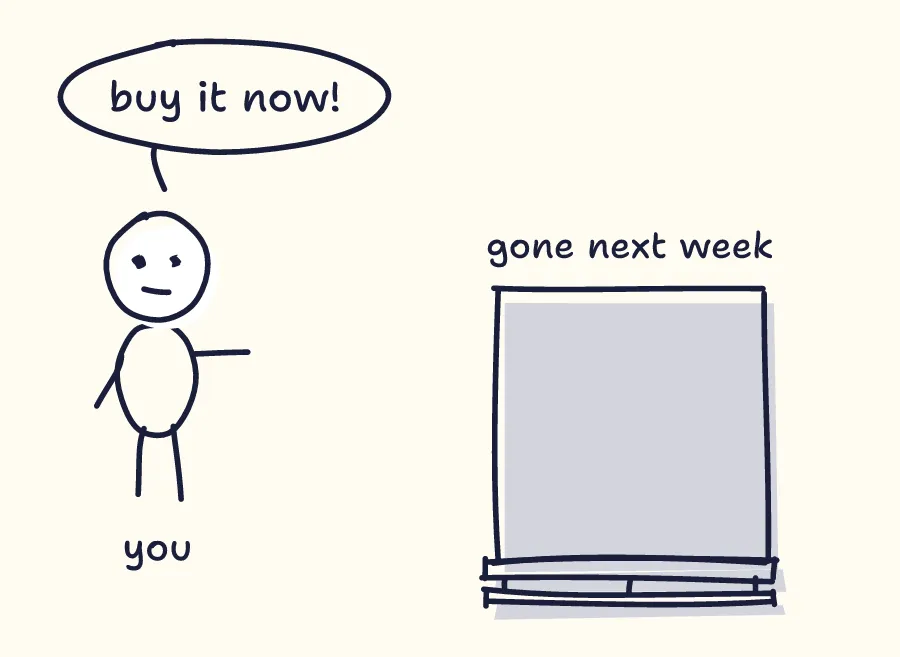
Some items stay only a few weeks, then they are gone. Jim Sinegal called it a treasure hunt. If you like a thing, you buy it now, because it may not be there next time.
-
6
Fewer items, huge orders, less work. All of it keeps the costs low, so the 14% rule still leaves Costco a little profit. But one price is not allowed to move at all: the hot dog. So how does Costco still sell it for $1.50?
-
Go further
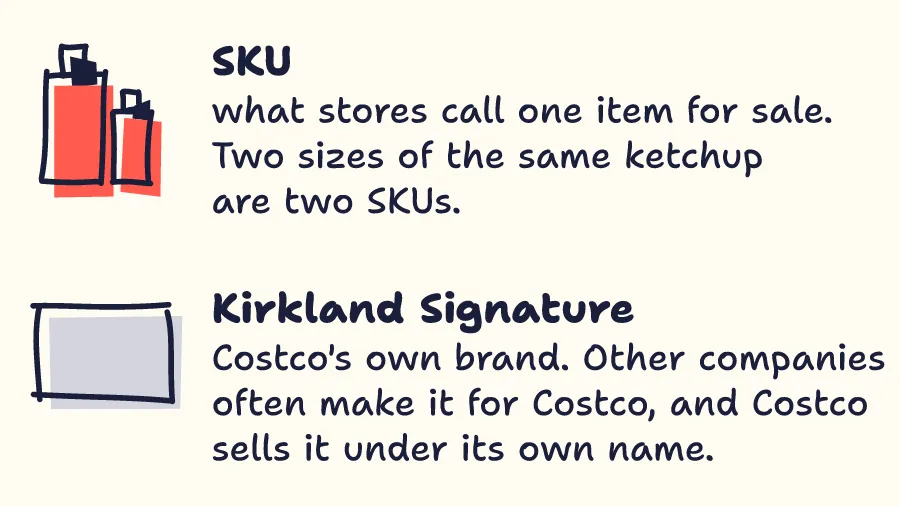
What stores call an item, and Costco's own brand.